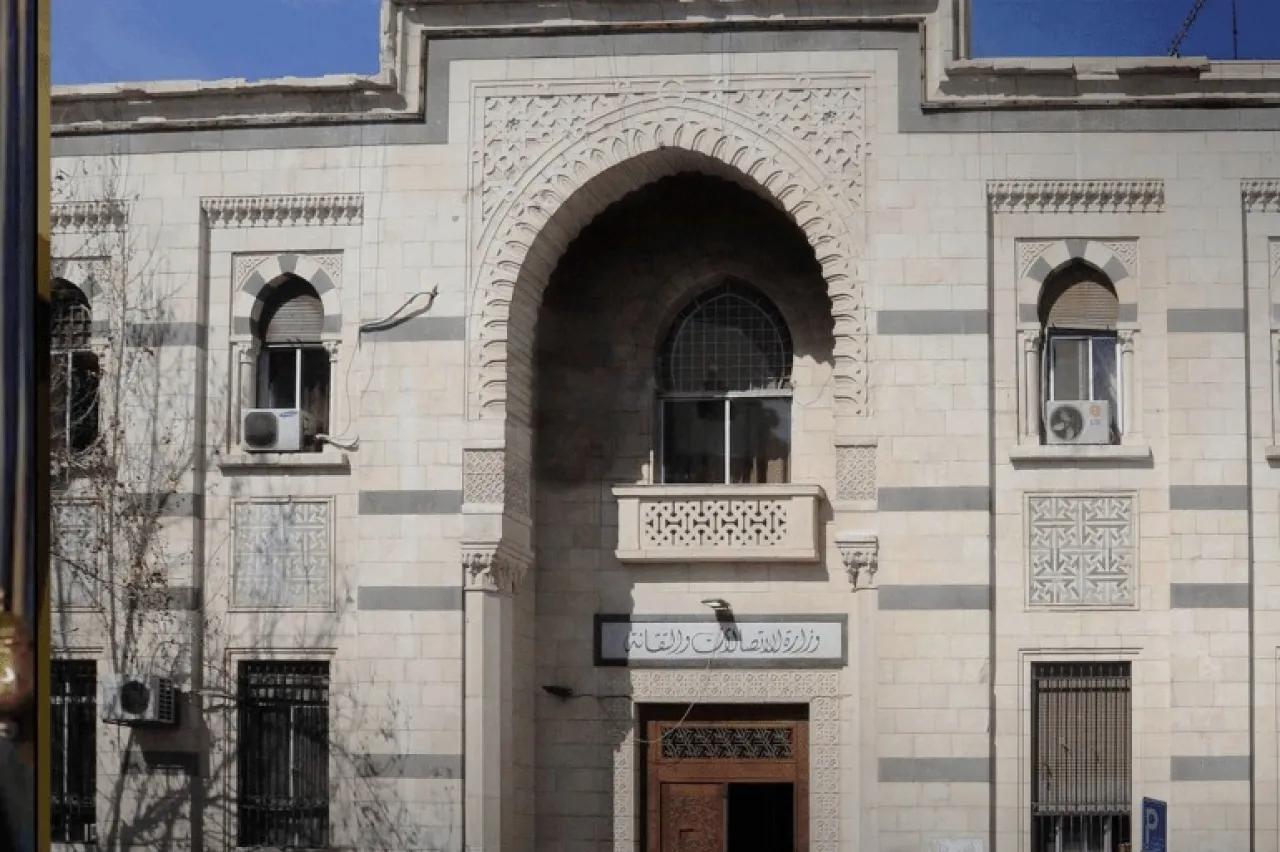
Full Analysis Summary
US warning on Chinese telecoms
The United States explicitly warned Syria against adopting Chinese telecommunications technology during recent bilateral talks.
That warning was delivered in a meeting between a U.S. team and Syrian counterparts.
Khaberni, citing Reuters, reported the U.S. warning said Chinese telecom gear 'poses security risks and conflicts with Washington’s interests' and that it was delivered in an undisclosed meeting.
Al-Jazeera Net described talks in San Francisco between the U.S. State Department and Syrian Communications Minister Abd al-Salam Heikal in which U.S. officials 'urged Syria to use American or allied telecommunications technology'.
Devdiscourse noted that 'The U.S. has urged Syria to prioritize security when choosing technology providers'.
Coverage Differences
Narrative Framing
Khaberni (Other): Frames the U.S. warning as a clear legal/espionage allegation against Chinese firms, quoting a U.S. spokesperson who says Chinese laws allow forced data access and that Chinese companies' privacy promises 'completely contradict' those laws. | Al-Jazeera Net (West Asian): Conveys the U.S. characterization as a legal/espionage risk, reproducing the U.S. claim that Chinese intelligence agencies can compel access to data and that Chinese companies' privacy assurances conflict with Chinese law. | Devdiscourse (Asian): Reports the U.S. warning in neutral terms but omits the explicit legal/espionage claim about Chinese laws compelling data access and the quoted US claim that Chinese firms' assurances contradict Chinese law.
Security concerns over Chinese tech
U.S. officials framed the concern as a national-security and privacy issue, warning that Chinese law can compel firms to share sensitive data and urging countries to prioritize security and privacy over cheaper equipment.
Al-Jazeera Net quoted the U.S. State Department on Chinese legal obligations and the related security risk.
Khaberni reiterated the U.S. characterization that Chinese technology poses security risks.
Devdiscourse echoed Washington’s focus on security as central to procurement choices amid Syria’s rebuilding needs.
Coverage Differences
Missed Information
Khaberni (Other): Provides specific infrastructure details — names Huawei market share in Syria's networks and cites an $800 million STC investment to rebuild and connect Syria's network — giving concrete scale and actors. | Al-Jazeera Net (West Asian): Also includes precise market-share and investment figures, noting Huawei's dominant share in Syria's operators and STC's $800m, framing the issue with concrete numbers and regional investment context. | Devdiscourse (Asian): Covers the U.S. warning and Syria's desire to diversify but omits the specific figures on Huawei's market share and the STC $800 million investment, keeping the treatment more general.
Syria openness to U.S. firms
Syrian officials and business sources signalled openness to U.S. partners but stressed practical constraints and a need to move quickly.
Al-Jazeera Net reported that Syria said it is "open to partnering with U.S. companies" while stressing projects are urgent and "hindered by U.S. export controls and 'excessive compliance' with them."
The Syrian Ministry of Communications told Al-Jazeera Net that equipment decisions "follow national technical and security standards."
Devdiscourse noted that "progress is complicated by export controls" and infrastructure shortages outside major cities.
Khaberni's report noted the warning occurred in a meeting whose further details were not released, underscoring limited transparency about concrete next steps.
Coverage Differences
Contradiction
Al-Jazeera Net (West Asian): Describes the Syrian state referenced as the 'ousted Bashar al-Assad regime', a characterization that implies a change in status of the regime. | Khaberni (Other): Refers to 'successive Bashar al-Assad regime governments' without calling the regime 'ousted', presenting a different factual framing of the regime's status. | Devdiscourse (Asian): Refers more simply to 'Assad's regime' when explaining Syria's prior reliance on Chinese tech, not using the term 'ousted'.
Syria telecom dependence
Multiple sources describe Syria’s telecom sector as heavily dependent on Chinese equipment, uneven outside cities, and in need of investment to recover from war damage.
Al-Jazeera Net reported that "Huawei reportedly supplies over half of the networks for the country’s two operators, Syriatel and MTN," and that coverage outside cities is weak and speeds are poor.
Devdiscourse similarly highlighted the "shortage of adequate telecommunications infrastructure outside major cities" and said Syria is "seeking foreign investment and plans to strengthen its private telecom sector to recover from war-related damage."
Khaberni’s account of the U.S. warning about Chinese technology provides context for why dependence on Chinese gear is central to the current dispute.
Coverage Differences
Tone/Emphasis
Khaberni (Other): Emphasizes urgency and concrete obstacles to U.S.-Syria cooperation, quoting sources that call the issue urgent and highlighting 'export control' and 'overcommitment' as active barriers. | Al-Jazeera Net (West Asian): Also stresses urgency and that export controls and excessive compliance are obstacles, presenting the U.S. request and Syrian time-sensitivity as a practical dilemma. | Devdiscourse (Asian): Mentions export controls and infrastructure shortfalls but frames the issue more as a longer-term complication rather than stressing immediate urgency or specific compliance barriers.
Syria, China and US dispute
The situation contains unresolved elements and competing claims.
Syria wants to diversify suppliers and move quickly while U.S. officials press security priorities.
China has denied accusations that its technology is used for spying.
Al-Jazeera Net recorded Syria saying it wants to 'diversify suppliers and move quickly' and noted that 'China denies using its technology for spying'.
Devdiscourse emphasised that despite investment plans, 'challenges remain'.
Khaberni underlined the limited public detail, saying the warning was delivered in an undisclosed meeting and 'no further details were released'.
That leaves the timing, terms and follow-up measures unclear.