
U.S. and Israel Assassinate Iran’s Leadership, Kill Supreme Leader Ayatollah Khamenei
Key Takeaways
- U.S. and Israel launched missile strikes against Iranian territory.
- Missile strikes killed most of Iran's leaders.
- Republican-controlled U.S. Senate rejected a resolution to limit Trump's authority to strike Iran.
Immediate US response
The Insider reports that a briefing about an operation that resulted in the death of Ayatollah Khamenei prompted sharp reactions in Washington, with Senate Democratic leader Chuck Schumer saying, “I found their answers completely and totally insufficient.
“On March 4, the Republican-controlled U”
In fact, at least to me, this briefing raised many more questions than it answered.”
The article states that "opinions within the Democratic Party about the operation have been divided," and that "Some lawmakers, such as Senators John Fetterman and Mark Kelly, supported the main stated objective — preventing Iran from obtaining a nuclear bomb — and welcomed the news of Ayatollah Khamenei’s death."
Democratic Party split
The coverage highlights a split within the Democratic Party: one faction praised the operation’s stated goal of stopping Iran from obtaining a nuclear weapon and framed the outcome as protecting "ordinary Iranians" from a dictatorial regime,
while other Democrats, represented by Schumer’s remarks, criticised the briefing as inadequate and unanswered.
The Insider quotes the pro-operation lawmakers explicitly and contrasts that with Schumer’s demand for fuller explanations.
Perpetrator ambiguity
The available article focuses on US congressional reactions and does not attribute the operation explicitly to the United States or Israel;
“On March 4, the Republican-controlled U”
it centres on lawmakers’ responses rather than on forensic or operational details naming perpetrators.
The Insider emphasises that the briefing 'raised many more questions than it answered' and describes internal divisions among Democrats, which indicates that key operational facts remained undisclosed in the reporting provided.
Outstanding questions
Given the limited sourcing provided, major questions remain unanswered: who carried out the operation, what intelligence justified it, and what legal or diplomatic steps will follow.
The Insider’s reporting shows clear political consequences in Washington — both praise for the claimed objective of preventing a nuclear-armed Iran and demands for fuller briefings — but the article itself underscores the lack of public detail and the need for further reporting to clarify responsibility and context.
More on Iran
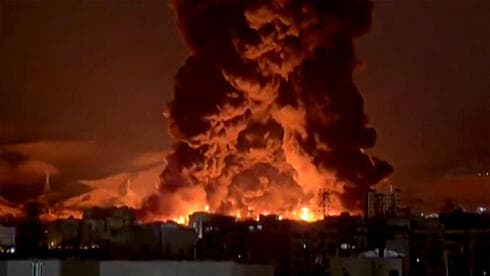
US obliterates military targets on Iran’s Kharg Island, Trump warns
13 sources compared

US Deploys About 2,500 Marines to Middle East After Iran Attacks Gulf Shipping
33 sources compared
FBI Warns of Iranian Drone Plot Based on Unverified Tip; California Says No Credible Threat
10 sources compared

White House Demands ABC Retract Report Claiming Iran Sought To Launch Drone Attacks On California
11 sources compared