
US and Israel attack Iran as gold plunges to a 43-year weekly drop.
Key Takeaways
- Gold heads for biggest weekly loss since 1983.
- US-Israel attack on Iran fuels inflation fears and drags bullion.
- Fewer near-term rate cuts expected, pressuring gold further.
Military Escalation
The United States and Israel launched a significant military attack against Iran last month, triggering widespread geopolitical instability.
“Gold tumbled another 3”
CBS News reported that the US is preparing to potentially deploy ground forces into Iran.

Iranian officials have become reluctant to even discuss reopening the strategically vital Strait of Hormuz as they focus on surviving the attacks.
The Pentagon responded by sending three warships and thousands of additional Marines to the Middle East, escalating tensions in the region.
This military action has disrupted global oil flows through the Strait of Hormuz, causing fears of a prolonged energy crisis.
The conflict has persisted for weeks, with ongoing military deployments indicating that the situation is likely to continue affecting markets and geopolitical relations.
Gold Market Crash
Gold markets have experienced unprecedented declines following the US-Israel attack on Iran.
Gold has suffered its largest weekly loss since 1983 and an eight-day losing streak that has challenged its traditional safe-haven status.
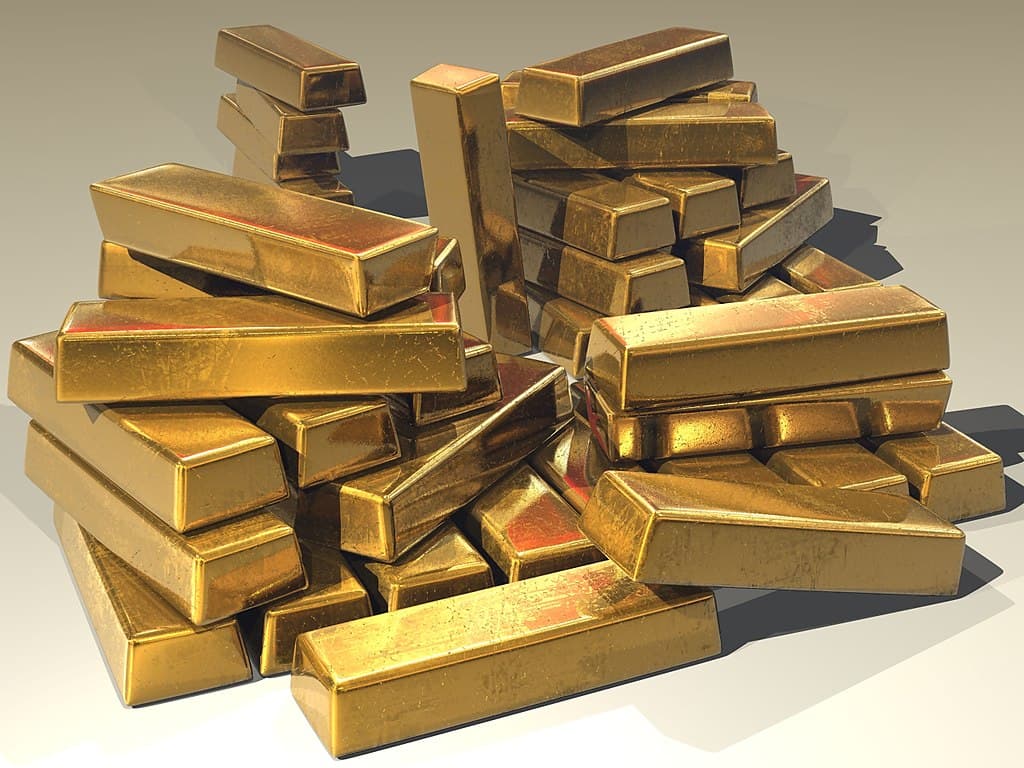
Gold has fallen more than 15% since February 28 when the US and Israel first attacked Iran.
The precious metal tumbled 3.5% on Friday alone to $4,488 per ounce.
Trading data confirmed that March 16-20 was gold's worst-performing week since 1983.
The 11% weekly fall was slightly larger than the dramatic drop seen at the end of January.
The sustained decline has raised serious questions about gold's reliability as a safe-haven asset during times of geopolitical crisis.
Economic Impact
The military conflict between the US-Israel alliance and Iran has created significant economic ripple effects.
“Gold headed for its biggest weekly loss since 1983, as war in the Middle East boosted energy prices and reduced expectations for interest-rate cuts”
Higher energy costs from disrupted oil flows through the Strait of Hormuz have stoked inflation concerns.
Traders have increased their bets on rate hikes to 50% by October amid protracted conflict concerns.
The dollar and bond yields have rallied while investors have sold stocks and bonds.
This hawkish economic environment has particularly hurt gold, which doesn't pay interest.
The combination of profit-taking and liquidation amid concerns about less monetary easing has accelerated gold's decline.
Prices above $5,200 had attracted many buyers, leaving the market vulnerable to correction.
Precious Metals Sell-off
The precious metals market has experienced widespread sell-offs across the board.
Silver has been particularly hard hit, falling 6.3% to $68.20 an ounce according to one source.
Another source reports silver declining 0.2% to $72.68 but still on pace for a nearly 10% weekly loss.
The discrepancy in silver pricing reflects the extreme market volatility and liquidity challenges.
Platinum has also struggled, dropping 0.4% to $1,967.63 ounce, down roughly 3% for the week.
The broader precious metals sell-off has been accompanied by substantial outflows from exchange-traded funds.
Bullion-backed ETFs are set for a third consecutive week of outflows, with holdings falling more than 60 tons.
Central Bank Impact
Central bank policies have played a crucial role in shaping the current precious metals market dynamics.
“Gold prices found modest footing during Asian trading on Friday, yet remained on track for their steepest weekly decline since early 2020”
The Reserve Bank of Australia raised interest rates, while major central banks held rates steady.
This coordinated lack of dovish action has significantly reduced expectations for monetary easing.
Gold has broken below the crucial $5,000-$5,200 per ounce trading range that had held since the war began.
Technical signals suggest the market may be due for a bounce despite overwhelming negative sentiment.
Gold's 14-day relative-strength index has dropped below 30, a level that some traders see as oversold.
More on Finance

Jury Rules Elon Musk Misled Twitter Investors in $44B Acquisition Case
20 sources compared

Nevada Judge Bars Kalshi From Offering Event Contracts
17 sources compared

Coinbase Launches Stock Perpetual Futures for Non-U.S. Users
12 sources compared

Coatue Management-Led Round Drives Kalshi's $1B Funding, Valuation Soars to $22B
12 sources compared