Iran28 February, 20262 min read
U.S. and Israel Kill Iranian Supreme Leader Ayatollah Ali Khamenei, President Donald Trump Says
United States and Israel launched a major joint air and missile campaign against Iran. President Donald Trump said Ayatollah Ali Khamenei was killed; Iran has not confirmed.

60 outlets told this the same way.
Coordinated strikes in Iran
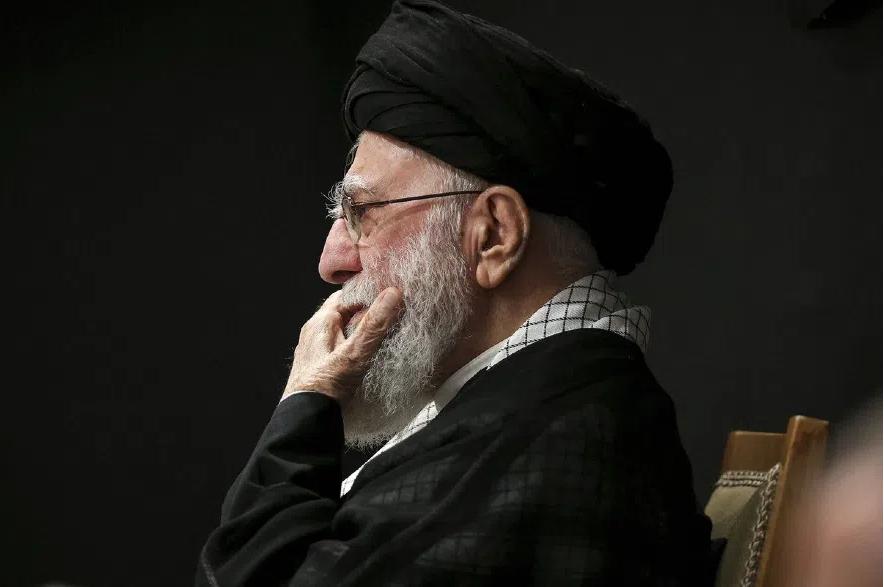
Multiple U.S. and Israeli officials announced a coordinated military campaign inside Iran. President Donald Trump publicly declared that Iran's Supreme Leader Ayatollah Ali Khamenei had been killed in the strikes. Reports across mainstream outlets described large, joint strikes, some named "Operation Epic Fury".
“Unconfirmed reports that Iran’s supreme leader, Ayatollah Ali Khamenei, has been killed follow joint US–Israeli airstrikes in June 2025 and come at a moment many say Iran is weaker than at any time since Khamenei took power in 1989 after years of Western sanctions. US President Donald Trump and two Israeli sources said Khamenei was killed, but Israel has produced no evidence and Tehran denies the claims, saying Khamenei and the president are ‘safe and sound.’”
President Donald Trump and allied Israeli sources said Ayatollah Ali Khamenei and other senior figures died. Several outlets emphasized that those claims were unconfirmed by Tehran. The White House framed the action as a major, intelligence-driven effort to degrade Iranian leadership and nuclear and missile capabilities.
Strikes and Reported Casualties
Israeli officials and some Western outlets said the operation struck multiple regime and military targets. They said senior Iranian commanders and officials were among the dead. Israel publicly reported eliminating several senior figures, and some intelligence partners told media that dozens of regime personnel were killed.
Israeli and U.S. statements described strikes on command-and-control, missile and nuclear-linked sites. Israeli leaders suggested evidence — including recovered bodies — pointed to Khamenei’s death, though independent verification remained lacking.

Responses to Khamenei claims
Iranian authorities and state-affiliated media denied or disputed the U.S. and Israeli assertions about Khamenei’s death. They called the claims baseless or psychological operations. Several outlets noted that Tehran had not provided independent confirmation.
“Iranian state media called the claim ‘baseless,’ and Foreign Minister Abbas Araghchi said Khamenei was alive ‘as far as I know.’”
Western and alternative outlets highlighted that independent verification was not available at the time those claims circulated. Those outlets also cautioned that some Western sources relied on unnamed officials when reporting leadership casualties.
Damage and casualty reports
The strikes and subsequent exchanges produced widespread damage inside Iran and across the region. Iranian state and humanitarian sources reported scores or hundreds killed and many more wounded. Regional governments reported missile and drone attacks, some interceptions, and limited damage to civilian infrastructure outside Iran.
Reporting on specific incidents, most notably claims of school strikes and large child casualties, varied sharply between Iranian state tallies and outside agencies. Multiple outlets flagged those figures as unverified or contradictory.
International and domestic reactions
International and domestic reaction emphasized the risks of rapid escalation and deep uncertainty about outcomes. U.N. officials called for an immediate halt to hostilities. Diplomats warned of a wider regional war.
“UN Secretary‑General António Guterres, at an emergency Security Council meeting, urged an end to hostilities, warned of a wider conflict, and condemned the U.S.-Israeli strikes and Iran’s retaliatory attacks for violating the sovereignty of regional states.”
Analysts and some U.S. politicians questioned whether airpower and decapitation strikes could produce regime change or would instead empower Iran’s security institutions. Critics also raised legal and political concerns about congressional authorization and the administration’s evidentiary claims. Commentators warned the killing—or claims of killing—would likely produce a complex succession process with unpredictable consequences for Iranian governance and regional stability.