Iran-Israel01 March, 20264 min read
U.S. and Israel Kill Iran’s Supreme Leader Ayatollah Ali Khamenei in Joint Strike
This article is an automated aggregation of coverage from news outlets. Our editorials offer in-depth analysis curated by the NewsCord team.
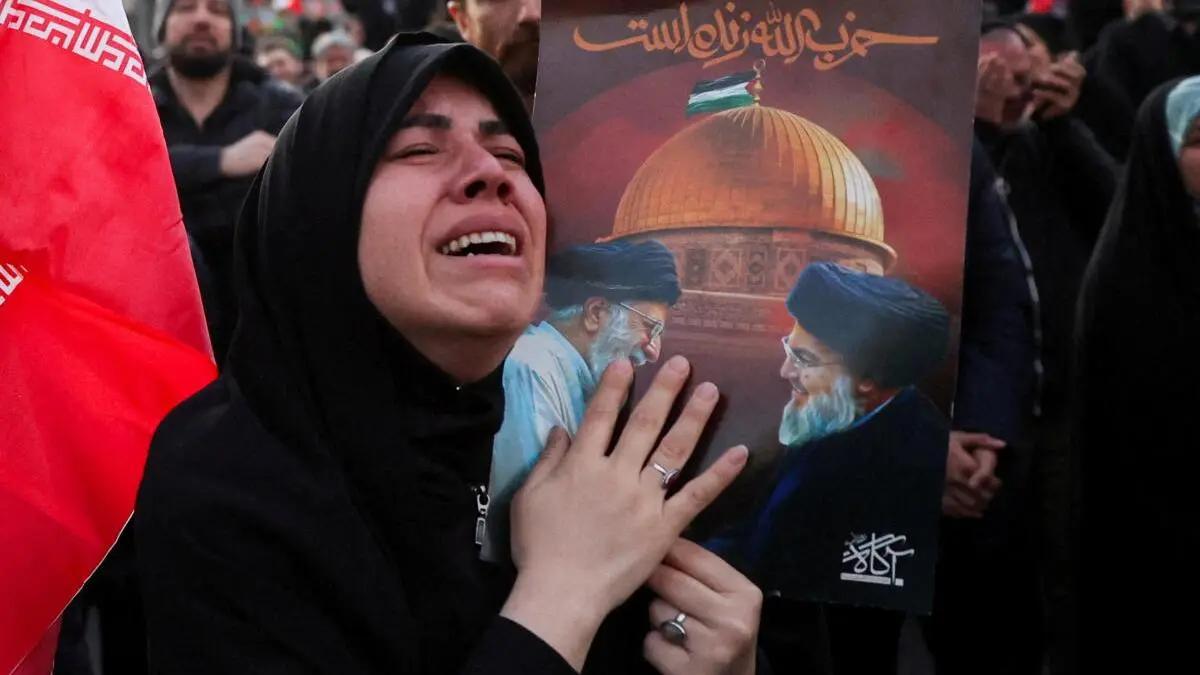
Iran declared 40 days of national mourning after state media confirmed his death. U.S. and Israeli forces conducted coordinated airstrikes that Iran and multiple outlets say killed him.

34 outlets told this the same way.
Outlets did split on U.S. Intercepts Iran Message Activating Sleeper Cells After U.S.-Israel Strike Kills Khamenei →
U.S. and Israeli strikes on Iran
U.S. and Israeli forces carried out broad strikes on Iran, with multiple outlets reporting attacks on Tehran and other locations. WGAL reported that "Israeli forces carried out strikes on targets in Tehran and elsewhere in Iran," and said Iranian state TV confirmed an explosion while U.S. officials spoke anonymously about American participation. NPR described the operation as "what they called their largest air operation ever — roughly 200 jets striking about 500 targets in Iran."
“Israeli forces carried out strikes on targets in Tehran and elsewhere in Iran — including sites near Supreme Leader Ayatollah Ali Khamenei’s offices — in an operation U.S. officials speaking anonymously said involved American participation, though the extent of U.S. involvement was unclear.”
Republic World reported that "Iranian state media and the Islamic Revolutionary Guard Corps reported that 86-year-old Supreme Leader Ayatollah Ali Khamenei was killed in an airstrike on his Tehran compound." Some sources cited satellite imagery and heavy bombing to support the claim of Khamenei's death, which conflicts with other reports that did not confirm that outcome.

Reports on Khamenei's death
Iranian state outlets published reports that Supreme Leader Ayatollah Ali Khamenei was killed. Those reports were echoed by U.S. and Israeli officials. Kerala Kaumudi noted that 'Israeli officials, including Prime Minister Benjamin Netanyahu, said Supreme Leader Ayatollah Ali Khamenei had been killed and his body found.'
Kerala Kaumudi also recorded that Iranian officials initially denied the reports — Foreign Minister Abbas Araghchi said Khamenei and President Masoud Pezeshkian were safe. Haaretz recorded both the state-media report and Israeli claims and quoted an Iranian official dismissing the announcements as 'mental warfare.' Reuters emphasized uncertainty, saying the referenced report 'offered no clear information about who or what was targeted or what the outcomes were.'

These accounts contradict each other: Iranian officials denied the reports while Israeli officials and some Iranian state outlets said Khamenei had been killed. Accounts were contested and some international outlets cautioned that details remained unverified.
Reports on casualties and strikes
Sources differ on the human toll and targets struck, with Iranian state broadcasters and humanitarian agencies reporting large civilian casualties while some international outlets noted difficult verification and divergent counts. Al Jazeera wrote that 'Iranian state media, citing the Red Crescent, reported at least 201 people killed in the joint US–Israeli attacks across 24 provinces' and said a strike on a school 'killed at least 148 people' in one account. Peoples Dispatch described the strikes as having 'killed several family members and more than 200 Iranians while injuring hundreds.'
“Iranian state media, citing the Red Crescent, reported at least 201 people killed in the joint US–Israeli attacks across 24 provinces. A strike on an elementary girls’ school in Minab in southern Iran killed at least 148 people and wounded 95, with the toll still rising.”
NPR's operational description that roughly 200 jets struck about 500 targets supports the scale of the campaign. France 24 cautioned that figures such as school‑death counts could not be independently verified and reported differing totals for that particular incident.
Gulf strikes and escalation
The strikes triggered immediate regional escalation: Iran's military organs vowed retaliation, ballistic and drone strikes were reported across the Gulf, and several states and international institutions warned of uncontrollable escalation. Al Jazeera said the Islamic Revolutionary Guard Corps (IRGC) vowed revenge and said it struck 27 bases hosting US troops and Israeli military facilities in Tel Aviv. France 24 reported that Iran's Revolutionary Guards vowed the 'most ferocious' retaliation and launched multiple missile and drone strikes.
Nation Thailand documented a wide regional effect, saying Bahrain said the US Fifth Fleet service center was hit; Kuwait reported a missile attack on a US base; and Qatar said it intercepted all missiles aimed at its territory. NPR noted the domestic and regional security responses inside Israel and nearby states, reporting that Israel has closed its airspace, declared a 48-hour national emergency, activated civil defenses and put regional forces on high alert.

Khamenei succession uncertainty
Khamenei’s reported death has prompted immediate questions about succession and the balance of power in Iran. State and international outlets emphasized constitutional procedures, institutional continuity and uncertainty over which actors will exercise authority during a transition. Gulf News observed that "Khamenei is both Iran’s highest political and religious authority; his removal would create a major, destabilizing constitutional crisis" and noted that "the Assembly of Experts is formally charged with picking a successor."
“Khamenei is both Iran’s highest political and religious authority; his removal would create a major, destabilizing constitutional crisis because succession procedures are opaque and politically controlled.”
Businessday NG outlined constitutional basics, saying "under the constitution the Assembly of Experts must appoint a new supreme leader, while senior political and security figures are expected to maintain continuity in the interim." WHEC and The Sunday Guardian described Khamenei’s decades of power consolidation and the immediate institutional uncertainty, with WHEC tracing his rise and the IRGC’s central role. The Sunday Guardian said the announcement "marks the end of Khamenei’s roughly 37-year tenure" and noted that reports "were not independently confirmed in the article."