Iran-Israel02 March, 20264 min read
U.S. and Israel Launch Strikes on Tehran, Kill Supreme Leader Ayatollah Ali Khamenei
This article is an automated aggregation of coverage from news outlets. Our editorials offer in-depth analysis curated by the NewsCord team.
U.S. and Israeli forces launched sustained strikes on Tehran and other Iranian cities The attacks killed Supreme Leader Ali Khamenei

8 outlets told this the same way.
Outlets did split on U.S. Intercepts Iran Message Activating Sleeper Cells After U.S.-Israel Strike Kills Khamenei →
U.S.-Israeli strikes in Iran
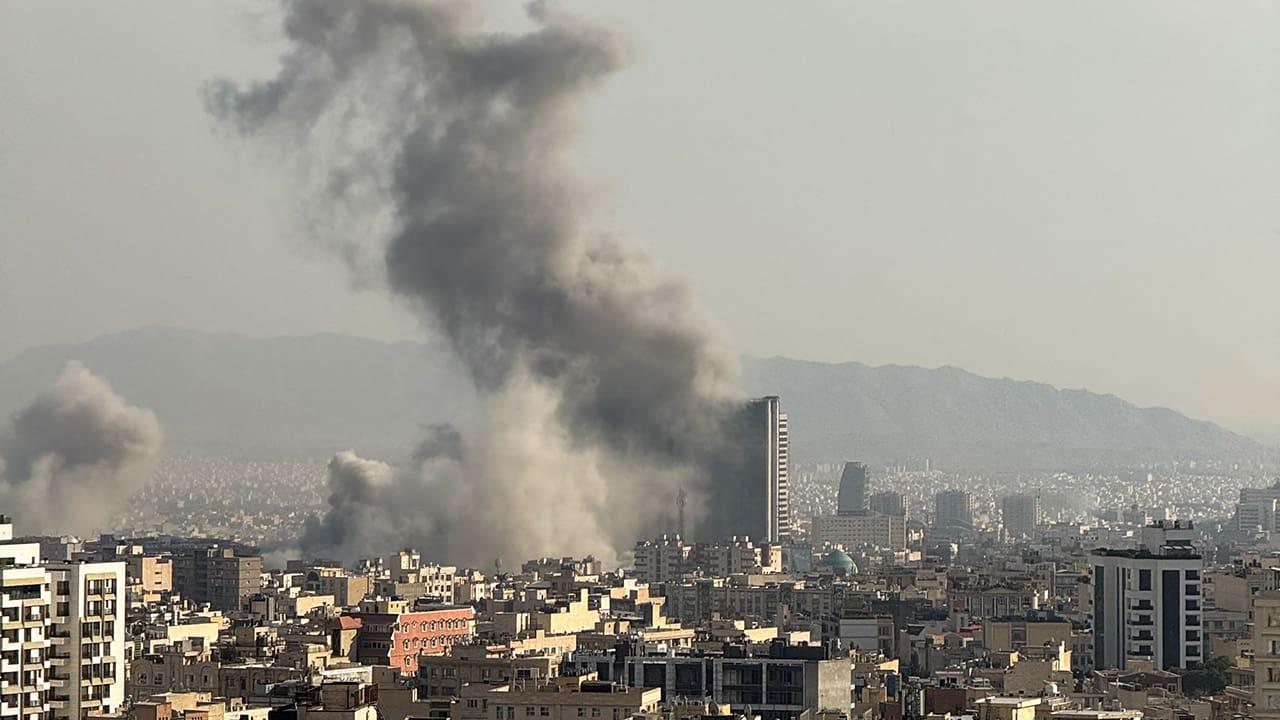
On February 28, 2026, U.S. and Israeli forces launched a major combined set of strikes on Tehran and other Iranian cities that targeted senior leadership and military sites. Multiple accounts report that the operation killed Iran’s Supreme Leader Ayatollah Ali Khamenei and several senior clerics. Arab Center Washington DC described the action as a "major combined strike on Tehran and other Iranian cities—U.S. forces included two carrier strike groups and advanced aircraft—killing Iran’s Supreme Leader Ayatollah Ali Khamenei and several senior clerics."
“On February 28, 2026, U.S. and Israeli forces launched a major combined strike on Tehran and other Iranian cities—U.S. forces included two carrier strike groups and advanced aircraft—killing Iran’s Supreme Leader Ayatollah Ali Khamenei and several senior clerics while destroying military and other official targets.”
KCRA reported that state media confirmed Khamenei’s death and put the overall toll above 200. Homeland Security Today summarized the strike objectives as hitting Iran’s missile infrastructure and nuclear program to limit Tehran’s long-range strike capabilities. Arkadelphian reported the operation under the name "Operation Epic Fury" and described early targeting of Khamenei’s compound and wide smoke over Tehran.

Strikes on Iran facilities
Reporting indicates the campaign struck a large number of strategic facilities across Iran, including nuclear and missile sites. KCRA compiled a map showing strikes on "at least 30 nuclear sites and 17 missile sites."
Homeland Security Today framed the attacks as aimed specifically at Iran’s missile infrastructure and nuclear program to "restore deterrence" and reshape regional balance. Arab Center Washington DC added that U.S. forces for the operation included "two carrier strike groups and advanced aircraft," underscoring the scale of U.S. military involvement.
Iran leadership losses and response
The attacks produced heavy leadership losses inside Iran and immediate institutional responses. KCRA said the death toll was placed "above 200, including a top Revolutionary Guard security adviser, Iran’s chief of army staff and its defense minister." CNN reported that "Iran’s supreme leader, Ayatollah Ali Khamenei, was killed Saturday along with several senior military officials."
“Reports put the death toll above 200, including a top Revolutionary Guard security adviser, Iran’s chief of army staff and its defense minister.”
CNN said Iran had established a three-person interim leadership council — naming President Masoud Pezeshkian, judiciary chief Gholamhossein Mohseni Ejei, and senior cleric Alireza Arafi — to run the country until a successor is chosen. Homeland Security Today emphasized that "the killing of Iran’s supreme leader, Khamenei, is described as a profound strategic variable with uncertain consequences."
Regional retaliation and disruptions
The strikes provoked wide regional escalation and direct Iranian retaliation. Homeland Security Today reported that Iran retaliated with missile and drone strikes against U.S. military sites in Iraq, Syria, and Gulf states—consistent with its forward-defense doctrine—and that missile activity was reported in eight Arab countries (UAE, Bahrain, Kuwait, Saudi Arabia, Iraq, Jordan, Oman, Qatar). Arab Center Washington DC said Iran’s counterstrikes hit Israeli targets, causing "dozens of deaths and injuries," damaged Gulf civilian infrastructure, and "effectively closed the Strait of Hormuz, disrupting roughly 20% of global oil flows."
KCRA noted that retaliatory strikes in Israel produced "at least one death in central Tel Aviv and more than 100 injuries." CNN described Iran as "battered but still capable of regional strikes."

U.S. messaging on Iran
Several outlets quoted President Trump urging Iranians to rise up and 'take over your government.' Homeland Security Today said 'President Trump publicly urged Iranians to rise up, called for the IRGC and police to merge 'with the Iranian Patriots,' and warned that 'heavy and pinpoint bombing' would continue as needed.' Arkadelphian reported Trump warning from Mar‑a‑Lago that 'bombs will be dropping everywhere' and urging Iranians to 'take over your government.'
“President Trump publicly urged Iranians to rise up, called for the IRGC and police to merge ‘with the Iranian Patriots,’ and warned that ‘heavy and pinpoint bombing’ would continue as needed; a U.S. official said intelligence suggesting imminent Iranian strikes on American targets overseas helped justify the military action.”
Arab Center Washington DC reported that 'President Donald Trump said the objective of the campaign was regime change in Tehran.' CNN characterized the messaging as 'mixed,' noting that 'former President Trump has alternately called for "freedom for the people"…'. CNN also noted that Defense Secretary Pete Hegseth has said the US is not pursuing a 'regime change' war.

Arkadelphian also noted the strikes were 'not specifically authorized by Congress,' a point raised politically in U.S. debate. These accounts reflect disagreement across outlets over the tone of the President's messaging and whether the US was pursuing regime change.
Uncertainty After Khamenei Killing
Analysts and the sources themselves emphasized profound uncertainty about the strategic consequences and potential for prolonged regional conflict. Homeland Security Today described Khamenei’s killing as a "profound strategic variable with uncertain consequences" and noted that historical outcomes of leadership decapitation have been mixed. Arab Center Washington DC said the campaign would "reshape the region’s strategic outlook" and that it was convening experts to analyze unfolding implications.
Arkadelphian recorded domestic U.S. political pushback warning that a wider war could become "a prolonged, costly commitment". CNN underlined that despite severe damage the Iranian regime remained capable of further regional strikes, together illustrating the broad uncertainty and high risk that the confrontation could widen.