Full Analysis Summary
US-Israel Gaza Aid Coordination
The United States and Israel are advancing a plan to reshape control of the Gaza Strip through a UN-backed framework.
Washington is simultaneously taking operational control over aid logistics inside Israel.
Haaretz reports that the U.S. has shifted coordination of humanitarian aid from Israel’s military unit COGAT to a U.S. military coordination center based in southern Israel.
Final decisions on aid are primarily made by the U.S., and the early transition has been somewhat chaotic and disorganized.
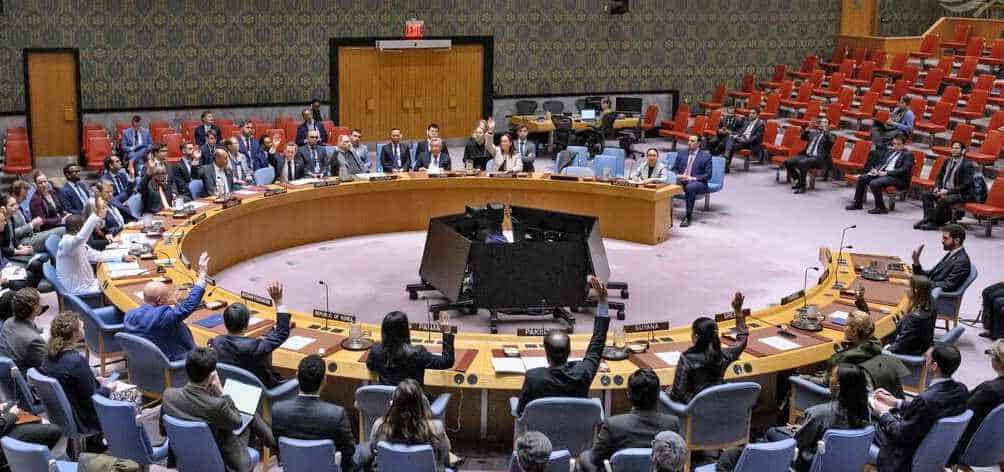
In parallel, Le Monde.fr says Washington is pushing a UN Security Council resolution to establish an international stabilization force in the Gaza Strip.
The resolution aims for adoption by the end of November and deployment supervision beginning January 2026.
This follows a fragile ceasefire brokered by Donald Trump between Israel and Hamas on October 10.
Israeli officials confirm that U.S. forces are working alongside Israel in managing aid transfers as part of the ceasefire agreement.
Meanwhile, Mehr News Agency highlights that regional states are urging the UN to block the formal adoption of these plans.
Coverage Differences
narrative
Le Monde.fr (Western Mainstream) frames the effort as building a UN-led “international stabilization force” with a formal adoption timeline, suggesting institutional stabilization. Haaretz (Israeli) focuses on U.S.-run operational control of aid and the mechanics of formalizing Trump’s cease-fire, portraying a practical shift in on-the-ground authority. Mehr News Agency (West Asian) centers the story on Arab opposition and the risks of a plan it describes as US-backed partition and control over Gaza, emphasizing resistance rather than stabilization.
missed information
Mehr News Agency (West Asian) brings in regional pushback that is absent from Haaretz’s operational focus and only indirectly present in Le Monde.fr’s institutional framing. Haaretz (Israeli) uniquely notes U.S. forces “working alongside Israel” on aid management—an operational detail missing from Le Monde.fr and Mehr.
tone
Haaretz (Israeli) uses a technocratic tone about aid logistics and UN diplomacy, Le Monde.fr (Western Mainstream) strikes an institutional and diplomatic tone about a UN force, while Mehr News Agency (West Asian) adopts an alarmed, rights-focused tone highlighting forced displacement and opposition.
Gaza Control and Peace Plan
The core of the plan, as described by sources, amounts to partition and control mechanisms inside Gaza.
Mehr News Agency details forced displacement of Palestinians, demilitarized zones under Israeli control, and the sidelining of Palestinian governance.
The agency also warns that even Israeli security officials doubt the practicality of managing Gaza’s dense population under such control.
Le Monde.fr reports the U.S. wants a UN framework for an international stabilization force to enact elements of Trump’s peace plan.
It also says some Arab and Muslim countries, including Indonesia, could contribute troops.
Haaretz reports U.S. diplomats, including Ambassador Mike Waltz, are pressing the UN and the Palestinian delegation to adopt the plan.
They warn that failure to adopt it could lead to renewed conflict between Israel and Hamas.
Coverage Differences
contradiction
Le Monde.fr (Western Mainstream) reports that the stabilization-force draft has “support from Arab and Muslim countries, including Indonesia,” whereas Mehr News Agency (West Asian) asserts regional states such as Egypt, Jordan, Qatar, and Turkey are urging the UN to block adoption—directly conflicting claims about regional alignment.
narrative
Mehr News Agency (West Asian) frames the plan as US-backed partition involving forced displacement and Israeli-controlled demilitarized zones, while Le Monde.fr (Western Mainstream) frames it as a UN-managed stabilization project tied to Trump’s plan. Haaretz (Israeli) emphasizes U.S. diplomatic pressure and the threat of renewed fighting if the resolution fails.
missed information
Only Mehr News Agency (West Asian) highlights internal Israeli skepticism about practicality in densely populated areas and anticipates Palestinian resistance; this is not present in Le Monde.fr’s or Haaretz’s accounts.
West Asian Diplomatic Responses
Regional and Palestinian opposition is central to the West Asian perspective.
Mehr News Agency says Egypt, Jordan, Qatar, and Turkey are pressing the UN to block the plan, calling it a violation of international law and Palestinian rights.
They forecast Palestinian refusal to relocate or accept governance imposed by the occupation, with the possibility of asymmetric attacks by resistance groups.
By contrast, Le Monde.fr reports a diplomatic pivot at the UN, where formal negotiations began on November 6 on a U.S.-drafted text after Washington had previously vetoed measures condemning Israel’s actions.
Le Monde.fr also points to potential troop contributions from Muslim-majority states like Indonesia.
Haaretz underscores Washington’s intensifying management role on the ground, with final aid decisions now made primarily by the U.S.
Haaretz also highlights ongoing efforts to formalize the cease-fire brokered during the Trump administration as international law.
Coverage Differences
tone
Mehr News Agency (West Asian) adopts a rights-driven, oppositional tone, emphasizing violations of international law, displacement, and likely Palestinian resistance; Le Monde.fr (Western Mainstream) maintains a diplomatic, process-oriented tone about UN negotiations and troop contributions; Haaretz (Israeli) keeps an operational/diplomatic tone centered on U.S.-led coordination and legal formalization.
contradiction
Le Monde.fr (Western Mainstream) suggests some Arab and Muslim countries support or may participate in the stabilization force, while Mehr News Agency (West Asian) lists key regional states urging the UN to block the plan—conflicting pictures of Arab alignment.
missed information
Haaretz (Israeli) highlights U.S.-Israel operational cooperation on aid logistics under the cease-fire—details not reflected in Mehr News Agency’s focus on rights violations or in Le Monde.fr’s emphasis on the UN force.
UN Plan and Implementation Challenges
Timelines and feasibility remain uncertain.
Le Monde.fr lays out a schedule—UN adoption sought by end of November with deployment oversight starting January 2026.
Haaretz says the early U.S. takeover of aid logistics has been “chaotic and disorganized,” indicating implementation risks.
Mehr News Agency argues the plan would entrench Israeli control through demilitarized zones and displacement.
It warns of impracticality even according to Israeli security officials and predicts sustained legal-diplomatic and humanitarian challenges aimed at tying reconstruction to Palestinian sovereignty.
Haaretz adds that U.S. envoys are warning the UN that failure to adopt the plan could trigger renewed fighting between Israel and Hamas.
This underscores high-stakes brinkmanship around formalizing Trump’s cease-fire into international law.
Coverage Differences
missed information
Le Monde.fr (Western Mainstream) provides concrete timing for a stabilization force, which is absent from Haaretz (Israeli) and Mehr News Agency (West Asian). Haaretz uniquely reports on chaotic early-stage logistics and U.S. final say over aid flows, which the others do not detail.
narrative
Mehr News Agency (West Asian) frames the plan as entrenching occupation and displacement that will face legal and humanitarian pushback, whereas Le Monde.fr (Western Mainstream) emphasizes a UN-managed stabilization process, and Haaretz (Israeli) emphasizes U.S.-led operational control and the legal codification of Trump’s cease-fire.
tone
Mehr News Agency (West Asian) uses a warning tone about impracticality and resistance; Le Monde.fr (Western Mainstream) presents institutional scheduling; Haaretz (Israeli) presents diplomatic brinkmanship, noting U.S. warnings of renewed fighting if the plan is not adopted.