US and Israel Strike Iran in Opening Days of War
Key Takeaways
- U.S. and Israel launched strikes against Iran in the war's opening days
- The Times used satellite imagery and maps to pinpoint strikes across the region
- Conflict spread regionally, including strikes and attacks in Lebanon, Iraq, and Gulf waters
Immediate strikes and escalation
U.S. and Israeli airstrikes in the opening days of the war struck deep into Iran, including attacks on Tehran’s Mehrabad Airport and nearby oil depots, while Israel also carried out strikes in Lebanon’s capital and eastern regions, creating immediate cross-border escalation.
Iran’s Revolutionary Guards announced they had launched a wave of strikes on American and Israeli targets, and Gulf states reported intercepting missiles and drones amid the exchanges.
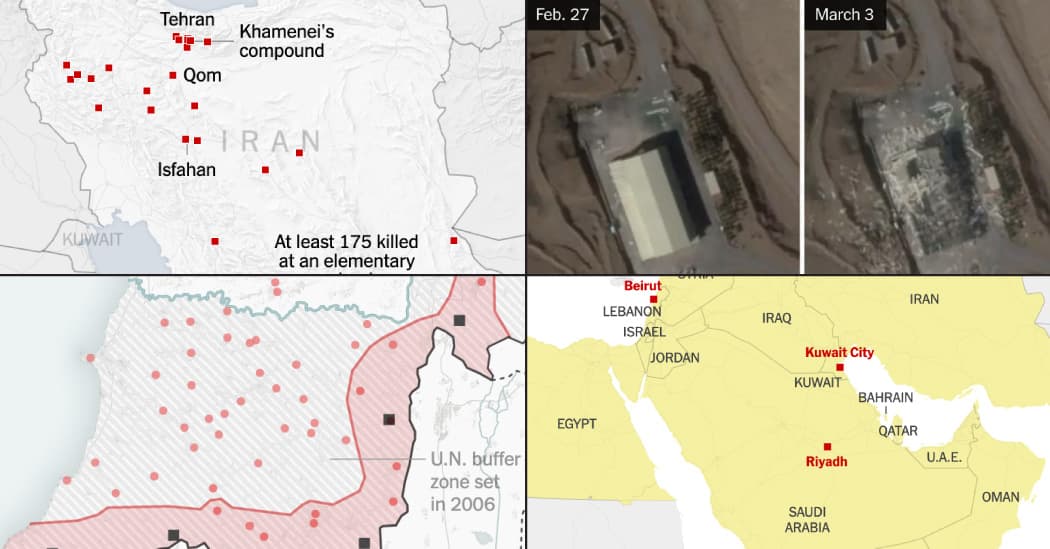
Media outlets documented the sequence of strikes and interceptions as the day unfolded, showing a rapid, multi-front conflict across the region.
Scale and objectives
Reporting by major outlets described the campaign as unusually large in scale: roughly 4,000 targets had been struck by U.S. and Israeli forces across land, air and sea in about a week, reflecting a broad strategy beyond isolated retaliations.
Analysts and the reporting framed U.S. and Israeli objectives as aiming to weaken Iran’s security and intelligence services, to erode or potentially topple Iran’s leadership, to eliminate missile production and launch capabilities, to degrade naval assets and to hinder any pathway to nuclear weapons production.
High-value targets hit
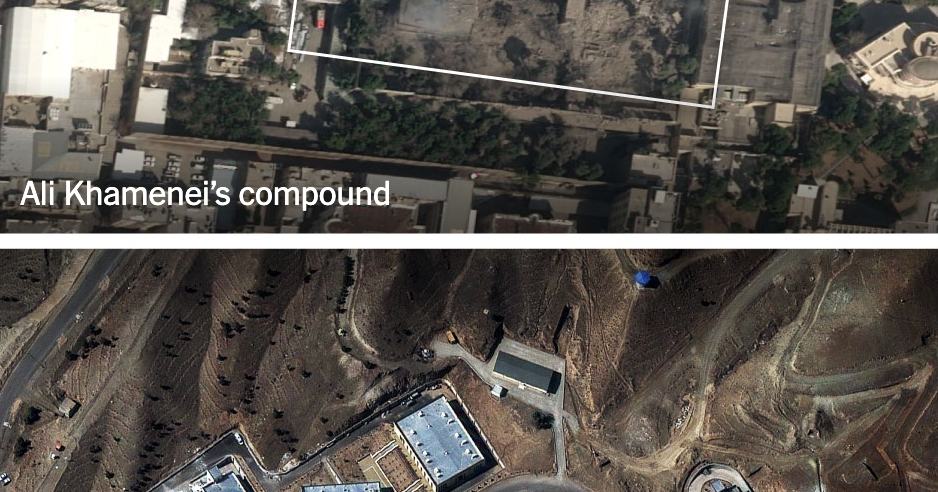
Reporters catalogued strikes on high-value and symbolic Iranian targets, listing hits on sites including the leadership compound attributed to Ali Khamenei, the Natanz nuclear site, the Garmdarah missile base, and a vessel at Bandar Abbas, while some coverage also recorded the striking of diplomatic and air-defense infrastructure.
One outlet noted the attack on the leadership compound in Tehran and reported the death of Ayatollah Ali Khamenei on the first day of the conflict, underscoring the intensity and political consequences of the opening strikes.
Regional spillover
The conflict produced immediate regional spillover and claims of retaliation: reports tracked Iran’s strikes and also recorded that some sites shown in maps had been claimed to have been struck by Iran-aligned militias, while Lebanon—particularly Beirut and the Bekaa Valley—saw Israeli bombardment.
Gulf states’ involvement in missile and drone interceptions, and the wide geographic spread of recorded damage, drew attention to the war’s rapid regionalization beyond Iran and Israel.
Verification and data
Newsrooms emphasised verification challenges and used satellite imagery, mapping and a range of data sources to document damage and trajectories of strikes.
Graphics teams said they rely on official statements as starting points but cross-check with satellite images and correspondent reporting; they published maps of strikes inside Iran and noted damage to energy infrastructure and ships, citing industry data providers for losses and disruptions as of March 10.
More on Iran
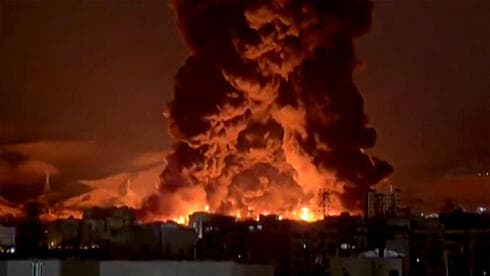
US obliterates military targets on Iran’s Kharg Island, Trump warns
13 sources compared

US Deploys About 2,500 Marines to Middle East After Iran Attacks Gulf Shipping
33 sources compared
FBI Warns of Iranian Drone Plot Based on Unverified Tip; California Says No Credible Threat
10 sources compared

White House Demands ABC Retract Report Claiming Iran Sought To Launch Drone Attacks On California
11 sources compared