Iran-Israel03 March, 20263 min read
US and Israel strikes damage UNESCO World Heritage site Golestan Palace in Tehran
This article is an automated aggregation of coverage from news outlets. Our editorials offer in-depth analysis curated by the NewsCord team.
US and Israel carried out joint airstrikes on Tehran on February 28, 2026 Golestan Palace, a UNESCO World Heritage site, suffered damage from debris and shockwaves

6 outlets told this the same way.
Outlets did split on U.S. Intercepts Iran Message Activating Sleeper Cells After U.S.-Israel Strike Kills Khamenei →
Golestan Palace damage
Iran’s Golestan Palace in Tehran, a UNESCO World Heritage site and former Qajar royal residence, sustained damage on 3 March 2026. Multiple outlets reported the harm resulted from shockwaves and debris from nearby airstrikes that struck central Tehran. Sky News said the palace was damaged by shockwaves from a nearby airstrike.
“On Tuesday 3 March 2026, Iran’s Golestan Palace — a UNESCO World Heritage site in Tehran — was reported damaged by shockwaves from a nearby airstrike.”
KalingaTV reported that strikes tied to a broader U.S.-Israel military offensive on Iranian targets produced shockwaves and debris that damaged windows, doors and other parts of Golestan Palace in central Tehran. Firstpost confirmed that a Qajar-era palace complex sustained damage in recent airstrikes. Nation Thailand located the blast as originating in Arag Square, which it described as inside the buffer zone around the UNESCO‑listed Golestan Palace.

Damage to Golestan Palace
Reported physical impacts to Golestan Palace include broken orsi windows, damaged wooden doors, and mirror work in decorative rooms, with references to the Mirror Throne Room and other historic halls. Nation Thailand said shockwaves "shattered or damaged orsi windows, wooden doors, mirror work and other traditional decorative features, with specific references to the palace’s Mirror Throne Room." KalingaTV described "windows, doors and other parts of Golestan Palace" damaged by shockwaves and debris.
Firstpost listed the complex’s key historic halls when noting the site "sustained damage in recent airstrikes." Sky News reported the palace "was reported damaged by shockwaves from a nearby airstrike."
&w=1920&q=75)
Reports on regional strikes
Sources place the incident in the wider context of a U.S.-Israel military offensive and intensified regional strikes that began on February 28, 2026. Sky News said the strikes "are part of a series of attacks on various targets in Tehran attributed to Israel and the US." KalingaTV described the strikes as "tied to a broader U.S.-Israel military offensive on Iranian targets."
“The strikes are part of a series of attacks on various targets in Tehran attributed to Israel and the US that have been occurring since Saturday.”
Nation Thailand noted the reports "emerged amid intensified regional strikes that began on February 28, 2026—codenamed 'Operation Epic Fury' by the US and 'Operation Roaring Lion' by Israel." Firstpost additionally reported that other high-profile sites across the region were hit during related operations, describing debris and damage to locations including Dubai International Airport, the Burj Al Arab façade and fires on parts of Palm Jumeirah as part of the broader exchanges.
Iran cultural heritage damage
Iranian officials and heritage bodies have signalled formal responses and expressed alarm. Nation Thailand reported that Iran's Cultural Heritage Minister described the damage as an attack on Iran's cultural and national identity and said Tehran will submit a formal report to UNESCO. KalingaTV said the minister visited the site, described the harm as both physical and symbolic to national identity, and said Tehran will formally report the damage to UNESCO.
According to Nation Thailand, UNESCO noted it had previously shared World Heritage site coordinates with parties to reduce accidental harm and said it is monitoring risks and awaiting fuller assessments. KalingaTV added that UNESCO and cultural preservation advocates have voiced concern and urged protection of historic sites. Firstpost described the palace as a repository of manuscripts, photographic and documentary archives, which underscores why officials portray the damage as significant to national heritage.
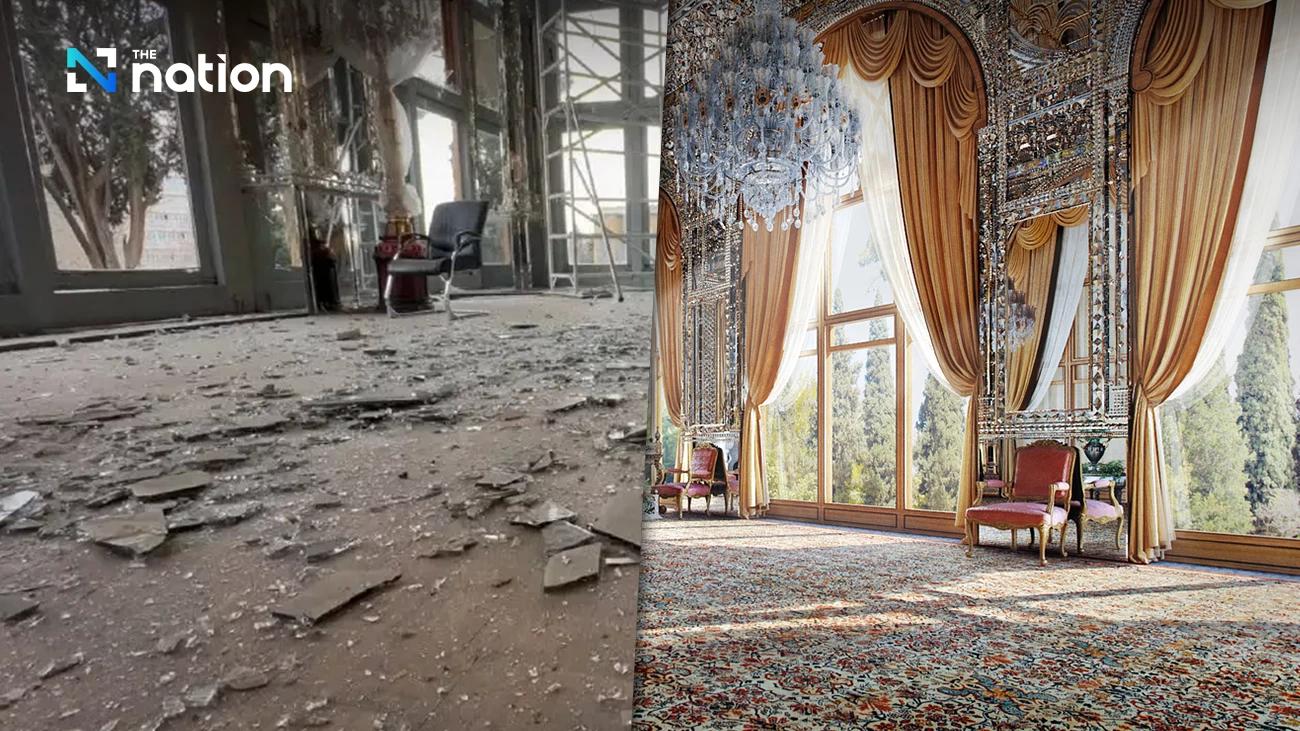
Palace damage assessments
The precise extent of damage to structures and movable artefacts remains unclear and is subject to ongoing assessment and access constraints. KalingaTV cautioned that "detailed structural and artefact assessments are still underway." Nation Thailand warned that "independent verification of the full extent of damage is currently limited by access and ongoing operations."
“Strikes tied to a broader U.S.-Israel military offensive on Iranian targets produced shockwaves and debris that damaged windows, doors and other parts of Golestan Palace in central Tehran, though detailed structural and artefact assessments are still underway.”
Sky News framed the reports as damage "reported" from nearby strikes. Nation Thailand also noted that some museum objects had already been moved to secure vaults during earlier unrest, reducing risk to movable heritage.

This creates uncertainty about losses to portable collections. Firstpost’s account of the palace’s archival holdings and historic halls further emphasises the potential cultural stakes while underscoring the need for fuller, expert assessments.