
U.S. and Israel Unleash Intense Air War on Iran, Surprise Europe
Key Takeaways
- United States and Israel launched a coordinated, large-scale air campaign against Iran
- The campaign employed unprecedented speed and colossal force over several days
- European governments were taken by surprise and received little U.S. consultation
Scale and timing
Sources report that the United States and Israel launched an unprecedented, high-intensity air campaign against Iran beginning on Saturday, February 28, and continuing for several days.
“Matthias Matthijs is senior fellow for Europe at the Council on Foreign Relations”
Le Monde characterises the strikes as an operation of a scale not seen in recent memory and says the two militaries "have been unleashing colossal force against the Iranian regime,"

The Council on Foreign Relations says "The speed and scale of last weekend’s U.S.–Israeli strikes on Iran took most European governments by surprise."
US–Israel military role
Reporting indicates close operational cooperation and a significant U.S. role alongside Israeli forces.
Le Monde quotes U.S. Secretary of Defense Pete Hegseth praising an "operational steamroller" and saying "[The Iranians] are burned," and records Hegseth giving the military "a few days" to seize control of Iranian airspace.
Le Monde also reports the campaign aims to "destroy Iran's launchers and missile factories" and that Hegseth spoke of using laser‑guided bombs up to 2,000 pounds.
The Council on Foreign Relations emphasises that the United States launched the operation "with little to no consultation with its allies in Europe" and was "expecting to use their bases and receive their broad support."
European response
European governments were caught off guard and have responded unevenly.
“Matthias Matthijs is senior fellow for Europe at the Council on Foreign Relations”
The Council on Foreign Relations says European leaders "found themselves scrambling to react" and calls the result a "strikingly disjointed European response."
CFR notes the United Kingdom pursued a "carefully balanced transatlantic posture, opting to combine criticism of the Iranian regime with calls for de‑escalation," a stance CFR says "made nobody at home happy and invited the ire of U.S."
Le Monde adds that U.S. officials did not "clarify the Trump administration's objective," contributing to uncertainty in capitals.
Civilian and diplomatic risks
Observers also flag grave civilian‑risk and political consequences.
Le Monde explicitly raises "serious questions about the number of civilian casualties the Trump administration is prepared to accept," noting officials' talk of using heavy precision bombs and even strikes "including against political targets in Tehran."
The Council on Foreign Relations highlights that Europe's lack of leverage and the U.S. decision‑making process—"leaving Europe in the dark"—exacerbate diplomatic strains and complicate efforts to manage humanitarian and escalation risks.
More on Iran
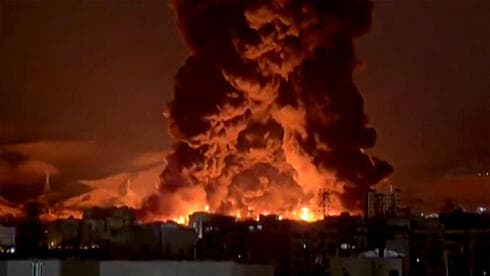
US obliterates military targets on Iran’s Kharg Island, Trump warns
13 sources compared
US Deploys About 2,500 Marines to Middle East After Iran Attacks Gulf Shipping
33 sources compared
FBI Warns of Iranian Drone Plot Based on Unverified Tip; California Says No Credible Threat
10 sources compared

White House Demands ABC Retract Report Claiming Iran Sought To Launch Drone Attacks On California
11 sources compared