Syria07 November, 20252 min read
US and UN Remove Syrian President Ahmad al-Sharaa from Global Terrorist Sanctions List
UN Security Council voted 14-0 to remove Syrian President Ahmad al-Sharaa from terrorism sanctions list US Treasury Department delisted al-Sharaa and Interior Minister Anas Khattab from Specially Designated Global Terrorist list

39 outlets told this the same way.
Outlets did split on France Suspends Police Stun Grenades at High School Protests After 15-Year-Old Loses Hand →
US and UN Lift Syria Sanctions
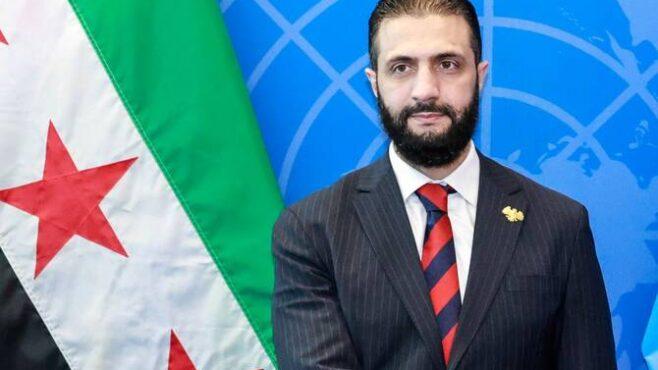
The United States and the United Nations moved in tandem to remove Syria’s new leader Ahmad al‑Sharaa and Interior Minister Anas Khattab from terrorism-related sanctions lists.
“The United States Treasury Department announced on Friday the removal of Syrian President Ahmad al-Sharaa and Syrian Interior Minister Anas Khattab from its Specially Designated Global Terrorist (SDGT) sanctions list. This decision followed a recent development at the United Nations.”
Several outlets describe this action as a significant change in policy toward Damascus.
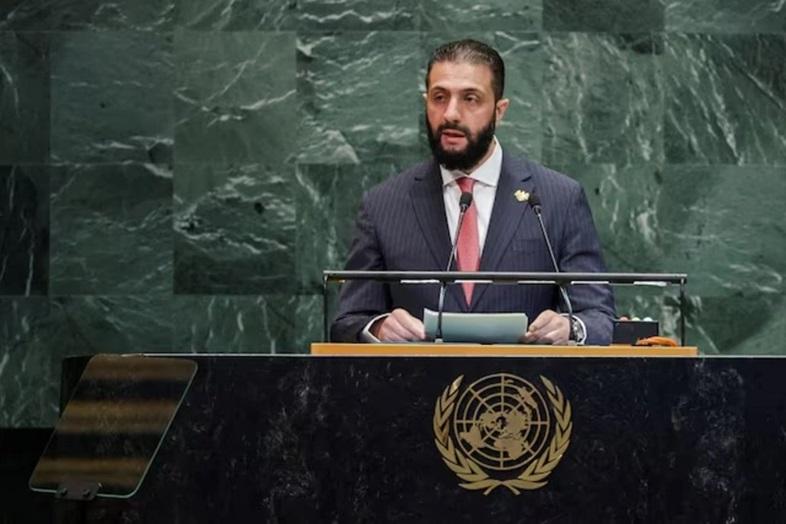
The U.S. Treasury delisted both men from its Specially Designated Global Terrorist roster.
This step was variously described as following or coinciding with UN action.
At the UN, a U.S.-drafted measure was adopted as Resolution 2799 to lift their listing under the ISIL/Al‑Qaeda regime.
The policy shift is closely linked to a high-profile U.S. visit.
Multiple reports say al‑Sharaa is due at the White House on November 10, marking the first such visit by a Syrian president.
Some outlets also note the UN delisting had largely become symbolic due to prior travel waivers for al‑Sharaa.
Al-Sharaa's Rise and Leadership
Accounts of al-Sharaa’s rise and background vary in emphasis across regions. Several sources stress his militant past and ties to groups once linked to al-Qaeda, including leadership in the HTS/Nusra milieu. Other sources highlight his transition into a state leader after Bashar al-Assad’s fall in December 2024 and his stated commitments to counterterrorism and reconstruction.
Timelines also differ on when and how he assumed office. Some outlets say he became transitional president in January after Assad fled. Others simply date his ascent to December 2024 when Assad’s regime collapsed.

Security Council Vote Analysis
Reporting diverges sharply on how the Security Council vote unfolded and why China abstained. Several outlets agree on a 14‑0‑1 result, but others present inconsistent tallies or wording. Coverage also varies on Beijing’s objections: some emphasize procedural or scope concerns, such as time‑limiting the delisting.
“The UN Security Council adopted Resolution 2799... The resolution passed with 14 votes in favor and one abstention from China...”
Others cite broader counterterrorism and foreign‑fighter risks including ETIM. The overall characterization ranges from neutral institutional reporting to celebratory language calling the outcome a “landmark.”
Global Reactions to Syria Delisting
International reactions and follow‑on policy moves are divided by region. European outlets and partners say they will align with the UN’s delisting while maintaining certain security restrictions. UK measures have already followed the UN action.
U.S. messaging presents the delisting as a political signal of a “new era,” alongside Congressional efforts to reduce broader Syria sanctions. Regional governments—from Jordan to Pakistan—publicly supported the resolution’s recognition of Syria’s sovereignty and the opportunity to rebuild. Some reports also mention U.S.–Syria negotiations regarding military basing and security arrangements.
Uncertain Outcomes of Delisting
What follows remains uncertain. Several outlets present the delisting as paving the way for engagement and aid, with some noting concrete pledges. Others stress that long-term effects on regional stability and counterterrorism are unclear and that some designations or conflicts persist.
“The removal lifts financial and travel restrictions on the officials and may pave the way for increased diplomatic engagement with the Syrian government, though the long-term effects on regional stability and counterterrorism remain uncertain.”
Many reports focus on Syria’s reintegration and al-Sharaa’s upcoming White House visit. Other mainstream coverage in the region spotlights unrelated UN diplomacy on Gaza, suggesting differing editorial priorities.