South America14 November, 20252 min read
U.S. Announces 'Operation SOUTHERN SPEAR' To Remove 'Narco-Terrorists' From Western Hemisphere
US launches SOUTHCOM-led military campaign to remove narco‑terrorists and stop drug flow Deployment includes aircraft carrier strike group, multiple Navy ships, F-35s and robotic naval assets

21 outlets told this the same way.
Outlets did split on Alexandre de Moraes Orders Eduardo Bolsonaro Arrest, Cancels Passport, Enforces Four-Year Sentence →
Operation SOUTHERN SPEAR Overview
The U.S. Department of Defense publicly named a new Western Hemisphere campaign "Operation SOUTHERN SPEAR" after Secretary of Defense Pete Hegseth announced the move on X, saying the mission will "defend our Homeland, remove narco-terrorists from our Hemisphere, and secure our Homeland from the drugs that are killing our people."
“US Defence Secretary Pete Hegseth announced ‘Operation SOUTHERN SPEAR’ on 14 November 2025, saying the mission will ‘defend our Homeland, remove narco-terrorists from our Hemisphere, and secure our Homeland from the drugs that are killing our people.’”
The announcement formalizes a Joint Task Force under U.S. Southern Command and was accompanied by the positioning of major naval assets, including an aircraft carrier strike group and other surface ships.

Officials described the aim as removing "narco-terrorists" and protecting the U.S. homeland from drug flows while the Pentagon has steadily expanded counter-drug strikes at sea in recent months.
Opaque operation announcement
The rollout was notable for how little operational detail was provided publicly: Hegseth posted the name and mission goals on X but gave no specifics, and the Pentagon directed reporters back to that post rather than briefing on tactics, rules of engagement, or geographic limits. Multiple outlets explicitly noted the announcement offered no explanation of how the new operation would differ from the intensified naval and air campaign already underway. That informational vacuum has left reporters and analysts tying the naming to activities the Pentagon has already acknowledged at sea.
Maritime strike reports summary
Multiple outlets tie the operation to an ongoing series of lethal strikes against suspected drug-smuggling vessels since early September, though figures and descriptions vary across reports. U.S. sources and regional reporting cite roughly 20–21 strikes and U.S. tallies of 76–80 fatalities, while other outlets report about 80 dead in total. Some accounts quote unnamed U.S. officials or CNN saying strikes left 'no survivors', and others emphasize the campaign's lethality has provoked regional alarm.
“U.S. forces have struck 21 vessels in international waters since early September, killing at least 76 people according to U.S. figures.”
Regional reactions to U.S. operations
Regional governments and analysts reacted with alarm, as Venezuela condemned the expanding U.S. presence as a threat to its sovereignty and ordered large readiness exercises. Colombia and other regional actors have at times limited intelligence cooperation amid concerns about human-rights guarantees.
Several reports say the operation is being read in capitals as pressure on Nicolás Maduro’s government or as a possible pretext for wider action against Venezuelan targets. U.S. officials have reportedly briefed the president on options that include ground strikes.
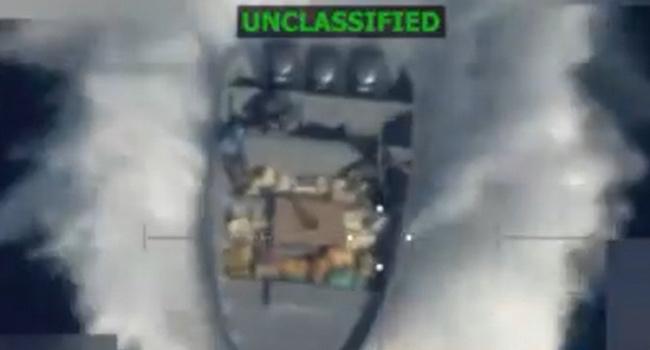
Reporting on maritime strikes
Reporting diverges on the character and scale of the deployment and on legal and ethical framings: some accounts emphasize advanced technology and a sizeable maritime and air footprint, while others describe the naming as formalizing a pattern of extrajudicial strikes that has already cost dozens of lives.
The result is a contested narrative: U.S. officials present a defence-oriented, counter-narcotics rationale, while other outlets stress regional sovereignty, civilian deaths, and the legal and political questions that follow lethal maritime strikes.
