
Iran vows retaliation after U.S. strike on Kharg Island oil hub
Key Takeaways
- U.S. strikes hit Kharg Island military targets, threatening oil infrastructure.
- Iran vows retaliation and threatens UAE ports and American hideouts may be targeted.
- Oil markets spike and Hormuz shipping remains disrupted, risking global supply.
Kharg Island Strike
The United States conducted a major military strike against Iran's Kharg Island on March 13, 2026, targeting what President Donald Trump described as 'every military target' while deliberately sparing the island's vital oil infrastructure.
The strike represented a significant escalation in the ongoing conflict between the U.S.-Israel coalition and Iran, with U.S. Central Command confirming the destruction of naval mine storage facilities, missile storage bunkers, and other military sites while preserving the oil infrastructure.
Kharg Island, located approximately 15-30 miles off Iran's southern coast in the Persian Gulf, serves as the primary export terminal for roughly 90% of Iran's crude oil exports, making it the economic lifeline of the Islamic Republic.
The operation was described by Trump as 'one of the most powerful bombing raids in the history of the Middle East,' though Iranian media reported more than 15 explosions were heard during the attacks while maintaining that oil facilities remained intact.
Iran's Retaliation Threats
Iran vowed immediate and severe retaliation following the U.S. strike on Kharg Island, with Iranian military officials warning they would target 'all oil, economic, and energy infrastructures belonging to oil companies across the region that have American shares or cooperate with America.'
The Islamic Republic's joint military command issued an unprecedented warning to residents of the United Arab Emirates, urging civilians to immediately evacuate the busiest port in the Middle East and two other Emirati ports, claiming the U.S. used these locations as 'hideouts' to launch strikes on Iranian islands.

Iranian Foreign Minister Abbas Araghchi went further, stating that the U.S. attacks on Kharg Island and Abu Musa Island originated from UAE territory, specifically mentioning Ras Al-Khaimah and a location 'very close to Dubai,' which he described as 'highly dangerous' and 'unacceptable.'
This marked the first time Iran openly threatened non-U.S. assets in a neighboring country during the conflict.
Regional Escalation
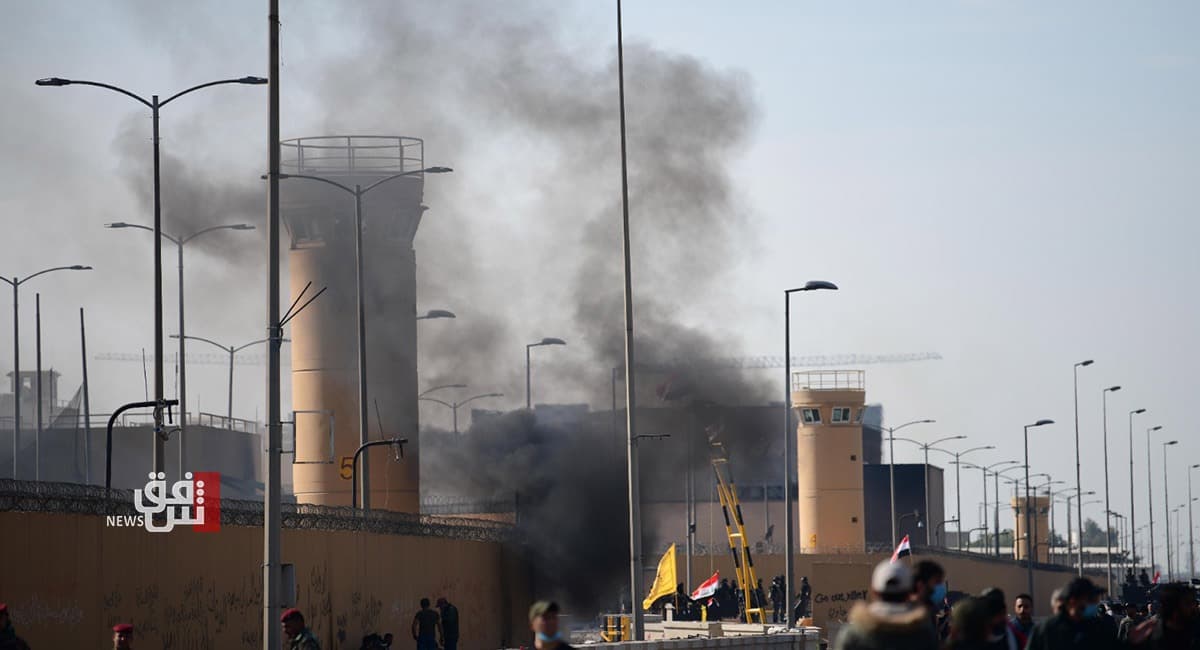
The conflict rapidly escalated across the Middle East following the Kharg Island strike, with Iran launching missile and drone attacks targeting multiple countries in the region and the U.S. Embassy compound in Baghdad suffering a direct hit when a missile struck a helipad inside the diplomatic facility.
“Bitcoin slipped below $71,000 on Saturday morning as geopolitical escalation in the Middle East triggered a sharp risk-off move across markets”
In the United Arab Emirates, debris from an intercepted Iranian drone struck an oil facility in Fujairah, causing a significant fire and further increasing global anxiety about oil supplies.
Qatar reported intercepting two missiles after blasts were heard in the capital Doha, leading authorities to evacuate certain key areas.
Saudi Arabia intercepted 16 drones in its eastern region and a ballistic missile launched toward Al-Kharj, demonstrating the widening regional impact of the conflict.
Lebanon's humanitarian crisis deepened dramatically, with nearly 800 people killed and 850,000 displaced as Israel launched waves of strikes against Iran-backed Hezbollah militants, while Israel claimed its air force had hit more than 200 targets in Iran in the last 24 hours.
Market Impact
The economic consequences of the Kharg Island strike and regional conflict became immediately apparent as global oil markets reacted with significant price volatility.
Brent crude prices jumped above $100 per barrel for the second consecutive day, with some platforms showing trades around $103 per barrel compared with about $100 the previous day, representing a surge of more than 40% versus pre-war levels.

The International Energy Agency described the current situation as the 'largest supply disruption in the history of the global oil market,' while analysts warned that any sustained damage to Kharg's export infrastructure could remove large portions of Iranian crude from the market, tightening global supply and pushing prices sharply higher.
JPMorgan's global commodity research team warned that any damage to Kharg Island could severely disrupt Iran's oil production and exports, noting that with production near 3.3 million barrels per day and exports around 1.5 million barrels per day, 'as much as half of Iran's output could be at risk if the Kharg hub remains offline.'
The export buffer previously estimated at about 20 days could disappear almost immediately, according to the analysts.
Military Buildup
Military tensions continued to escalate as the United States announced the deployment of additional forces to the Middle East, with an American official confirming that 2,500 more Marines and an amphibious assault ship were being sent to the region.
Elements from the 31st Marine Expeditionary Unit and the amphibious assault ship USS Tripoli were ordered to the Middle East, with the vessel spotted by commercial satellites sailing near Taiwan, putting it more than a week away from the waters off Iran.

Earlier in the week, the U.S. Navy had 12 ships, including the aircraft carrier USS Abraham Lincoln and eight destroyers, operating in the Arabian Sea.
Meanwhile, U.S. Central Command confirmed that a KC-135 refueling aircraft crashed in western Iraq, with four of the six crew members confirmed dead, though the Pentagon stressed that the loss was not caused by hostile fire.
The total number of U.S. service members on the ground in the Middle East remained unclear, though Al-Udeid Air Base in Qatar typically houses around 8,000 American troops.
Defense Secretary Pete Hegseth stated that over 15,000 enemy targets have been struck — more than 1,000 a day since the war began.
Diplomatic Response
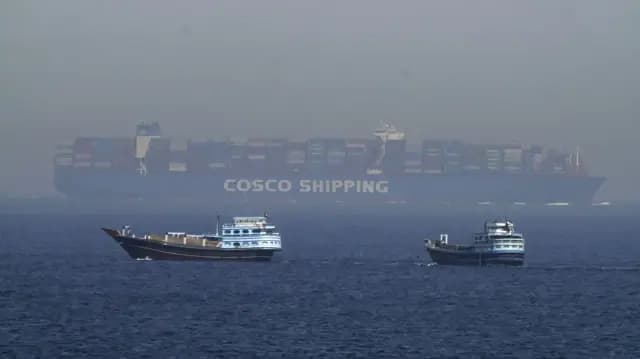
International diplomatic efforts to de-escalate the conflict faced significant challenges as Iran's new Supreme Leader Mojtaba Khamenei issued his first public statement since succeeding his slain father, vowing to keep the Strait of Hormuz closed and continue attacking Gulf Arab neighbors as leverage against the United States and Israel.
Khamenei called on Iran's neighbors to 'shut down' U.S. bases on their territory and warned that Iran would continue to target them, stating 'I assure everyone that we will not neglect avenging the blood of your martyrs.'
Meanwhile, Saudi Arabia reportedly backed off from diplomatic talks after it came under repeated attack, while European leaders expressed concern about the conflict's impact on global energy markets.
In a dramatic diplomatic shift, the United States temporarily eased sanctions on the purchase of Russian oil, with European Council President Antonio Costa calling the decision 'very concerning' as it 'impacts European security' and 'weakens sanctions increases Russian resources to wage the war of aggression against Ukraine.'
Trump, meanwhile, called for international support to reopen the Strait of Hormuz, publicly suggesting that 'China, France, Japan, South Korea, the UK, and others' might need to send warships to keep the vital waterway 'open and safe,' marking the first time he acknowledged that the U.S. might not be able to reopen the strait on its own.
More on Iran
Pro-Iran Group Strikes U.S. Embassy in Baghdad
17 sources compared

Iran Threatens UAE Ports, Urges Evacuation as US Strikes Kharg Island
86 sources compared
Iran Considers Allowing Limited Oil Tanker Passage Through Strait of Hormuz if Traded in Yuan
10 sources compared
US Strikes Iran's Kharg Island Military Sites
14 sources compared