USA03 January, 20264 min read
U.S. Captures President Nicolás Maduro in Venezuela Raid, Maduro Heads to New York for Indictment
This article is an automated aggregation of coverage from news outlets. Our editorials offer in-depth analysis curated by the NewsCord team.
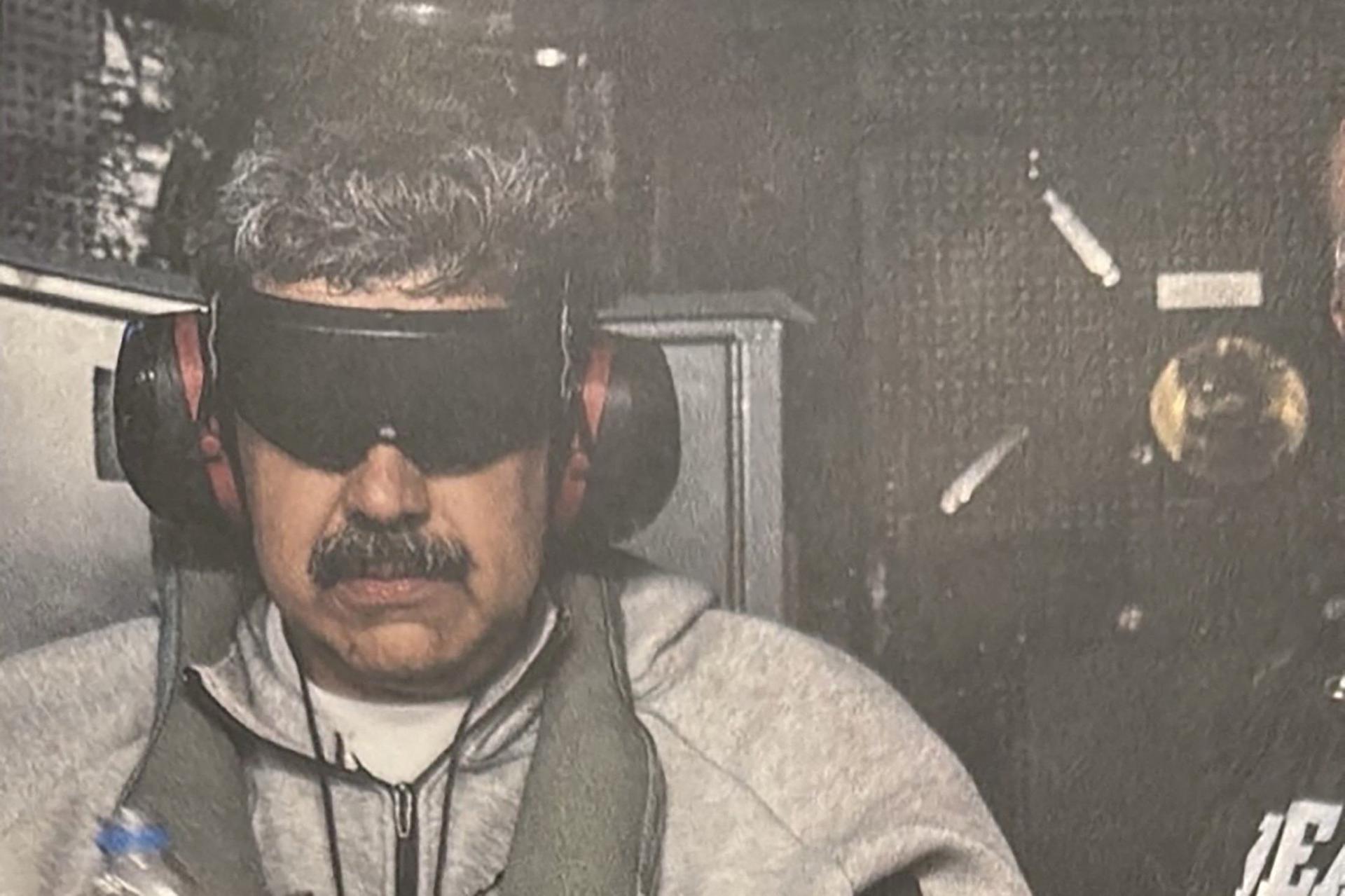
President Nicolás Maduro captured by U.S. forces during raid; moved to New York for indictment. President Nicolás Maduro arrived in New York City to be tried.

Maduro Capture Operation
The United States conducted a military operation in Venezuela resulting in the capture of President Nicolás Maduro.
“President Nicolás Maduro has arrived in New York City to be tried by the U.S. Department of Justice on criminal charges related to drug trafficking and weapons possession. His capture began early Saturday morning with multiple explosions reported in Caracas, Venezuela, including at military installations.”
Maduro is now en route to New York City to face criminal charges including narcoterrorism conspiracy, cocaine importation conspiracy, and weapons possession.
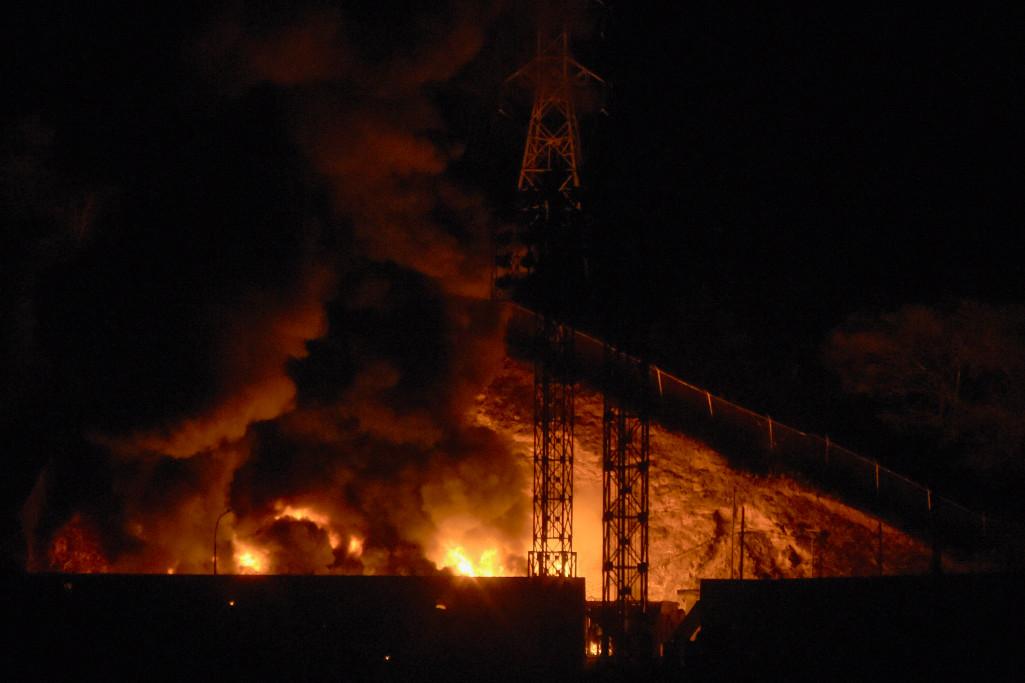
The operation, labeled 'Operation Absolute Resolve,' involved multiple explosions in Caracas at military installations.
The operation was carried out by U.S. Army Delta Force and the 160th Special Operations Aviation Regiment.
Maduro and his wife, Cilia Flores, were captured and flown from Venezuela to the USS Iwo Jima before being transported to New York.
They have been indicted in the Southern District of New York on multiple charges.
The operation lasted fewer than 30 minutes but resulted in significant casualties.
Venezuelan officials reported at least 80 people killed, including both civilians and military personnel.
International Law Violations
The U.S. operation represents a significant violation of international law, specifically breaching Article 2(4) of the UN Charter. This article prohibits the use of force against other states. Legal experts argue that unlike previous U.S. boat strikes in international waters against stateless vessels, this operation directly struck Venezuelan territory.
The operation clearly violated the prohibition on the use of force by abducting the country's president. While the U.S. may attempt to justify the action under self-defense against drug trafficking, this legal justification is questionable. International law standards require an 'armed attack' to trigger the right of self-defense.
The operation also potentially initiates an international armed conflict. This would trigger the application of the Geneva Conventions and create various legal obligations. These include treatment of Venezuelan nationals in the U.S., custody of Maduro and his wife, and accountability for any war crimes.
U.S. Statements & Regional Reactions
President Trump celebrated the operation as an 'extraordinary success' and announced that the United States will 'run the country' until a transition can take place. Trump described the operation as having 'breathtaking speed, power, precision and confidence.' The operation involved more than 150 U.S. aircraft launched from 20 different bases across the Western Hemisphere.
“In a nationwide address, Trump described the raid as 'an extraordinary success overnight with breathtaking speed, power, precision and confidence.'”
Trump emphasized that 'not a single American service member was killed, and not a single piece of American equipment was lost.' Regional reactions have been mixed, with Argentina's President Javier Milei celebrating the capture. Milei called it 'a decisive advance against narcoterrorism in the region.'
Guyana has activated its 'security architecture' due to concerns about potential spillover effects. The U.S. has designated a team to run Venezuela.
Secretary of State Marco Rubio is engaging with Vice President Delcy Rodríguez. Rodríguez is constitutionally obligated to hold elections within thirty days following Maduro's removal.
Monroe Doctrine Context
The operation draws explicit connections to the Monroe Doctrine. This 19th century policy has historically been invoked to justify U.S. military interventions in Latin America. Political scientists have noted that Venezuela has frequently served as 'the pretext or the trigger for a lot of corollaries to the Monroe Doctrine' throughout history.
These corollaries extend from the late 1800s through Trump's previous administration. Trump himself cited America's fifth president in justifying the capture. Some now call it 'the Don-roe Doctrine.'

The operation represents the first concrete implementation of Trump's new National Security Strategy. This strategy has a heavy emphasis on the Western Hemisphere.
Trump explicitly mentioned Colombia and Cuba as countries whose leaders should now 'know the consequences of not cooperating with the United States.' This approach signals a return to more direct U.S. engagement in the region after years of reduced military presence.
Future Challenges & Winners
The U.S. now bears significant responsibility for Venezuela's future political trajectory. Challenges include security concerns from gangs, paramilitary groups, guerrillas, and transnational cartels. While U.S. forces are expected to provide security around critical infrastructure, broader public security protection of citizens remains pressing.
“The challenge will be ensuring a 'safe and judicious transition' in a country where many entrenched actors are likely to resist meaningful change, but where real change is fundamental to US interests and to the Venezuelan people.”
The operation marks the most consequential moment in recent Venezuelan history and for the broader Latin American region. It goes beyond a simple extradition to represent a full-scale regime-change effort. Hundreds of political prisoners remain imprisoned, and their fate has become a top priority concern.

The challenge will be ensuring a 'safe and judicious transition' in a country with entrenched actors resisting change. Real change is fundamental to U.S. interests and to the Venezuelan people.
The operation's success has created winners including U.S., regional, and global security. The Venezuelan people, who have long sought Maduro's removal, are also winners of this operation.