South America03 January, 20262 min read
U.S. Captures Venezuelan President Nicolas Maduro and First Lady After Large-Scale Strike
United States conducted a large-scale military strike against Venezuela U.S. forces captured President Nicolás Maduro and his wife and flew them out
45 outlets told this the same way.
Outlets did split on Alexandre de Moraes Orders Eduardo Bolsonaro Arrest, Cancels Passport, Enforces Four-Year Sentence →
US strike claims in Venezuela
U.S. President Donald Trump announced on social media that the United States carried out a "large-scale strike" on Venezuela and that President Nicolás Maduro and his wife Cilia Flores had been captured and "flown out of the country."
“The United States, President Donald Trump announced on his Truth Social account, carried out a ‘large scale military strike’ on Venezuela and captured President Nicolás Maduro and his wife Cilia Flores, saying they were ‘flown out of the country’ and that the operation involved U.S. law enforcement.”
Those claims were echoed across multiple outlets.

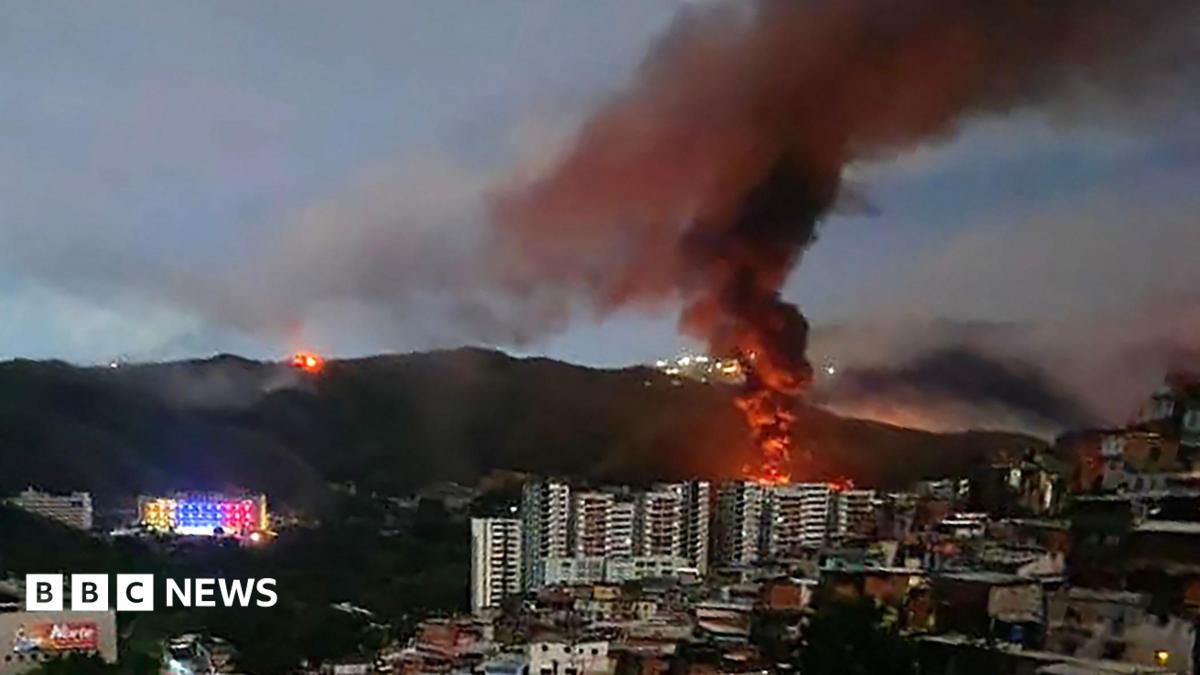
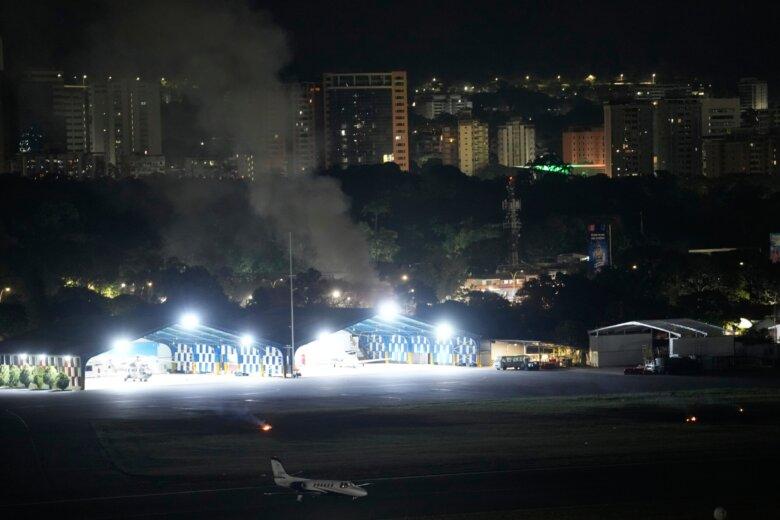
Explosions, low-flying aircraft and fires were reported in and around Caracas and nearby states.
Venezuelan authorities called the action a "military aggression" and demanded proof of life as Maduro’s whereabouts remained unverified.
Operation reporting and framing
Reporting on how the operation was executed varies: several outlets cite U.S. special-operations involvement, with CBS News reporting Delta Force participation, while tactical accounts highlight rotary-wing special operations, helicopters firing rockets in footage, and a larger U.S. naval and air presence that had been built up in the region in preceding months.
At the same time, President Trump and other U.S. statements framed the mission as conducted in conjunction with U.S. law enforcement, blending law-enforcement and military language.

Global reactions to strikes
Regional and international reactions were swift and sharply divided. Venezuela declared a state of emergency and called the attacks an 'imperialist attack' and an 'invasion'. Allies such as Russia and Iran condemned the strikes as armed aggression.
“Maduro’s government accused the U.S. of attacking civilian and military sites, calling it an ‘imperialist attack’ and urging citizens into the streets.”
Colombia warned of risks to the border and of potential refugee flows. Protests erupted in multiple U.S. cities. Some U.S. officials and allied politicians portrayed the action as a law-enforcement measure aimed at bringing Maduro to U.S. justice.
Legal and political fallout
Major questions remain about legality, congressional notification, and the political aftermath. Senators and legal experts quoted in multiple outlets questioned whether the strikes and an arrest operation in a sovereign state fit constitutional and international law norms. Supporters point to indictments and past U.S. anti-drug measures as justification, and observers repeatedly compared the actions to earlier U.S. interventions in Latin America, notably the operation against Panama's Noriega.
Human cost and uncertainty
Beyond politics and tactics, reports emphasize the human cost, disrupted civilian life and lingering uncertainty. Media outlets cite explosions, fires and widespread power outages.
“Residents of Caracas reported explosions, aircraft overhead and power outages beginning around 2 a.m.; witnesses said blasts occurred near military installations.”
Venezuelan authorities are compiling tallies of the killed and injured, but independent verification remains limited. The full humanitarian toll and operational consequences, including who governs next, refugee flows and diplomatic fallout, remain unresolved.