
U.S. Chief of Staff Sets Timetable for Military Operation Against Iran
Key Takeaways
- Iran appears to pace escalation, pressuring Washington on timing.
- The operation reportedly advanced beyond the initial timetable set by the Joint Chiefs.
- Shifting, volatile end goals shape the U.S.–Israeli approach toward Iran.
Timeline Clash
Iran’s pace and Washington’s shifting posture have become the central tension in the run-up to, and conduct of, a U.S.-Israeli operation against Iran, according to the sources.
“Iran is setting the pace—while Washington risks surrendering control of time, cost, and outcome By : The Editorial Board, Opinion The choreography is no accident”
An editorial in yalibnan frames the contest as one where “Iran is setting the pace—while Washington risks surrendering control of time, cost, and outcome,” arguing that “nothing happens on America’s timeline.”

The same piece describes Tehran’s approach as “time warfare—a strategy refined over decades by Tehran to stretch negotiations, multiply channels, and avoid decisive commitments while conditions on the ground shift in its favor.”
It adds that “The Strait of Hormuz—the world’s most critical energy artery—has been turned into a pressure valve,” with “Ships wait” and “Insurance costs spike.”
In parallel, the sources describe Washington officials publicly insisting they are not constrained by time, including Defense Secretary Pete Hegsethinsists, “we have all the time in the world.”
The editorial board then links that posture to a strategic disadvantage, writing that “in this contest, time is power,” and warning that “Indecision is itself a decision—and it favors Tehran.”
The same editorial quotes a bottom-line warning: “The world is no longer watching the crisis—it is paying for it. And the longer Washington hesitates, the more Tehran defines the cost.”
Operation Timetable
Multiple sources lay out a detailed sequence for the U.S. military operation in Iran, including named officials, specific times, and the scope of the first day.
In a report from الشرق الأوسط, American General Dan Kin, the Chairman of the Joint Chiefs of Staff, “announced the initial timetable and some details about the military operation in Iran” on Monday.
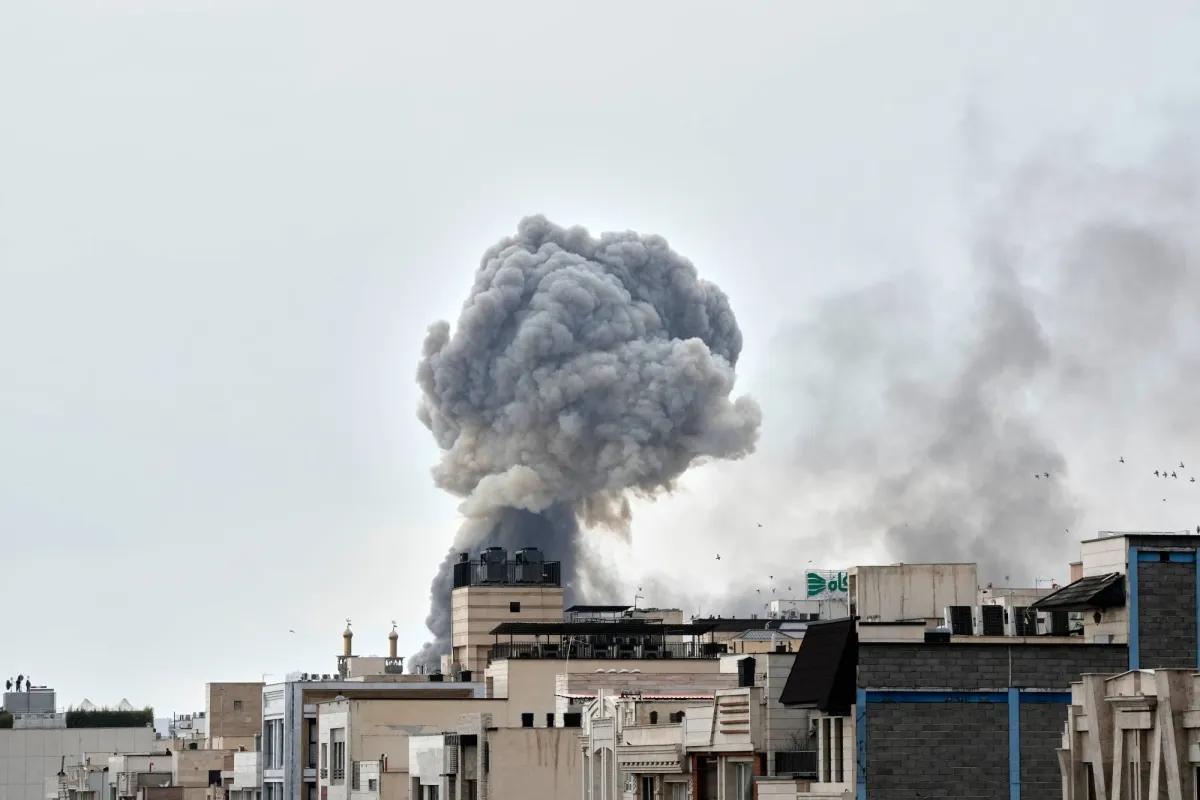
The same account says that by 3:38 p.m. on February 27, Eastern Time (2038 GMT), the U.S. Central Command had received the “final launch order” from President Donald Trump indicating that the “Epic of Wrath” operation had been approved.
It describes preparations as already underway, including air-defense batteries testing systems, pilots and air crews training on the strike sequence, aircraft crews loading weapons, and “two carrier groups began moving toward launch points.”
The report then states that by 1:15 a.m. on February 28, Eastern Time (06:15 GMT / 9:45 a.m. Iran time), “more than 100 aircraft took off from land and sea, 'to form a single synchronized wave.'”
It further says the daytime assault was based on a “surprise move carried out by the Israeli Defense Forces, with the help of U.S. intelligence agencies,” and that the initial strikes used Navy Tomahawk missiles while ground forces fired “long-range precision weapons.”
The same source claims the assault “struck more than 1,000 targets in the first 24 hours,” and it describes the first phase as focusing on “Iran's leadership and command-and-control infrastructure, the naval forces, ballistic missile sites, and intelligence infrastructure.”
Troops, Nuclear Claims
The sources also describe how President Donald Trump discussed the possibility of ground action and the rationale for striking Iran, while other reporting emphasizes how the operation’s timeline and objectives shifted.
“On Monday, American General Dan Kin, the Chairman of the Joint Chiefs of Staff, announced the initial timetable and some details about the military operation in Iran”
In صحيفة عاجل, Trump told The Washington Post that he “does not rule out sending American ground troops to Iran if necessary,” and the report says he confirmed that the “Epic of Anger” operation was “far ahead of the scheduled timeline,” with “dozens of senior officials in Tehran had been eliminated.”
The same source says Trump told Britain’s Daily Mail yesterday that he estimates the war would last about four weeks, and then “today hinted to The Washington Post that this timeframe could be shortened.”
It adds that Trump said he made the final decision to launch the strike after “the final talks held last Thursday in Geneva,” partly because of intelligence indicating Iran had “secretly restarted work on its nuclear projects.”
Trump is quoted as saying he did the “right thing,” and the report says he argued that “allowing the Iranians to possess a nuclear weapon would be worse than a regional conflict.”
The same account says Israeli Channel 12 had quoted an Israeli official weighing with the United States the possibility of sending ground troops to Iran.
Separately, الجزيرة نت portrays the broader U.S.-Israeli war aims as volatile, describing declared goals ranging from destroying nuclear facilities and missile capabilities to weakening Iran’s regional influence and inciting opposition to overthrow the regime.
Conflicting End Goals
The الجزيرة نت report emphasizes that the Trump administration presented “a series of volatile and sometimes conflicting end goals” for the U.S.–Israeli war on Iran, and it ties those shifting aims to changes in the declared timeline.
It says the stated objectives ranged from “destroying its nuclear facilities and missile capabilities” to “weakening Iran's military power and its regional influence,” to “inciting opposition to overthrow the regime,” and to “advancing Israeli interests.”
The same source says critics argue the changing aims indicate “a lack of planning for this conflict and its repercussions,” while it also says more questions were raised about Washington’s ultimate objective in the war and its divergence from Israel’s ambitions and goals.
The report lays out a sequence of dates and statements, beginning with February 28, when Trump urged the Iranian people to “take the reins of governance in their country” and said it “perhaps” would be “their only opportunity for generations to come.”
It then describes February 28 as also focused on weakening Iran’s military, with Trump saying the United States would deny Iran the capability to possess a nuclear weapon, while Tehran says its nuclear program is for peaceful purposes and Iran does not possess nuclear weapons.
The report says Trump insisted he would end what he described as the Iranian ballistic missile threat, and it quotes Trump saying Iran’s long-range missiles “can now threaten our friends and close allies in Europe, our forces stationed abroad, and could soon reach U.S. soil.”
The same report also records a sequence of explanations for why the U.S. attacked, including Secretary of State Marco Rubio saying, “We knew there would be an Israeli operation, and we knew that would lead to an attack on American forces,” and Trump later contradicting Rubio by saying he ordered U.S. forces to join Israel’s attack because he believed Tehran was about to strike first.
Casualties and Air Defense
While the editorial framing stresses time as leverage, the operational reporting in الشرق الأوسط provides concrete details about casualties, defensive systems, and the continuing nature of the campaign.
“Iran is setting the pace—while Washington risks surrendering control of time, cost, and outcome By : The Editorial Board, Opinion The choreography is no accident”
The same report says that “four American soldiers were killed and four were seriously injured since the operation began,” and it places those losses within the broader timeline it describes for the “Epic of Wrath” operation.
It also describes the U.S. effort to “disable, degrade, and hinder Iran's ability to see, communicate, and respond before the attack,” attributing those steps to “The Cyber Command and Space Command.”
For the strike itself, it specifies that the initial wave was “more than 100 aircraft” and that the assault “struck more than 1,000 targets in the first 24 hours,” while also describing the use of Navy Tomahawk missiles and “long-range precision weapons.”
The report then says the operation continues, supported by “Patriot and THAAD batteries,” and it adds that “naval destroyers” are capable of intercepting ballistic missiles and that they “intercept hundreds of missiles targeting American and partner forces.”
It further states that “the threat from attack drones remains 57 hours after the start of the attack,” tying the continuing danger to a specific elapsed time.
The editorial in yalibnan, meanwhile, argues that the Strait of Hormuz has become a “pressure valve,” with “Ships wait” and “Insurance costs spike,” linking the operational tempo to broader economic risk.
More on Iran

Iran’s Foreign Minister Abbas Araghchi Arrives in Islamabad as Trump Cancels US Envoys
15 sources compared

Netanyahu Orders IDF To Vigorously Strike Hezbollah Targets In Lebanon
17 sources compared

Iranian Foreign Minister Abbas Araghchi Meets Oman’s Sultan Haitham bin Tariq in Muscat
14 sources compared

Iran FM Abbas Araghchi Meets Pakistan PM Shehbaz Sharif as Trump Cancels Envoys
127 sources compared