
U.S. Could Follow 1980s Tanker War Model to Protect Ships in Strait of Hormuz
Key Takeaways
- U.S. considering revival of 1980s Tanker War model for Hormuz.
- 1980s strategy protected Kuwaiti ships via U.S.-led Earnest Will convoys.
- Current tensions feature mines and fast boats; U.S. boosts presence, seeks diplomacy.
Hormuz, mines, and escorts
A new round of tensions in the Strait of Hormuz has revived comparisons to the 1980s “Tanker war,” when Iran targeted shipping during its war with Iraq and U.S. warships stepped in to escort Kuwaiti tankers.
“On April 20, the United States fired at and then seized an Iranian-flagged container ship close to the Strait of Hormuz in the northern Arabian Sea, amid its blockade of Iranian ports”
In the current crisis described by the Associated Press, “Naval mines bobbing in the waters of the Persian Gulf” threaten oil tankers while “Iranian speed boats raking ships with machine-gun fire” operate in the strait, with “the United States right in the middle of the fight.”
The AP frames the situation as distinct from the “current conflict between Iran and the U.S., paused by a shaky ceasefire,” and instead points to the earlier pattern of attacks on maritime commerce and U.S. escort operations.
The AP says the U.S. could “follow that model now and become more aggressive to protect ships passing through the strait,” noting that the waterway carries “20% of the world’s traded oil and natural gas” in peacetime.
It also notes that the U.S. has already conducted “more limited escorts of ships that came under attack in the Red Sea in recent years,” and that President Donald Trump said he ordered the U.S. military to “shoot and kill” small Iranian boats.
The AP cautions that offering escorts in Hormuz “wouldn’t be so easy,” because “Military technology has advanced since the ‘Tanker war.’”
What the 1980s model was
The Associated Press describes the “Tanker war” as growing out of the “fierce eight-year war between Iraq and Iran in the 1980s,” with Iraq first targeting Iranian oil infrastructure and tankers in the Persian Gulf.
It says Iran responded with “a concerted campaign of its own against ships in the region, including laying mines,” and that Iraq ultimately would attack “over 280 vessels to Iran’s 168,” according to the U.S. Naval Institute.
The AP says the U.S., which supported Iraqi dictator Saddam Hussein with “intelligence, weaponry and other aid,” launched “Operation Earnest Will” and began escorting Kuwaiti oil tankers that were “reflagged as American.”
It emphasizes that the operation carried real risks, including that the Kuwaiti supertanker Bridgeton “struck a mine while under U.S. escort at the start of the operation.”
The AP also recounts an Iraqi missile strike on the USS Stark that “killed 37 sailors,” and an Iranian mine attack that “wounded 10 on the USS Samuel B. Roberts.”
It further notes a fatal U.S. mistake when it “mistook a commercial airliner for a fighter jet and shot it down, killing all 290 people aboard Iran Air flight 655.”
Parallels and why it differs
Al Jazeera frames the current Hormuz crisis as a “Tanker War redux?” while also insisting the situation is “different,” and it anchors the comparison in a specific recent incident.
“Battleground Hormuz: US Using Its 1980s’ Tanker War Model Against Iran”
It says that “On April 20, the United States fired at and then seized an Iranian-flagged container ship close to the Strait of Hormuz in the northern Arabian Sea,” describing it as occurring “amid its blockade of Iranian ports.”
Al Jazeera links the scene to the 1980s when “both countries fired on each other’s tankers in the Strait of Hormuz, seeking to cripple each other’s economies,” and it uses that parallel to set up a comparison of “parallels and differences between the situations then and now.”
It also provides a timeline for the older conflict, saying “The war between Iran and Iraq began in 1980” after then-Iraqi President Saddam Hussein launched a full-scale invasion of Iran following Iran’s 1979 Islamic revolution.
Al Jazeera says that in 1984 “this war reached the Gulf when Iraq attacked Iranian oil tankers,” and that Iran retaliated by firing at oil tankers belonging to Iraq and its allies.
It adds that “In November 1986, when Iran struck Kuwait’s ships, Kuwait asked for foreign help,” and that “The US, led by then-president Ronald Reagan, launched Operation Earnest Will in July 1987.”
U.S. moves, European contacts
The Al-Sharq report describes a broader set of actions around Hormuz that includes both U.S. military deployments and international contacts with Iran, while also emphasizing uncertainty about timing for any escorting.
It says the U.S. Department of Defense is “seeks to bolster its military presence there by transferring more Marines and warships,” and it cites “Three American officials” telling The Wall Street Journal that “U.S. Defense Secretary Pete Hegseth approved a request from CENTCOM” to deploy elements of an “Amphibious Readiness Group with an Expeditionary Unit of Marines.”

The report adds that “this force typically consists of several warships and around 5,000 Marines,” and it says “the amphibious assault ship USS Tripoli, based in Japan and with Marine forces aboard, is currently heading to the Middle East.”
It also says the Pentagon is “considering sending additional warships to the Middle East in preparation to escort oil tankers through the Strait of Hormuz,” but that “American forces would not begin escorting ships until the threat from Iran has diminished,” which “could take up to a month or more.”
On the diplomatic side, the report says “France and Italy have begun talks with Iran aiming to negotiate an agreement to ensure safe passage for their ships through the Strait of Hormuz,” while noting “Rome denied the report.”
The report also says “France is deploying about 12 warships, including a carrier strike group, in the Mediterranean and the Red Sea and perhaps in the Strait of Hormuz,” and it cites Bloomberg on Iran arranging “private transport to repatriate about 180 sailors from India.”
What’s at stake now
The stakes in the Strait of Hormuz crisis are described in terms of shipping disruption, energy prices, and the risk of escalation at sea, with multiple outlets tying the current situation to the earlier tanker-war logic.
“As a subscriber, you can share up to 3 articles each month with friends for free”
Al Jazeera says that “Shipping through the strait collapsed by 95 percent,” and it links that collapse to the price of oil, stating that “the price of oil – 20 percent of global supplies of which are shipped this way – soaring above $100 a barrel.”
It also says the current hostilities began when “Tehran… closed passage to all vessels after the US and Israel began bombing the country,” and it reports that on “March 4, the Islamic Revolutionary Guard Corps (IRGC) declared that it was in full control of the strait.”
The Associated Press similarly emphasizes that the U.S. would need to create a cordon Iran couldn’t pierce, warning that “just one Iranian missile, drone or boat-borne attack would bring back the fear that now pervades the strait.”
The Al-Sharq report adds that shipping has been “nearly completely halted since the United States and Israel began striking Iran on February 28,” and it says that this pushed “global oil prices to levels not seen since 2022.”
It also quotes Defense Secretary Pete Hegseth saying the closure is “effectively due to the war with Iran, which has driven oil prices higher,” and that it “would not pose a long-term problem for the United States or the world.”
More on Iran
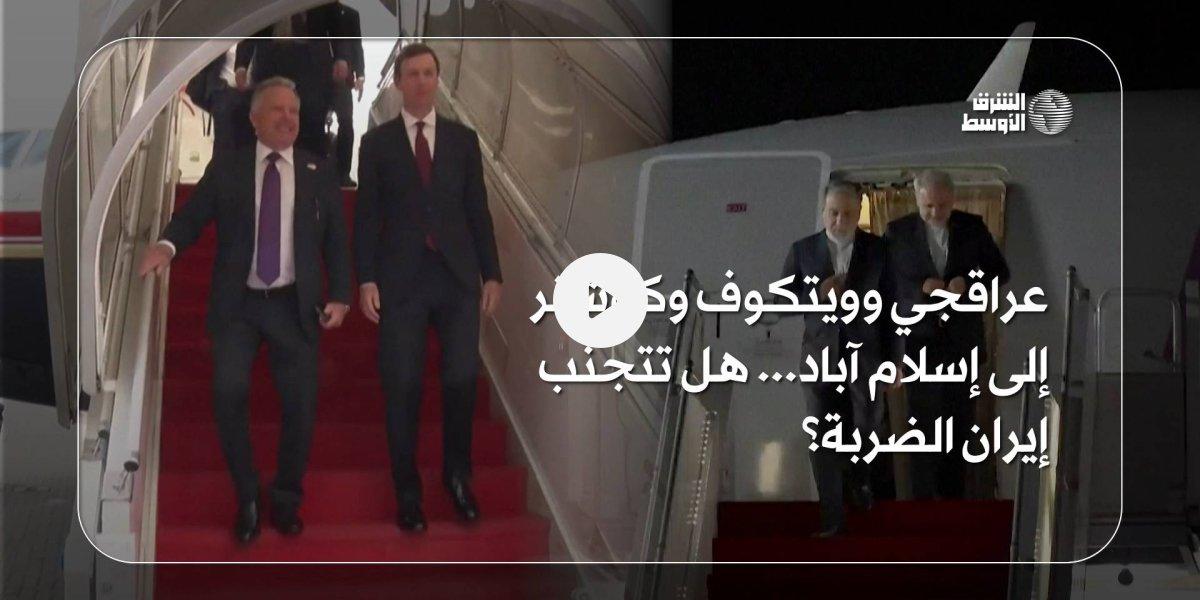
Trump Sends Steve Witkoff and Jared Kushner to Pakistan for Direct Iran Talks
31 sources compared

Iran’s Abbas Araghchi Travels to Pakistan as Trump Sends Witkoff and Kushner for Ceasefire Talks
36 sources compared
Trump Orders U.S. Forces To Board Iranian Ships Amid Hormuz Blockade
17 sources compared

Ahmad Vahidi and the IRGC Control Iran, Jerusalem Post Says Mojtaba Khamenei Not Leading
22 sources compared