South America25 October, 20253 min read
US Deploys Aircraft Carrier Strike Group to Latin America to Escalate Drug War Military Campaign
USS Gerald R. Ford carrier strike group deployed to Caribbean with over 6,000 personnel. U.S. military conducted multiple lethal strikes on suspected drug-smuggling vessels near Venezuela.
28 outlets told this the same way.
Outlets did split on Alexandre de Moraes Orders Eduardo Bolsonaro Arrest, Cancels Passport, Enforces Four-Year Sentence →
US Military Buildup in Latin America
The United States has ordered a major military buildup in Latin America, deploying the USS Gerald R. Ford aircraft carrier strike group as part of what the Pentagon presents as an escalated campaign against drug-trafficking organizations.
“The Pentagon has ordered the deployment of an aircraft carrier strike group to combat drug-trafficking organizations in Latin America, marking a significant escalation in the US military presence in the region.”
Western mainstream outlets describe a significant expansion of force.

France 24 reports at least ten air strikes since September and calls the deployment a "significant escalation."
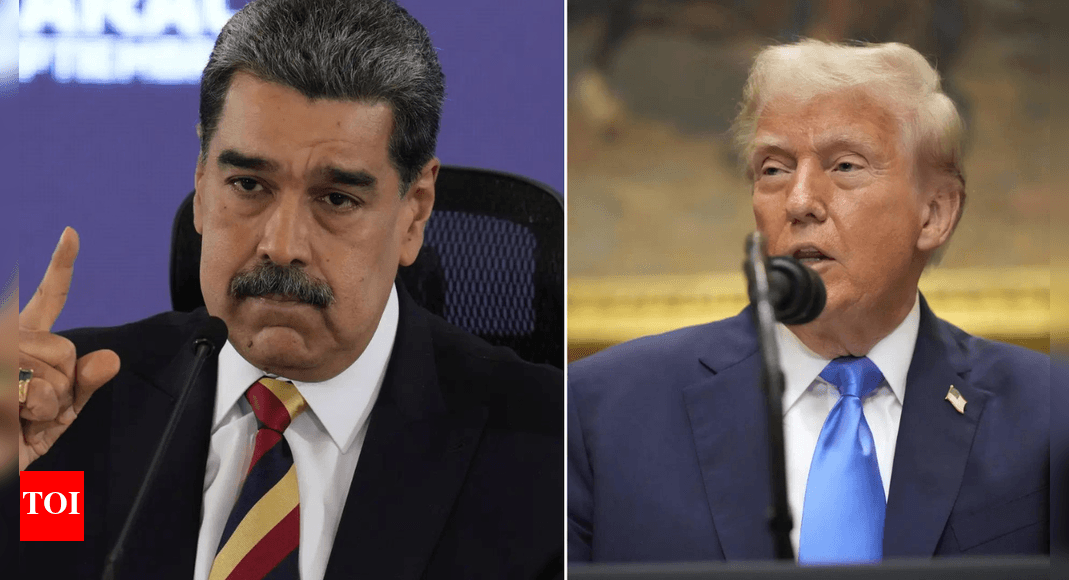
The Japan Times notes the move is "intensifying the U.S. military presence" and drawing condemnation from Venezuela’s president, who accuses Washington of fabricating a conflict.
West Asian Al Jazeera characterizes it as the "largest military build-up in the Caribbean in decades," emphasizing a shift from counter-narcotics to land-attack capabilities.
Asian coverage like the South China Morning Post frames the buildup as aimed at countering drug trafficking and "threats to democracy" attributed to Venezuela.
Other outlets such as INVC NEWS specify an October 2025 announcement and a counter-narcotics mission near Venezuela with over 6,000 troops.
Military Force Build-Up Reports
Reports differ on the exact composition of the forces, but agree the build-up is among the largest in recent years. Various sources from Asia and the West detail significant naval and air assets involved. Mezha.net states the Ford-led group includes eight warships, a nuclear-powered submarine, and F-35 fighters.
Al Jazeera adds the Iwo Jima Amphibious Ready Group, which has 4,500 sailors and marines, five destroyers, and a nuclear fast-attack submarine named USS Newport News. Asian EurAsian Times reports the presence of 10 F-35 jets and eight Navy ships.

INVC NEWS mentions destroyers, drones, and over 6,000 troops as part of the force. In contrast, West Asian PressTV claims there are over 10,000 troops, highlighting discrepancies in reported troop numbers across different outlets.
Increase in Strikes on Smuggling Boats
Western Mainstream and Asian outlets report a sharp increase in lethal strikes on suspected smuggling boats, often linked to Venezuela’s Tren de Aragua, while noting gaps in evidence. France 24 states there have been at least ten air strikes resulting in the deaths of dozens of people. ABC notes that strikes have escalated from occasional to multiple times weekly, with a recent attack killing six people and at least 43 deaths overall.
“Since September, the US has conducted at least ten air strikes in the Caribbean and Pacific, resulting in the deaths of dozens of suspected traffickers.”
The US has not provided evidence of narcotics smuggling by the targeted boats, according to ABC. Asian ETV Bharat also reports at least 43 killed since early September and emphasizes the focus on Tren de Aragua.
News.au highlights the shift in military activity from the Mediterranean to the Caribbean, coinciding with US forces killing six 'narco-terrorists'. ABP Live mentions at least ten smuggling boats destroyed and points out the lack of public evidence supporting the strikes.
Legal Views on Trump Campaign
Legally and politically, sources differ on the authority and classification of the campaign. The Guardian reports that the Trump team labeled the campaign a “non-international armed conflict,” involving CIA operations and noted “no clear evidence directly connecting the strikes to drug smuggling.” West Asian and West Asian-adjacent sources emphasize more aggressive legal claims and concerns.
Evrim Ağacı states that cartels are treated as “unlawful combatants” while bypassing congressional approval. PressTV links the escalation to Trump’s authorization of CIA operations, describing the buildup as “reckless” and “unlawful.”

Asian ETV Bharat reports that President Trump declared an “armed conflict” and labeled cartels “unlawful combatants,” which sparked bipartisan concerns over the lack of congressional approval. Western mainstream ABC reports that Trump claimed he does not need congressional approval to attack Venezuela.
Regional Responses to Venezuela Conflict
Regional reaction is polarized and volatile. Western mainstream and Asian outlets report Venezuela warning of defense measures and accusing Washington of fabricating a conflict. ABC cites Maduro’s claim of “5,000 Russian surface‑to‑air missiles.”
“Venezuela accused the US of plotting to overthrow President Maduro, who claimed the country has 5,000 Russian surface-to-air missiles for defense.”
France 24 quotes him accusing the U.S. of “fabricating a war.” Asian Mint says Maduro “pleaded for peace” while calling the buildup intimidation and a violation of international law. Asian BSS and ABP Live chronicle broader backlash, including Brazil warning that intervention could destabilize the region.

Colombia’s President Gustavo Petro condemns the strikes even as he faces U.S. sanctions. Local Western AP News adds Lula’s criticism of “unilateral actions violating national sovereignty.” West Asian Al Jazeera frames the moment as a “major escalation” with ten major warships and advanced airpower deployed near Venezuela, underscoring a region‑wide standoff.