South America26 October, 20252 min read
US Deploys Largest Warship Toward Venezuela as Maduro Accuses Washington of Fabricating War
This article is an automated aggregation of coverage from news outlets. Our editorials offer in-depth analysis curated by the NewsCord team.
The US deployed the aircraft carrier USS Gerald R. Ford toward Venezuela. Venezuela conducted nationwide coastal defense drills with Russian-made Igla-S missiles.

12 outlets told this the same way.
Outlets did split on Alexandre de Moraes Orders Eduardo Bolsonaro Arrest, Cancels Passport, Enforces Four-Year Sentence →
US-Venezuela Naval Tensions
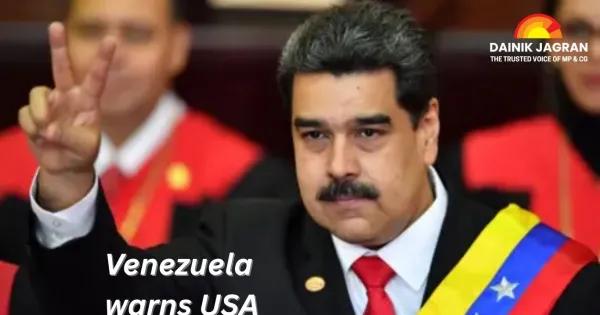
Venezuela accuses Washington of fabricating a pretext for conflict as the USS Gerald R. Ford, described by multiple outlets as the United States’ largest and most advanced aircraft carrier, moves toward the Caribbean near Venezuela.
“Venezuelan President Nicolás Maduro has accused the United States of fabricating a conflict against Venezuela as the U.S. deploys its largest warship, the USS Gerald R. Ford, to the region, marking a significant military escalation.”
Nicolás Maduro says the U.S. is fabricating a war and rejects criminal and drug-trafficking allegations tied to Tren de Aragua.
Reports also note that U.S. air and naval strikes on suspected drug-smuggling boats have caused at least 43 deaths.
Coverage varies in emphasis: some focus on the carrier’s approach and escalation, while others highlight the anti-narcotics rationale and the political confrontation framing the standoff.
US-Venezuela Tensions Overview
Legal and strategic framings diverge regarding recent U.S. actions near Venezuela. Al Jazeera reports that UN officials and international law experts condemned the U.S. strikes as unlawful extrajudicial executions. Meanwhile, Caracas announced coastal defense drills and portrayed the American presence—ships, warplanes, and a submarine—as a cover for a plot to overthrow the government.
Other outlets describe the U.S. posture as an anti-narcotics mission that has already resulted in dozens of fatalities at sea. At the same time, Venezuelan officials claim covert CIA activity and are moving to strengthen their defenses.

Political Crackdown and Conflict
The confrontation is entwined with a domestic crackdown on opposition figure Leopoldo López. Reports say Maduro’s government is moving to strip López—exiled in Spain—of his Venezuelan citizenship and passport. Officials accuse him of calling for invasion, backing U.S. military presence, and promoting blockades.
“Venezuelan opposition leader Leopoldo López, exiled in Spain, faces revocation of his Venezuelan nationality after Vice President Delcy Rodríguez accused him of calling for a military invasion, supporting U.S. military presence, promoting economic blockades, and inciting violence.”
López rejects the move as unconstitutional but is consistently described as supporting U.S. military action against Maduro’s rule. This reflects how internal political battles link to the external military standoff.
Tren de Aragua Crime Allegations
Drug and organized-crime allegations are a core fault line. AP and Mainichi stress that Tren de Aragua’s profile skews toward violent rackets—contract killings, extortion, and people smuggling—rather than large-scale drug trafficking. This is despite Trump accusing Maduro of leading the group.
Maduro and allied or regional sources deny the drug narrative outright. Some highlight that Venezuela “does not produce cocaine.” Others say Washington is inventing a pretext for intervention.

Political and Economic Challenges
Western and Asian outlets note that Maduro’s government faces broad accusations of election fraud and authoritarianism, alongside sanctions. Other regional coverage widens the frame, citing severe economic collapse, poverty, and mass migration tied to policy missteps and sanctions.
“Maduro was also widely accused of election fraud in the previous year, with international condemnation.”
Some reports even connect U.S. measures against Colombia’s president to the unfolding geopolitical clash. The result is a narrative where military brinkmanship intersects with contested legitimacy at home and a polarized regional order.