Full story
Blockade and strikes
The United States enforced naval blockade measures against Iran on July 15 by disabling an unladen oil tanker attempting to sail toward an Iranian port in the Arabian Gulf, with U.S. Central Command (CENTCOM) observing Curacao-flagged M/T Belma transiting international waters toward Kharg Island.
“Iran threatened to halt all energy exports from the Middle East after the US reimposed a blockade of its ports and ships, as the two countries traded strikes for a fifth day and Donald Trump threatened to attack a site linked to Iran’s nuclear programme while he weighed further expanding US strikes next week”
CENTCOM said the commercial vessel ignored multiple warnings as it attempted to violate the U.S. blockade, and that a U.S. aircraft disabled the vessel after firing hellfire missiles into the ship’s smokestack, after which “The ship is no longer transiting to Iran.”

The same day, the U.S. launched a new wave of strikes aimed at Iranian military capabilities used to threaten vessels in the Strait of Hormuz, with CNN describing it as the “second round on Wednesday” after earlier attacks.
CNN also reported explosions in Bandar Abbas, Ahvaz, and Chabahar late Wednesday evening local time, and said Shahid Baghaei Hospital in Ahvaz had to temporarily evacuate families and patients after a projectile landed nearby.
In parallel, the BBC reported Trump warned Tehran it “better behave” as the U.S. targeted “Iranian military capabilities used to threaten vessels” moving through the Strait of Hormuz and fired on a ship attempting to violate the renewed blockade of Iran’s ports.
Voices and rhetoric
President Donald Trump praised Iran’s release of an American woman detained since December 2024, writing on Truth Social that “She is now safely outside of Iran, and in good condition,” and adding, “The United States of America appreciates this gesture of Goodwill by Iran!”
CNN later identified the woman as Dena Karari through her attorney, with Jared Genser posting on X that “my client U.S. citizen #DenaKarari, who had been trapped in #Iran since December 2024 on bogus charges is now free,” and saying she was “now safe and traveling back to the United States”.
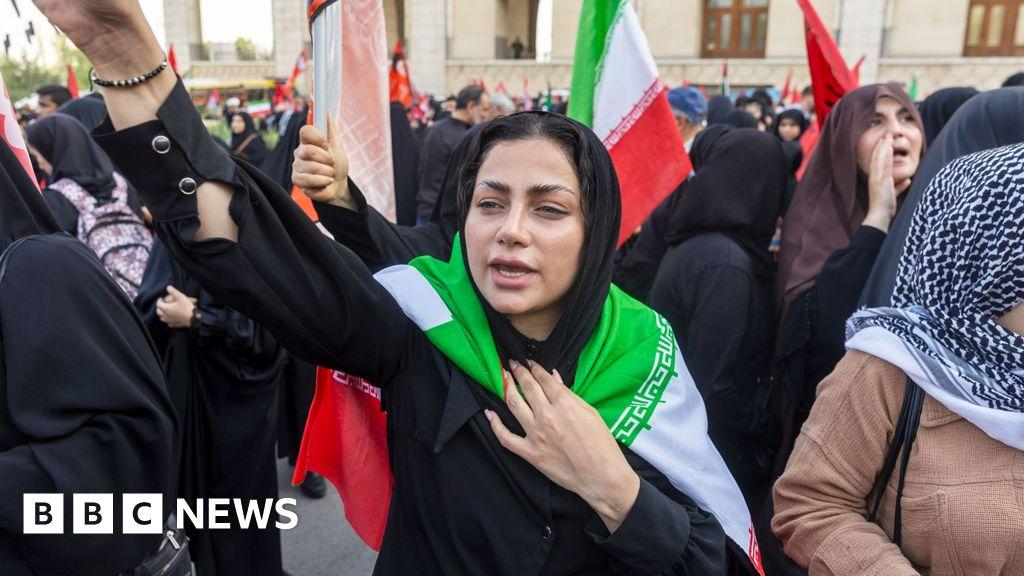
On the military side, CENTCOM said its strikes were aimed at Iranian capabilities used to threaten vessels freely transiting through the Strait of Hormuz, while the BBC framed the escalation around Trump’s warning that Tehran “better behave.”
Iran’s top negotiator Mohammad Bagher Ghalibaf told state media Tehran had “no reason” to abide by the deal if it did benefit from it, and the BBC reported he said negotiation and war were part of Iran’s strategy of resistance.
The BBC also reported Trump threatened wider action if Iran did not return to talks next week, including that he would attack bridges and power plants, while CNN said the U.S. was receiving options for expanding the operation to loosen Tehran’s grip on the waterway.
What’s at stake next
The renewed blockade and strikes are tied to the Strait of Hormuz as the central point of contention, with NPR reporting the U.S. began a wave of strikes to “further degrade military capabilities Iranian forces have used to attack commercial shipping in the Strait of Hormuz.”
“Summary - The US military said it had weakened Iran's ability to carry out attacks around the Strait of Hormuz by striking Iranian military facilities for a fifth straight day”
NPR also said CENTCOM launched the second wave of attacks at 3 p.m. ET and reported it had redirected two commercial vessels during the first 24 hours of enforcing the blockade, while Iran’s Revolutionary Guard warned the U.S. “must expect other oil and gas export routes that serve the interests of the United States and its allies to be closed as well.”
In Iran’s account of the escalation, CBS News reported Iran’s health ministry said overnight U.S. airstrikes injured more than 260 people, and it said Hossein Kermanpour did not include fatality statistics.
CBS News also reported Jordan’s army said it shot down three ballistic missiles from Iran at dawn on Wednesday after they entered Jordanian airspace, adding that there were no casualties or material damage.
Meanwhile, the BBC described the blockade and strikes as straining a preliminary deal to end the war, and it reported Centcom said it had “further degraded Iran's ability to attack commercial shipping in the Strait of Hormuz” earlier in the day.