South America12 February, 20263 min read
U.S. Energy Secretary Wright Pushes Dramatic Increase in Venezuela Oil Output During Tour With Interim President Rodriguez
This article is an automated aggregation of coverage from news outlets. Our editorials offer in-depth analysis curated by the NewsCord team.
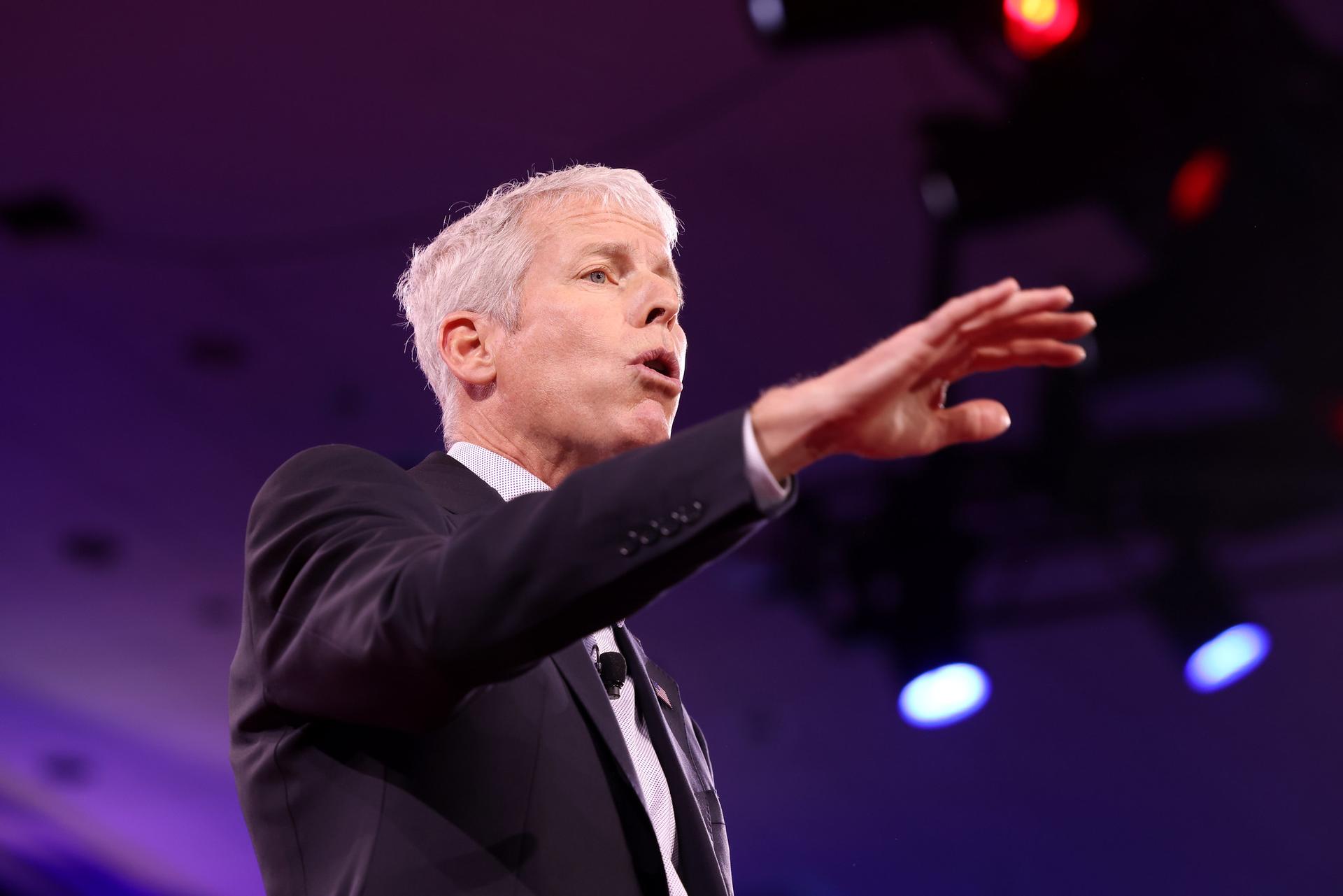
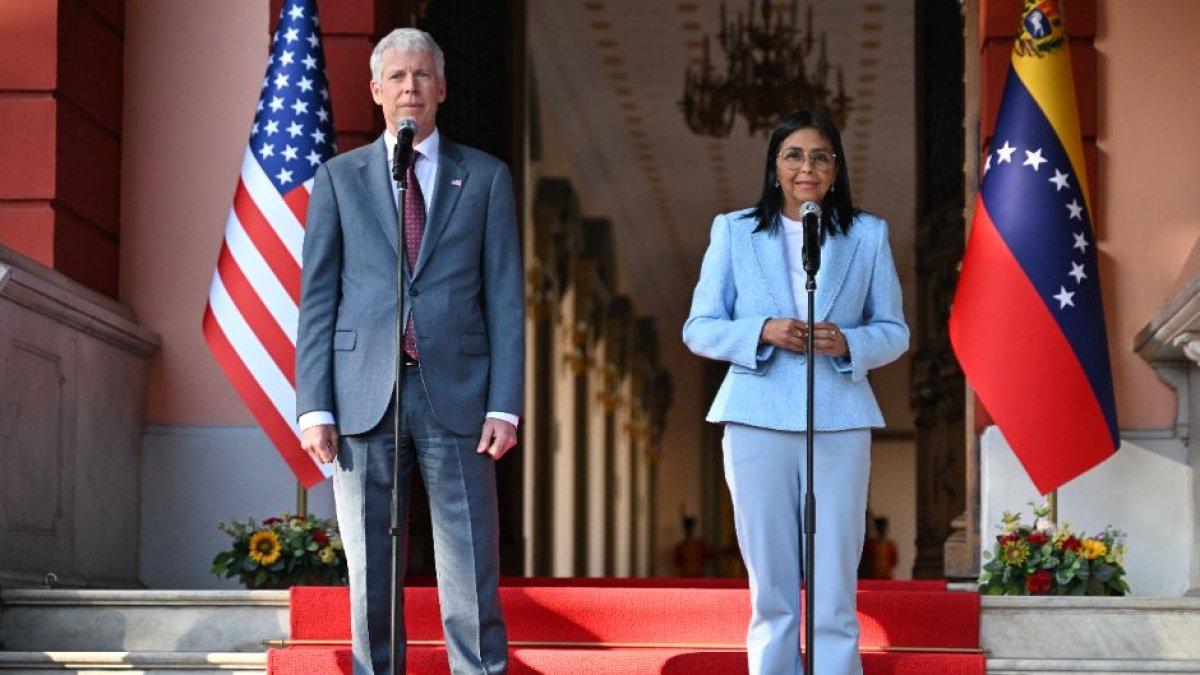
U.S. Energy Secretary Chris Wright visited Caracas and met acting President Delcy Rodríguez. Wright toured an Anzoátegui oil facility with acting President Rodríguez to assess oil production.
13 outlets told this the same way.
Outlets did split on Alexandre de Moraes Orders Eduardo Bolsonaro Arrest, Cancels Passport, Enforces Four-Year Sentence →
U.S.-Venezuela energy visit
U.S. Energy Secretary Chris Wright visited Caracas in February 2026, met interim President Delcy Rodríguez, and toured energy facilities.
“Energy Secretary Chris Wright made a rare, high‑level U.S. visit to Venezuela — the first by a Trump cabinet member — meeting interim president Delcy Rodríguez and signaling a push to restore ties and expand Venezuelan oil production in partnership with the United States.”
The trip was reported as Washington signaling an opening to revive Venezuela's oil sector after Nicolás Maduro's capture.

Al Jazeera described the trip as 'the first by a Trump cabinet member' and reported Wright and Rodríguez delivered an optimistic joint message at the Miraflores palace about increased production, privatization measures, reopening the U.S. embassy, and economic cooperation.
Energy News Beat framed the visit as 'the most senior U.S. energy trip to Venezuela in about 30 years' and quoted Wright saying Venezuela 'could see sharp short-term increases in oil, gas and power output'.
CNN reported that Wright toured an oil facility in Venezuela's Anzoátegui state on Thursday alongside acting President Delcy Rodríguez.
Sources differ on Rodríguez's title, with some accounts using 'interim President' and CNN using 'acting President'.
Sanctions and oil claims
The trip coincided with U.S. Treasury (OFAC) authorizations and renewed discussion of sanctions policy.
Several sources report General Licenses and eased restrictions that facilitate trade, supplies and certain oil activities.

Energy News Beat lists OFAC General Licenses 46 and 47 as permitting "certain U.S. entities to trade, export and supply diluent," and says Chevron has obtained expanded licenses to resume operations.
MercoPress reports additional authorizations including "General License 48 (authorizing supply of certain items and services), General License 30B (transactions necessary for port and airport operations), and General License 46A (activities involving Venezuelan-origin oil)."
At the same time Al Jazeera highlights a controversial public claim by President Trump about Venezuelan oil proceeds — saying "about 50 million barrels were turned over to be sold and that proceeds 'will be controlled by me, as President'" — prompting congressional demands for transparency.
Venezuela oil output prospects
Analysts and energy reporting cited by multiple outlets set out how much output could rise and what that would require. Energy News Beat gives concrete figures: 'Current oil output is roughly 1 million barrels per day (bpd); analysts say a near-term rise to about 1.5 million bpd is possible if investment arrives, while a full return to pre-sanctions levels (2.5–3 million bpd) could take up to a decade and roughly $183 billion of investment.'
“Current oil output is roughly 1 million barrels per day (bpd); analysts say a near‑term rise to about 1.5 million bpd is possible if investment arrives, while a full return to pre‑sanctions levels (2.5–3 million bpd) could take up to a decade and roughly $183 billion of investment.”
Colombia One and other coverage add that Caracas has reformed hydrocarbons rules to attract foreign producers and that officials and companies reportedly discussed frameworks including about '$2 billion in oil supplies and a wider $100 billion reconstruction plan.' Observers on the ground and in reporting (voz.us) also stressed technical deterioration at PDVSA and planned facility visits, signaling both opportunity and major operational challenges.
Venezuela legitimacy dispute
The visit also intersected with contested claims about political legitimacy and domestic opposition activity. LBC reports Acting President Delcy Rodríguez told NBC News that "Nicolás Maduro remains the legitimate president of Venezuela," while asserting "she is legally in charge of the presidency, citing the Venezuelan constitution." Al Jazeera documents that President Trump has recognized Rodríguez as interim leader and made public claims about controlling oil proceeds, a move that critics in Washington have challenged.
Together, these accounts present conflicting claims about who holds legitimate authority in Venezuela. Colombia One and other regional reporting note continued political volatility, including the brief release and re-arrest of opposition leader Juan Pablo Guanipa, underlining domestic tensions even as energy talks proceed.

Wright visit implications
The Wright visit signals a reopening of diplomatic and commercial channels that could yield noticeable short-term production gains. Coverage diverges sharply on emphasis, with Energy News Beat and MercoPress highlighting investor opportunities and specific licensing, Al Jazeera focusing on stark political controversy and legal concerns in Washington, and lbc.co.uk and Colombia One pointing to ongoing domestic instability.
“Bottom line: The trip signals a reopening of avenues for foreign investment in Venezuela’s energy sector and potential quicker output gains, but meaningful, sustained capital inflows depend on clarified rules, debt resolution, continued sanctions guidance, and political stability.”
Energy News Beat’s guidance for investors lists concrete monitoring points — production metrics, OFAC licensing, debt restructuring and political stability — while Al Jazeera underscores congressional probes and proposed transparency legislation. Taken together, the reporting paints a scene of conditional re-engagement: technical and commercial avenues are opening, but legal, political and operational hurdles remain.