Full Analysis Summary
US Military Plans in Syria
Newsweek reports that the White House plans to deploy U.S. military forces to an airbase in Damascus to support a potential Syria–Israel security agreement brokered by President Donald Trump.
The move is linked to the anticipated fall of Bashar al‑Assad in December 2024 and the rise of new Syrian President Ahmed al‑Sharaa, who is set to meet Trump at the White House.
LBCI Lebanon similarly reports that the U.S. Army intends to establish a military presence at an airbase in Damascus under a Trump-brokered security agreement.
This report situates the base near a planned demilitarized zone in southern Syria and calls the development a major shift after Assad’s fall, noting it had not been previously disclosed.
Haaretz offers no article content in the provided snippet, so it neither corroborates nor challenges these claims, leaving an Israeli-source perspective absent from the details available here.
Coverage Differences
narrative
Newsweek (Western Mainstream) emphasizes a White House–led plan tied to Trump’s brokerage and provides leadership and diplomatic context (new president, historic White House visit). LBCI Lebanon (West Asian) emphasizes the military deployment under a security agreement near a DMZ and frames it as a previously undisclosed, significant shift in relations after Assad’s fall. Haaretz (Israeli) provides no substantive text in the snippet, offering no narrative or corroboration.
timeline/precision
Newsweek specifies the fall of Assad as December 2024 and names Ahmed al‑Sharaa as the new president; LBCI Lebanon references Assad’s fall “last year” without naming his successor, creating a precision gap. Haaretz provides no details to reconcile the timeline.
missed information
Haaretz (Israeli) has no usable article text in the snippet, so it contributes no confirmatory or contrary details on the deployment, agreement terms, or leadership changes, a notable gap compared with Newsweek and LBCI.
U.S. Airbase Monitoring in Syria
Operationally, Newsweek says the U.S. will use an undisclosed airbase to monitor the agreement and stresses that Syrian authorities will maintain full control of the base.
The report adds that reconnaissance confirmed the runway is suitable for aircraft operations.
LBCI Lebanon places the presence at an airbase in Damascus and also near a planned demilitarized zone in southern Syria, which creates ambiguity about the precise location.
It is unclear whether the site’s proximity to the demilitarized zone is central to the mission.
With no text from Haaretz, there is no Israeli-source clarification on the base’s control, location, or operational parameters.
Coverage Differences
ambiguity/contradiction
Newsweek calls the facility an “undisclosed airbase” and highlights Syrian control of the base, while LBCI identifies it as an airbase in Damascus and simultaneously situates it near a planned southern DMZ, introducing uncertainty about exact location and emphasis. Haaretz provides no clarifying details.
unique detail
Newsweek uniquely adds operational granularity about readiness—reconnaissance confirming runway suitability—whereas LBCI does not provide such technical specifics and focuses instead on the DMZ context and disclosure aspect.
missed information
LBCI does not specify who controls the base; Newsweek says Syrian authorities will maintain full control. Haaretz provides no information on governance or command arrangements.
US Role in Syria-Israel Agreement
Newsweek describes the U.S. mission as monitoring a Syria–Israel agreement to support a potential pact, suggesting the arrangement may still be in development.
LBCI Lebanon reports the U.S. presence as being under a security agreement and places it near a planned demilitarized zone, implying a role in enforcement or stabilization related to the boundary.
The difference between "support a potential security agreement" and "under a security agreement" shows varying levels of certainty about the pact's status.
No Haaretz text is available to clarify or reconcile these differing descriptions.
Coverage Differences
wording/status
Newsweek says the deployment supports “a potential security agreement,” suggesting the pact is not fully finalized; LBCI says the presence is “under a security agreement,” implying a more established arrangement. Haaretz has no content to clarify the agreement’s status.
mission emphasis
Newsweek emphasizes monitoring the agreement from an undisclosed base and notes Syrian control of the facility, while LBCI emphasizes proximity to a planned DMZ, hinting at demilitarization and enforcement tasks.
Syrian Leadership and Diplomacy Changes
Politically, Newsweek links the deployment to a leadership transition in Damascus.
It asserts that Assad will fall in December 2024 and that Ahmed al‑Sharaa will rise to power.
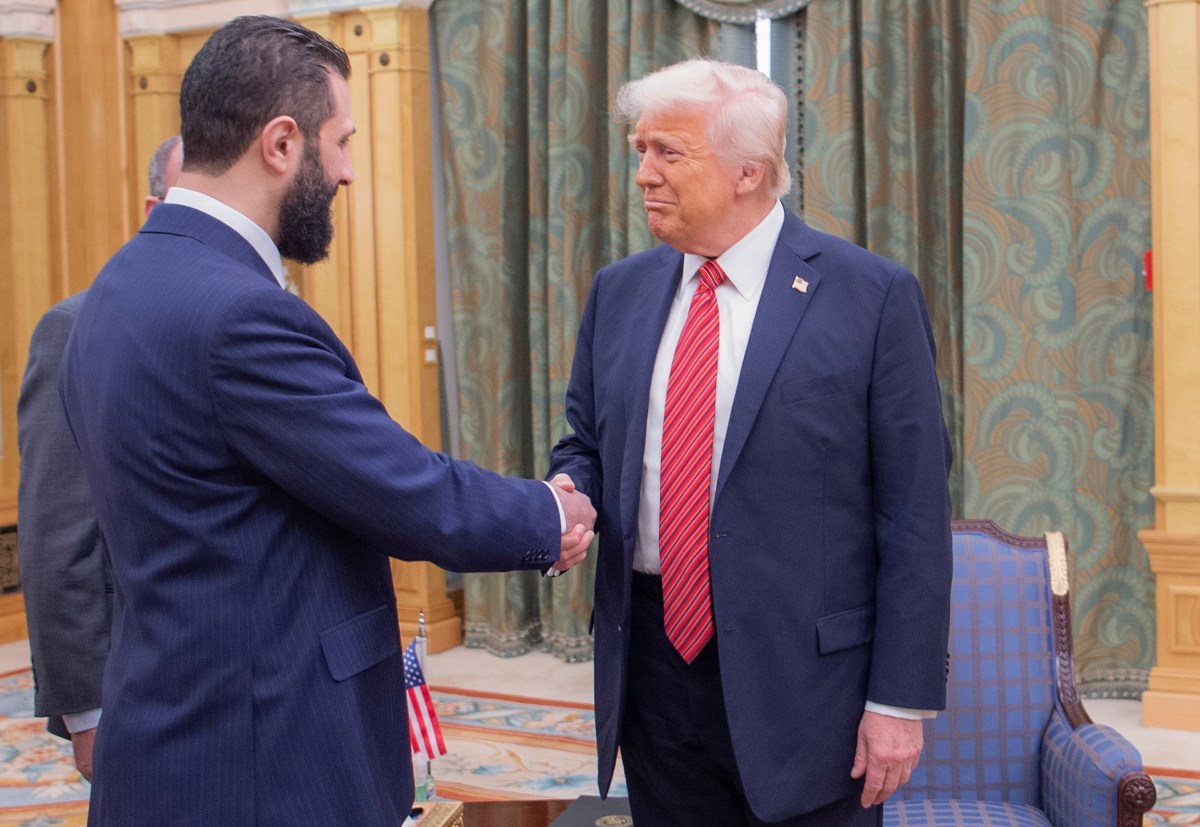
Ahmed al‑Sharaa is expected to meet Trump at the White House in a historic first visit by a Syrian leader.
LBCI Lebanon also connects the shift to Assad’s fall last year but does not name the new president or mention a White House visit.
Haaretz provides no details in the snippet, so it is not possible to verify these leadership and diplomatic claims from an Israeli source.
Coverage Differences
specificity
Newsweek provides the successor’s name (Ahmed al‑Sharaa) and characterizes an upcoming White House meeting as historic; LBCI mentions only Assad’s fall and omits the successor’s identity and diplomatic schedule. Haaretz provides no political details to confirm or contest either account.
tone/narrative
Newsweek presents the visit as a milestone and credits Trump’s brokerage; LBCI portrays the military presence as consequential for regional relations and the DMZ without highlighting a diplomatic milestone. Haaretz has no narrative contribution.
Analysis of Syria–Israel Security Move
Both Newsweek and LBCI agree that the move stems from a Trump-brokered Syria–Israel security framework and involves a U.S. military presence at a Damascus airbase.
They diverge on disclosure and detail: LBCI emphasizes that the information had not been previously revealed and highlights the demilitarized zone context.
Newsweek provides operational specifics such as runway readiness and Syrian control of the base.
The absence of usable Haaretz content in the snippet leaves a gap in Israeli-media verification or critique of these claims.
This limits cross-regional corroboration in the available sources.
Coverage Differences
transparency/sourcing
LBCI highlights novelty and secrecy (“had not been previously disclosed”), while Newsweek supplies granular operational details (reconnaissance, base control). Haaretz contributes no sourcing or verification in the provided snippet.
consensus vs. divergence
Consensus: both Newsweek and LBCI attribute the framework to Trump’s brokerage and place U.S. forces at a Damascus airbase. Divergence: degree of detail (Newsweek) versus emphasis on secrecy and DMZ proximity (LBCI); no corroboration or counterpoint is available from the Haaretz snippet.