Full Analysis Summary
Veronica III boarding
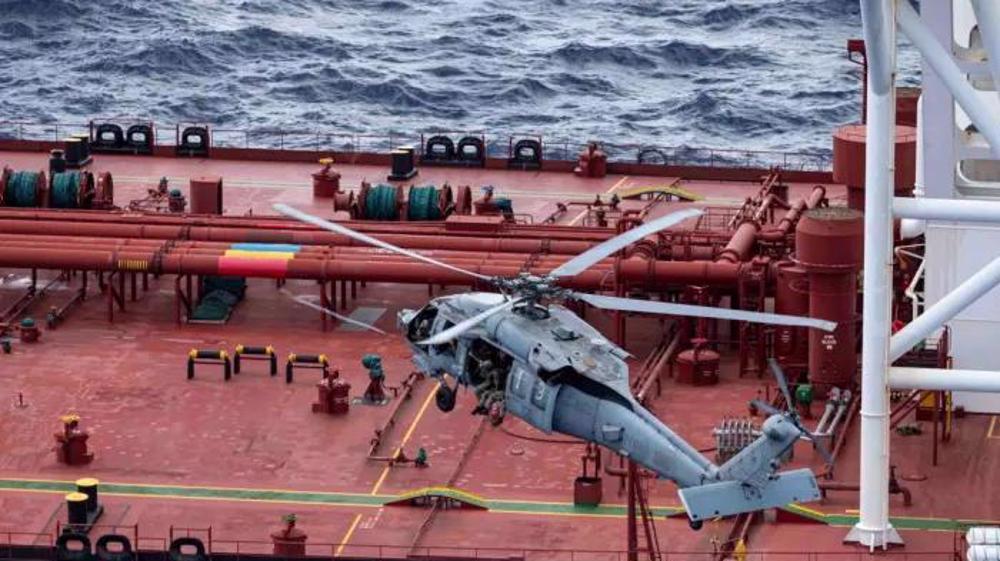
The Pentagon said U.S. forces boarded the Panamanian-flagged tanker Veronica III in the Indian Ocean after tracking it from the Caribbean.
The Pentagon described the action as a 'right-of-visit, maritime interdiction and boarding' aimed at intercepting illicit oil tied to Venezuela.
The Pentagon also posted video and said the vessel 'tried to defy President Trump’s quarantine.'
PressTV reported the Veronica III tried to 'slip away' from the Caribbean to the Indian Ocean but was tracked and stopped, and it placed the action in a broader pattern of U.S. enforcement against Venezuela-linked tankers.
Only two source articles were provided for this summary: PressTV (West Asian) and CBS News (Western Mainstream).
Coverage Differences
Tone
CBS News (Western Mainstream) frames the operation as a targeted law‑enforcement/military interdiction — quoting the Pentagon’s description of a “right‑of‑visit, maritime interdiction and boarding” and video showing the vessel “tried to defy President Trump’s quarantine.” In contrast, PressTV (West Asian) frames the boarding as part of an “oil blockade” and emphasizes a narrative of overreach and global enforcement actions “halfway around the world.” CBS reports official Pentagon language and procedural detail, while PressTV uses charged labels like “oil blockade.”
Narrative Framing
CBS situates the boarding in the context of sanctions enforcement and a December quarantine ordered by President Trump; PressTV situates it in a campaign it labels as seizure and control of Venezuelan oil sales, asserting broader claims (including detentions) reported as facts by the outlet. CBS relies on Pentagon statements, while PressTV reports wider allegations and political conclusions.
Measures targeting Venezuela-linked shipping
The boarding follows a series of U.S. measures against Venezuela‑linked shipping.
CBS notes a December quarantine of sanctioned tankers ordered by President Trump and says several tankers fled Venezuelan waters after what it describes as the January U.S. capture of Nicolás Maduro.
CBS also reports that OFAC lists the Veronica III as sanctioned and that Panama says its registration was canceled in December 2024.
PressTV places the action in a wider campaign that it says has led the U.S. to seize nine ships in international waters since last year and describes recent escalations including a December quarantine.
Both sources therefore record overlapping events but emphasize different elements—enforcement details and sanctions (CBS) versus breadth and political condemnation (PressTV).
Coverage Differences
Missed Information
CBS provides specific tracking and sanctions details that PressTV does not emphasize — CBS cites OFAC listing, Panama’s registration cancellation, and TankerTrackers reporting the Veronica III left Venezuela with nearly 2 million barrels. PressTV focuses instead on counting seizures and political claims about U.S. control of Venezuelan oil sales and alleged detentions.
Tone
PressTV uses stronger accusatory language — calling the seizures an “oil blockade” and citing international observers condemning the actions as “theft” and “outright piracy.” CBS uses more restrained, official language emphasizing the Pentagon’s stated purpose and the mechanics of sanctions enforcement.
Veronica III legal dispute
CBS reports that the Pentagon did not say whether the Veronica III has been formally seized or placed under U.S. control, leaving the vessel's formal disposition unclear and emphasizing official labels such as an OFAC designation and third‑party tracking.
PressTV, by contrast, asserts that Washington "now controls Venezuelan oil sales", quotes the U.S. Secretary of Energy saying those sales have generated more than $1bn so far with another $5bn expected, and presents allegations of prior detentions as fact.
These differences mean readers receive different answers about property control and legal status depending on which source they consult.
Coverage Differences
Contradiction
CBS explicitly notes uncertainty about whether the Veronica III was formally seized (“The Pentagon did not say whether the Veronica III has been formally seized or placed under U.S. control.”). PressTV reports as fact that Washington controls Venezuelan oil sales and reports specific dollar amounts from a quoted official. The two accounts therefore diverge on whether the U.S. has secured legal control of Venezuelan oil shipments.
Source vs. Reported Claim
PressTV reports the detention of Nicolás Maduro and his wife as an asserted fact; CBS references a U.S. capture of Maduro in its chronology but focuses on Pentagon statements about vessel interdiction. Readers should note PressTV is reporting broader political claims that are not corroborated in CBS’s reporting as presented.
Media framing of Venezuelan oil
PressTV highlights international condemnation, uses terms like "theft" and "outright piracy," and argues the measures amount to an "oil blockade" enforced far from Venezuelan waters.
CBS emphasizes official enforcement of sanctions and documents tracking evidence of vessels leaving Venezuela in violation of the quarantine, citing TankerTrackers’ reporting of at least 16 tankers.
Both sources agree there has been sustained U.S. pressure on Venezuela’s oil shipments but disagree sharply on characterization, scale, and legal control.
Given only the two provided sources, some claims — notably PressTV’s broader allegations about detentions and U.S. control of oil sales — are not independently corroborated in the CBS piece and remain contested between these accounts.
Coverage Differences
Narrative Framing
PressTV (West Asian) frames the pattern as an illegitimate blockade and cites international condemnation; CBS (Western Mainstream) frames the actions as sanctions enforcement with tracking evidence showing multiple vessels leaving Venezuela in violation of the quarantine. The outlets therefore present the same events with different implied legitimacy.
Missed Information
PressTV includes claims about revenues generated from seized oil and the detention of Venezuelan leaders; CBS focuses on procedural and evidentiary details and does not corroborate those political claims in its coverage.