South America25 December, 20253 min read
U.S. Forces Seize Venezuelan Oil Tankers Off Venezuela's Coast
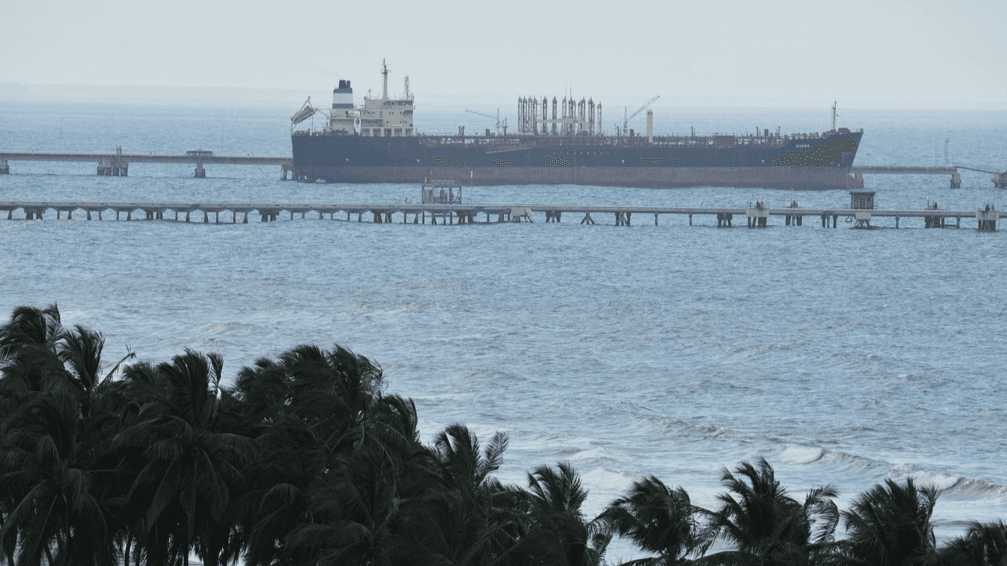
U.S. forces seized two Venezuelan oil tankers and pursued a third, Bella-1. White House ordered U.S. military to enforce a two-month 'quarantine' of Venezuelan oil.

15 outlets told this the same way.
Outlets did split on Alexandre de Moraes Orders Eduardo Bolsonaro Arrest, Cancels Passport, Enforces Four-Year Sentence →
U.S. maritime sanctions operations
U.S. forces have seized at least two Venezuelan-linked oil tankers and are pursuing a third sanctioned vessel, Bella 1, after a regional deployment aimed at blocking sanctioned exports.
“U.S. forces tracked the sanctioned oil tanker Bella 1 near Barbados and ordered it to move to calmer waters for boarding; the ship instead sailed back into the Atlantic and U.S. officials say it likely will not return.”
Moneycontrol reports U.S. forces tracked the sanctioned oil tanker Bella 1 near Barbados and ordered it to move to calmer waters for boarding, but the ship sailed back into the Atlantic and U.S. officials say it likely will not return.

The U.S. Coast Guard says it has not abandoned the pursuit and that there is a judicial seizure order against the tanker.
Al Jazeera and the Australian Broadcasting Corporation report U.S. forces have seized two tankers and are pursuing a third while Bella 1 has refused boarding, and samaa tv and Firstpost likewise note two interceptions and preparations for a third action.
These accounts depict a concerted maritime interdiction campaign using the U.S. Coast Guard and other assets to enforce sanctions-related seizures.
U.S. quarantine vs blockade
Washington has framed the interdictions as a maritime "quarantine" intended to tighten sanctions and deny revenue to the Maduro government rather than calling the operation a "blockade," an adjustment officials say avoids the legal implications of an act of war. Firstpost, Sky News and the Australian Broadcasting Corporation report the White House ordered forces to "concentrate almost exclusively" or "spend the next two months" enforcing a quarantine, citing Reuters as the underlying source.
Regtechtimes and PressTV note critics and U.N. experts have called the posture illegal or akin to "illegal armed aggression." Several outlets stress the administration chose the term "quarantine" to sidestep the legal weight of a "blockade."

U.S. Caribbean deployment
The U.S. has amassed a large naval and aerial deployment in the Caribbean to support the interdiction effort. Many reports estimate the force at about 15,000 troops plus an aircraft carrier, destroyers, amphibious ships and more than a dozen F-35s.
“The Pentagon has deployed more than 15,000 troops to the Caribbean — including an aircraft carrier, 11 warships and over a dozen F‑35 jets — assets officials say can support sanctions enforcement, though some (like fighter jets) are poorly suited to maritime interdiction.”
Al Jazeera says the buildup is 'about 15,000 troops plus carriers, destroyers and amphibious ships,' Sky News and Samaa TV cite 'more than 15,000 troops, an aircraft carrier, 11 warships and over a dozen F-35s,' and Moneycontrol describes the action as 'the largest regional military deployment in decades.' Some outlets note a mismatch between certain assets and the law-enforcement nature of interdictions, with Samaa TV and Daily Times observing that fighter jets and other high-end platforms are poorly suited to maritime interdiction.
Global reactions to interdictions
Reactions to the interdictions are sharply divided. Venezuelan authorities and allied governments have denounced the measures as aggression and piracy. United Nations human-rights experts and some analysts argue the actions may violate international law and have urged investigations into deaths.
U.S. officials portray the moves as necessary enforcement of sanctions and anti-narcotics efforts. PressTV and Regtechtimes report that Russia, China and Cuba condemned the U.S. actions as aggression and that U.N. experts called the move illegal armed aggression.

Firstpost and other Reuters-based outlets note that Caracas denounces the seizures as piracy and a violation of sovereignty. The Australian Broadcasting Corporation and PressTV cite U.N. human-rights experts urging probes into fatalities and legal breaches, and the Washington Post reports domestic reactions including army mobilization and accusations that the government is using U.S. pressure to justify internal repression.
Pressure on Venezuelan oil
Analysts and reports highlight the strategic aim to choke off Venezuelan oil revenue and force concessions from President Nicolás Maduro, but they disagree on whether the operation intends or will achieve a change of government. Firstpost and en.bd-pratidin say officials hope to create enough economic pressure by late January to force major concessions, and Moneycontrol notes the operation is aimed at quarantining Venezuelan oil exports to economically pressure President Nicolás Maduro rather than through broad military strikes.
“Washington told the U.N. it will enforce sanctions ‘to the maximum extent,’ a posture that threatens Iran’s roughly $2 billion stake in Venezuelan oil trade.”
Regtechtimes and Sky News add that the posture is tied to drug‑trafficking accusations and could threaten international stakes, with Regtechtimes warning that Iran’s interests are at risk, while PressTV and some critics interpret the measures as efforts to oust Maduro and seize oil. Officials have been vague about whether changing the government is an explicit goal, according to Moneycontrol, leaving the policy’s ultimate endstate ambiguous across coverage.