
US Imposes New Iran Sanctions Before Possible Talks in Pakistan
Key Takeaways
- Treasury sanctioned 14 individuals and entities aiding Iran's weapon components.
- Sanctions target networks linked to arming Iran and weapon procurement.
- The actions are described as new sanctions by U.S. authorities.
Sanctions as Talks Loom
The United States issued a new round of sanctions against Iran on Tuesday on the eve of possible talks in Pakistan, as Washington sought to close “more of seven weeks of fighting between the two countries.”
“The United States has issued a new round of sanctions against Iran on the eve of possible talks to close more of seven weeks of fighting between the two countries”
The US Department of the Treasury announced penalties targeting “14 individuals and entities” it accused of helping Iran acquire weapon components, with the measures freezing targets’ assets in the US and making it “generally illegal for US citizens to do business with them.”
Treasury Secretary Scott Bessent said, “The Iranian regime must be held accountable for its extortion of global energy markets and indiscriminate targeting of civilians with missiles and drones,” adding, “Under President Trump’s leadership, as part of Economic Fury, Treasury will continue to follow the money and target the Iranian regime’s recklessness and those who enable it.”
The sanctions came as talks between US and Iranian officials scheduled for Wednesday in Pakistan were “up in the air,” with Tehran refusing to commit due to the ongoing US blockade against its ports.
In parallel, Trump posted on Truth Social that he would extend an existing ceasefire, with its expiry set for Wednesday, even after he had previously said he did not want to extend it.
Trump’s extension was framed as a response to Pakistan’s mediation, with the US President saying the pause would continue “until such time as [Iran’s] leaders and representatives can come up with a unified proposal.”
The sanctions also targeted entities and people based in Iran, Turkiye and the United Arab Emirates, including “Chabok FZCO, a Dubai-based firm” accused of procuring “sensors other US-origin aircraft components” for Mahan Air, and “Kamal Sabah Balkhkanlu, an Iranian money exchanger.”
Ceasefire Extended, Blockade Kept
Hours after the US announced the sanctions, Trump said he was extending the ceasefire with Iran while keeping the US military blockade in place, and the Israeli outlet Israel Hayom reproduced the full statement explaining the decision.
Trump said, “Based on the fact that the Government of Iran is seriously fractured, not unexpectedly so and, upon the request of Field Marshal Asim Munir, and Prime Minister Shehbaz Sharif, of Pakistan,” the US was being asked to “hold our Attack on the Country of Iran until such time as their leaders and representatives can come up with a unified proposal.”

In the same statement, Trump directed the military to continue the blockade, writing, “I have therefore directed our Military to continue the Blockade and, in all other respects, remain ready and able, and will therefore extend the Ceasefire until such time as their proposal is submitted, and discussions are concluded, one way or the other.”
Ynetnews similarly reported that Trump extended the ceasefire while maintaining “a U.S. military blockade,” citing divisions within Iran’s leadership and a request from Pakistani officials to allow more time for negotiations.
The announcement followed Iran’s decision not to attend planned talks in Pakistan, which Ynetnews said was reported by Iranian state-linked media, and it also described operational disruptions in Washington, including that “U.S. Vice President JD Vance also canceled a planned trip to Pakistan for the talks.”
Ynetnews added that “senior officials, including special envoy Steve Witkoff and presidential adviser Jared Kushner, were called back to the White House,” and that “U.S. Ambassador to Israel Mike Huckabee was also summoned for consultations.”
Iran’s Foreign Minister Abbas Araghchi responded to the extension and blockade, saying, “Imposing a blockade on Iran's ports is an act of war, and therefore constitutes a violation of the ceasefire. Attacking a civilian vessel and taking its crew hostage constitute an even graver violation.”
Mediation and Negotiation Signals
Beyond the sanctions and the ceasefire extension, multiple reports described shifting signals about when and how talks would proceed in Islamabad and what conditions each side demanded.
“We are now closing the live blog for the day”
Morning Star said the United States and Iran “have signalled they will hold a new round of ceasefire talks in Pakistan,” and it reported that “Pakistan-led mediators received confirmation that the top negotiators, US Vice-President JD Vance and Iran’s parliament speaker Mohammad Bagher Qalibaf, will arrive in Islamabad early Wednesday to lead their teams in the talks.”
The same report said neither side had publicly confirmed the timing, with Iranian television denying any official was already in Pakistan’s capital, while it also described leaders warning they were “prepared for more fighting if the fragile two-week truce expires without a deal.”
Morning Star also quoted Trump warning that “lots of bombs” will “start going off” if there’s no agreement before the ceasefire deadline, and it said Iran’s chief negotiator told reporters that Tehran has “new cards on the battlefield” that haven’t yet been revealed.
In parallel, Radio Free Europe/Radio Liberty reported that Pakistani Prime Minister Shehbaz Sharif thanked Trump for accepting the request to extend the cease-fire, saying, “I sincerely hope that both sides will continue to observe the cease-fire and be able to conclude a comprehensive ‘Peace Deal’ during the second round of talks scheduled at Islamabad for a permanent end to the conflict.”
RFE/RL also reported that a Qalibaf spokesperson called the extension a “ploy to buy time” and said the US move to continue its blockade of Iranian ports was “no different from bombardment and must be met with a military response.”
RFE/RL further stated that Tehran had not decided whether to attend a second round of peace talks, citing Iranian Foreign Ministry spokesman Esmaeil Baqaei saying on April 21 that Iran “has not decided whether to attend a second round of peace talks that were set to begin this week with the US in Islamabad.”
Hormuz, Energy and New Planning
The dispute over maritime access and the Strait of Hormuz remained central to the reports, with multiple outlets tying the ceasefire and sanctions to navigation and energy flows.
Al Jazeera said Iran responded to the conflict by closing the Strait of Hormuz and launching drone and missile attacks across the region, and it reported that fighting was halted on April 8 after the two-week ceasefire was reached.
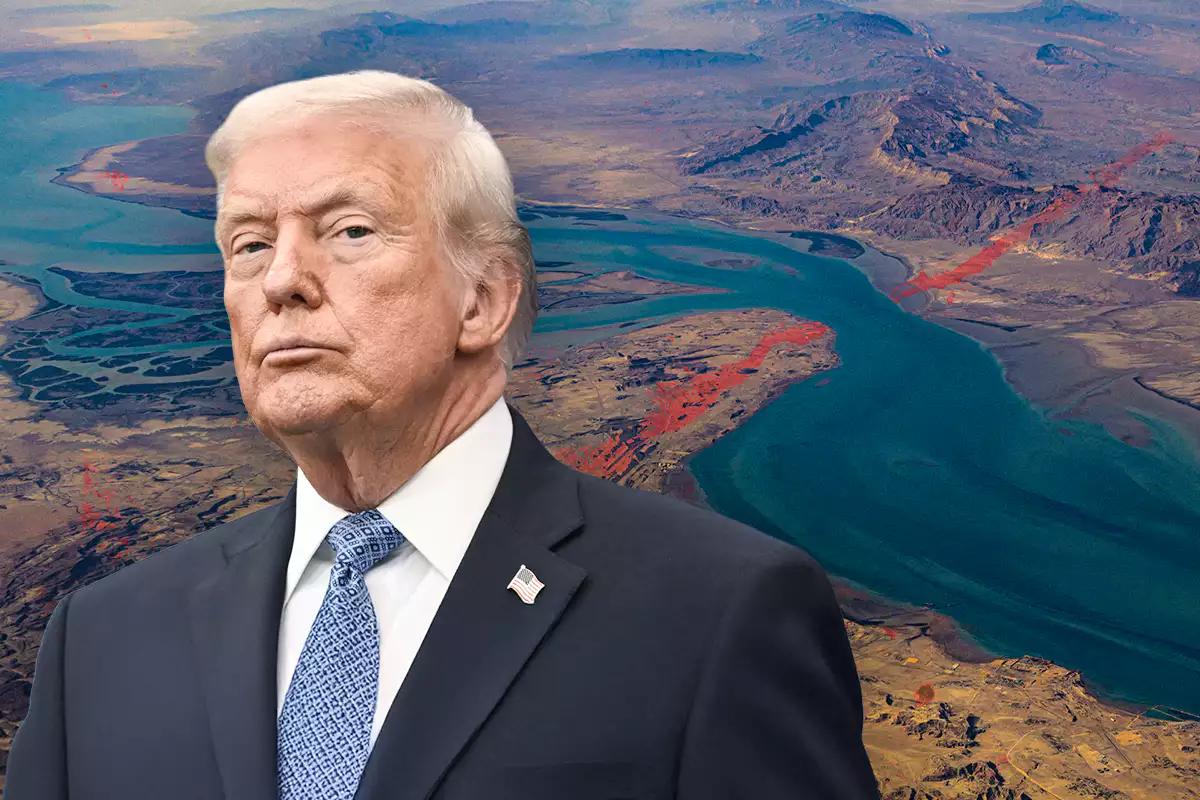
It added that Iran continued to block Hormuz because Israel refused to extend the ceasefire to Lebanon, as stipulated in the ceasefire deal initially announced by Pakistan, and it said the US military imposed its own naval blockade targeting all ships originating from or bound for Iranian ports.
Al Jazeera also reported that Iran announced the reopening of Hormuz last week after a truce was established in Lebanon, but it said Trump maintained that the US blockade would continue, prompting Tehran to shut down the strait again.
RFE/RL reported that Britain would host military planners from more than 30 countries for talks starting on a potential multinational mission led by the UK and France to protect sea traffic in the Strait of Hormuz, with the British Defense Ministry saying the talks would involve “detailed planning” on reopening the strait when conditions allow.
RFE/RL quoted Defense Minister John Healey saying, “The task...to translate diplomatic consensus into a joint plan to safeguard freedom of navigation in the Strait and support a lasting ceasefire,” and it said he was confident “real progress can be made.”
Morning Star framed the blockade as a pressure mechanism, saying the US imposed the blockade to press Tehran to end its “stranglehold on the Strait,” through which “20 per cent of the world’s natural gas and crude oil transits.”
Sanctions Escalate, Arsenal Rebuild
The sanctions round described by Al Jazeera and Al Sharq tied the US pressure campaign to Iran’s efforts to rebuild its ballistic missile arsenal and to the use of drones, while also placing the measures in a broader timeline of US actions.
“President Donald Trump said Tuesday he is extending the ceasefire with Iran while maintaining a U”
Al Jazeera said the sanctions highlight Trump’s push to increase financial pressure on Iran as he seeks major concessions, and it described how Iran is likely to demand sanctions relief as part of any future agreement.

It quoted the Treasury’s claim that “As the United States continues to deplete Iran’s ballistic missile inventories, the regime is seeking to reconstitute its production capacity,” and it said the measures target those involved “in procuring or transporting weapons or weapons components” on behalf of Tehran.
Al Sharq described the Tuesday action as “the fifth round of measures to prevent proliferation” taken by the US Treasury in support of “reimposing United Nations sanctions and other restrictions on Iran on September 27, 2025,” and it said the targets were located in Iran, Turkey, and the United Arab Emirates.
Al Sharq also said the US action was timed “at a time when Tehran is seeking to rebuild its ballistic missile arsenal after the U.S.–Israel attacks,” and it added that Iran is increasingly relying on “the Shahed drones to target the United States and its allies, including the region’s energy infrastructure.”
The same Al Sharq report said the European Union broadened its sanctions criteria to include those responsible for closing the Strait of Hormuz, and it quoted an EU official saying there was “a political agreement among ambassadors that we will indeed change the criteria of the sanctions regime on Iran so that we can also list individuals and entities responsible for obstructing freedom of navigation through the Strait of Hormuz.”
In the Reuters-linked sanctions narrative, Al Jazeera reported that the US imposed new sanctions on Tuesday against companies and people based in Iran, Turkiye and the United Arab Emirates, and it specified that “Chabok FZCO” was accused of procuring “sensors other US-origin aircraft components” for Mahan Air.
More on Iran

Donald Trump Extends Iran Ceasefire Until Peace Talks End, Keeps Blockade of Iranian Ports
10 sources compared
Donald Trump Indefinitely Extends Ceasefire With Iran While U.S. Blocks Iranian Ports
15 sources compared
Trump Extends Iran Ceasefire Indefinitely, Orders U.S. Military To Continue Blockade
11 sources compared
Donald Trump Extends U.S. Ceasefire With Iran, Orders Naval Blockade to Continue
15 sources compared