
U.S. Intelligence Assesses Military Action Won't Topple Iran's Leadership
Key Takeaways
- U.S. intelligence judged military intervention would not produce regime change in Iran
- The National Intelligence Council completed the assessment in February
- Assessment was finished shortly before the United States and Israel launched a war in Iran
U.S. assessment on Iran strikes
A classified National Intelligence Council assessment completed in February concluded that neither limited airstrikes nor a larger, sustained U.S. military campaign would likely produce a new government in Iran, even if Iran’s current leadership were killed.
“WASHINGTON (AP) — A U”
The assessment, described to reporters by two anonymous officials, said targeted attacks or broader U.S. military options were unlikely to achieve the political outcomes some policymakers seek and instead could trigger unpredictable succession dynamics and retaliatory actions.
The reporting also noted that earlier coverage in major outlets had documented internal debates over these strike options and skepticism within the intelligence community.
U.S. intelligence view on Iran
The assessment reflected deep skepticism inside parts of the U.S. intelligence community about the effectiveness of kinetic options.
According to the reporting, officials believed that decapitation or escalation strategies carried high uncertainty, potentially reinforcing Iran’s hardline elements and failing to produce the political transition some U.S. policymakers envision.
The same reporting tied this intelligence judgment to previously published accounts that documented debate inside the Trump administration over whether and how to use force against Iran.
NIC assessment on Iran
The NIC assessment specifically warned that removing Iran’s leaders—even through lethal means—would not reliably deliver the political outcomes sought by some U.S. policymakers, and might instead strengthen hardliners or otherwise fail to achieve regime change.
“WASHINGTON (AP) — A U”
That judgment framed both limited airstrike scenarios and larger sustained campaigns as unlikely to produce a stable, desired successor government, emphasizing the limits of military tools to shape political transformation in Iran.
Risks of military action
The assessment also highlighted risks of retaliation and 'unpredictable succession,' signaling concern that any strike could produce adverse regional consequences.
The reporting cited unnamed officials describing those risks and framed the intelligence community view as cautionary about relying on military action to reliably remake Iran's political order.
The articles connected this caution to a broader public record of reporting on administration deliberations and skeptical intelligence judgments.
Sources and limitations
The material provided for this summary consists of a single news snippet from the Atlanta Journal-Constitution and an unrelated Channel 8 San Diego cookie-consent text.
“WASHINGTON (AP) — A U”
The AJC piece itself references earlier reporting in outlets such as The New York Times and The Washington Post.
Because only these two source texts were supplied, this summary relies principally on the AJC account.
I cannot independently corroborate details beyond what that article reports and cannot draw on the directly cited NYT/Washington Post pieces themselves.
For a fuller picture, consultation of the original NYT/Washington Post reporting and the NIC assessment would be required.
More on Iran
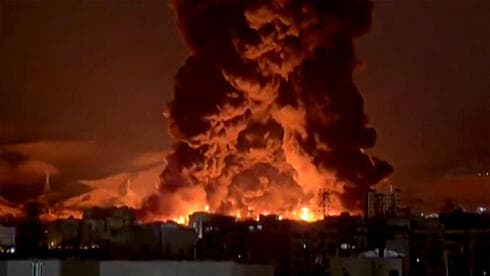
US obliterates military targets on Iran’s Kharg Island, Trump warns
13 sources compared

US Deploys About 2,500 Marines to Middle East After Iran Attacks Gulf Shipping
33 sources compared
FBI Warns of Iranian Drone Plot Based on Unverified Tip; California Says No Credible Threat
10 sources compared

White House Demands ABC Retract Report Claiming Iran Sought To Launch Drone Attacks On California
11 sources compared