Full Analysis Summary
Geneva nuclear talks
U.S. and Iranian delegations concluded their most intense Geneva talks on Iran's nuclear programme without reaching a deal but agreed to continue negotiations.
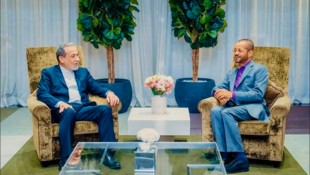
Negotiations were indirect and mediated by Oman, and negotiators described the sessions as lengthy and consequential.
Iran's deputy foreign minister Abbas Araghchi called the meetings among the "most intense" they've had and said talks produced "significant progress."
U.S. officials characterized the roughly six-hour session in Geneva as constructive enough to schedule follow-ups in Vienna.
Oman's foreign minister and multiple mediators framed the pause as a chance to consult capitals and prepare technical work next week.
The IAEA was expected to play a role as a technical observer.
Coverage Differences
Tone
Sources differ on the session’s immediate assessment: WION (Western Alternative) highlights Iran calling the talks the “most intense” and notes Araghchi’s post that “Iran will under no circumstances develop a nuclear weapon,” Newsmax (Western Alternative) and NBC (Western Mainstream) report Oman and U.S. officials as saying there was “significant progress” or calling the session “positive,” while Sky News (Western Mainstream) frames the outcome as inconclusive and says talks “ended inconclusively.” These are reporting differences rather than conflicting factual claims about whether further talks were agreed.
Iran nuclear talks issues
Key substantive gaps remain.
Washington pressed for sharp constraints on Iran's nuclear capabilities, including demands reported by multiple outlets that Iran reduce enrichment, surrender enriched uranium stocks and dismantle or restrict facilities.
Tehran insisted on preserving its right to enrich uranium for peaceful purposes and rejected proposals to ship stocks abroad.
Sources report the U.S. delegation sought limits that Iran has so far balked at: CNBC and OilPrice describe U.S. teams pressing to eliminate enrichment at certain sites and hand over enriched material, while The Guardian and several West-Asian outlets say Iran's negotiators conditioned a framework on Washington accepting symbolic enrichment rights and separating nuclear from non-nuclear issues like missiles and proxies.
Coverage Differences
Contradiction
CNBC (Western Mainstream) and OilPrice (Other) report tough U.S. demands — e.g., destroying or restricting Fordow, Natanz and Isfahan and handing over enriched uranium — while The Guardian (Western Mainstream) and sources like 1470 & 100.3 WMBD (Other) emphasize Iran’s insistence on keeping enrichment rights and rejecting transfers of stocks. The contradiction is between what the U.S. negotiators are reported to demand and what Iran says it will accept; articles are reporting different emphases, not directly disputing the other's reporting.
Military buildup and warnings
The talks unfolded against an elevated military backdrop and heated political rhetoric that increased the stakes.
Multiple outlets note the largest U.S. military buildup in the region in years, with carrier groups and forces moved closer to Iran, and President Trump using his State of the Union to warn Iran that it must explicitly renounce weapons ambitions or face consequences.
Iranian state media and West-Asian outlets also reported Tehran’s public warnings of retaliation, including threats to strike U.S. bases and Israel if attacked, underscoring the risk that failed diplomacy could escalate into military confrontation.
Coverage Differences
Narrative Framing
Western Mainstream outlets such as CNBC and NBC stress the U.S. military buildup and market implications (e.g., oil prices), while Sky News and aapnews emphasize Iran’s threats of retaliation and the immediate security risks. WION highlights Trump’s State of the Union rhetoric as heightening tensions. These are different emphases: some sources foreground military and market risks, others foreground Iranian warnings and political rhetoric.
Participants and media coverage
The U.S. team was led by special envoy Steve Witkoff, with Jared Kushner present.
Iran’s delegation was led by Abbas Araghchi.
Oman mediated the indirect talks and the IAEA attended as an observer for technical matters.
Media coverage diverged over whether Kushner’s inclusion was diplomatically controversial and over how authoritative Araghchi’s mandate was.
Some outlets noted Araghchi’s authority to sign a deal, while others underlined domestic pressures in Iran, from economic strain to public protests, that shape Tehran’s negotiating posture.
Follow-up technical talks in Vienna were reported as the next step, giving both sides time to consult their capitals.
Coverage Differences
Unique Coverage
Folha de S.Paulo (Latin American) highlights that Jared Kushner’s participation “drew diplomatic criticism,” while West‑Asian and local outlets (e.g., نورنیوز, WANA) emphasize Araghchi’s authority and Iran’s internal economic/political pressures as determinants of Tehran’s flexibility. This reflects differences in which political actors or domestic constraints each source foregrounds.