Iran-Israel01 March, 20262 min read
U.S., Israel and Iran Military Strikes Shut Middle East Airspace, Ground Thousands of Flights
US and Israel launched military strikes on Iran, prompting Iranian retaliatory actions Thousands of flights canceled or delayed; sources report varying totals (≈1,600 to 19,000)

14 outlets told this the same way.
Outlets did split on U.S. Intercepts Iran Message Activating Sleeper Cells After U.S.-Israel Strike Kills Khamenei →
Middle East air disruptions
A wave of U.S. and Israeli strikes on Iran and Iran's retaliatory attacks on Gulf states prompted widespread airspace closures across the Middle East, producing what officials and industry watchers described as the worst aviation disruption since the COVID-19 pandemic. Multiple outlets reported that major Gulf hubs - notably Dubai, Abu Dhabi and Doha - were shut or severely restricted, leaving flight corridors largely empty and creating a global cascade of cancellations and diversions that stranded hundreds of thousands of passengers. Reporting also flagged a major, extraordinary claim - that Iran's supreme leader was killed - and cautioned that this assertion needs independent verification.
“A wave of US and Israeli strikes on Iran and Iran’s retaliatory attacks on Gulf states prompted widespread airspace closures across the Middle East.”
Gulf airport closures and strikes
The immediate operational impact concentrated on Gulf hubs and several regional airports: Dubai International, Abu Dhabi’s Zayed/Etihad hubs and Doha’s Hamad International were closed or severely limited, with reports of injuries and damage at some facilities. Outlets recorded incidents including four people injured at Dubai International and a reported drone strike at Abu Dhabi’s Zayed International that killed one and injured seven. Kuwait International and other commercial airports were also reported struck, contributing to authorities’ decisions to shut or restrict airspace for safety.
Flight cancellations and disruptions
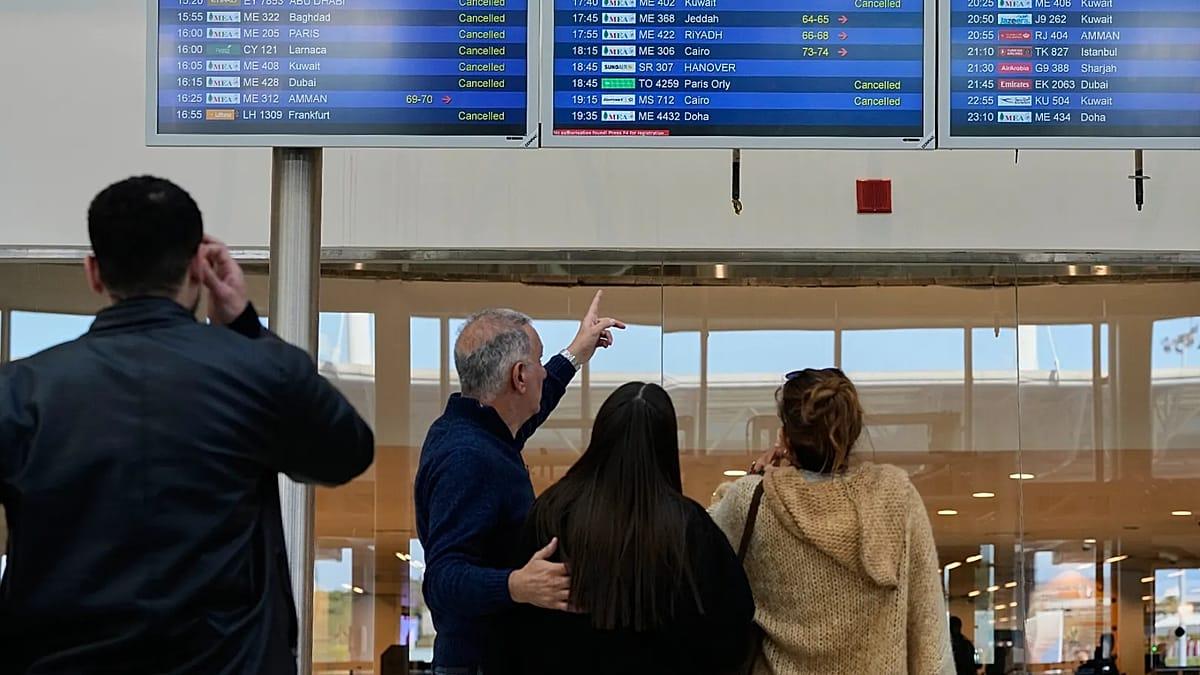
Cancellations and disruptions were massive and were quantified differently across outlets. FlightAware and Cirium tallies were cited alongside carrier reports. One tracker recorded about 2,800 cancellations on Saturday and 3,156 on Sunday, while another source counted more than 3,400 cancellations at seven airports on a single day.
“FlightAware recorded about 2,800 cancellations on Saturday and 3,156 on Sunday; Cirium counted at least 1,555 cancellations to the Middle East by 10am Monday (likely an undercount because of limited data).”
Some industry tallies put total cancellations north of 4,000. Across reports, outlets described hundreds of thousands of passengers stranded or diverted worldwide.
Airline suspensions and impacts
Carriers and industry actors responded with mass suspensions, reroutings and operational waivers, while analysts warned of broader economic spillovers. Major Gulf airlines paused hub operations, with Emirates, Etihad and Qatar Airways specifically cited. Many international carriers canceled or suspended services to regional destinations.
Airlines rerouted flights south over Saudi airspace where possible, lengthening routes, increasing fuel burn and raising costs. Observers warned fares could rise if disruptions persist, and reports said travel stocks and energy prices were hit sharply.
Airspace closures and impacts
The timeline for reopening airspace and restoring hub operations remained unclear. Some governments extended temporary closures, with one report saying Iran extended its airspace closure to at least March 3. Analysts said safe corridors would require military coordination before civilian flights could resume widely.
“Iran extended its airspace closure to at least March 3, and some facilities have reported significant strike damage, leaving the reopening timeline uncertain.”
Airlines urged passengers to check flight status, accept waivers, or seek refunds. Industry sources warned recovery would be complicated by displaced crews and aircraft. Separately, at least one report included an extraordinary and unverified claim about Iran’s supreme leader that outlets explicitly flagged as requiring independent verification.
