
U.S., Israel Kill Supreme Leader Ayatollah Ali Khamenei in Joint Strike
Key Takeaways
- Joint U.S.-Israeli strike killed Supreme Leader Ayatollah Ali Khamenei on Feb. 28.
- Mojtaba Khamenei was selected as successor despite international pressure for regime change.
- Hundreds reported dead in Iran and at least seven U.S. service members killed.
Strike and leadership claim
U.S. and Israeli forces carried out a joint air campaign that, according to U.S. and Israeli statements quoted by the Los Angeles Times, resulted in the killing of Iran’s Supreme Leader Ayatollah Ali Khamenei; Tehran has denied those claims, and President Trump announced the death on social media.
The Times framed the strikes as a broad campaign by the United States and Israel that has rapidly escalated into a wider Middle East war, noting both the immediate reports of Khamenei’s death and Iran’s rejection of that account.
This announcement has contributed to dramatic international alarm and emergency diplomatic activity.
Military objectives targeted
U.S. officials and the Pentagon described a set of concrete military objectives: dismantling Iran’s ability to project power beyond its borders by striking ballistic missile, drone and nuclear programs, and naval assets, while also hitting internal security forces that the Times reports have been used to suppress domestic dissent.
Analysts cited in the Times — including work from the Institute for the Study of War and the Critical Threats Project — interpreted some strikes as aimed at Tehran’s internal control apparatus as well as external capabilities.
The breadth of targeted systems underscores a campaign that mixes strategic disarmament goals with efforts to degrade the regime’s coercive instruments.
Civilian massacre at school
The strikes have produced significant civilian harm and international condemnation: satellite imagery, expert analysis and U.S. officials cited by the Times point to a Feb. 28 explosion at Shajareh Tayyebeh Elementary School that likely resulted from U.S. airstrikes and killed scores of students — the Times reports more than 165 people killed, most of them children according to Iranian state media — prompting criticism from the United Nations and human rights monitors.
That single event, described by the Times as the highest reported civilian death toll since the war began, has intensified scrutiny of the campaign’s conduct and civilian protection failures.
Regional and global fallout
The conflict has rippled across the region and global markets: the Times describes nearly every country in the Middle East sustaining damage from missile or drone strikes, major shipping through the Strait of Hormuz being disrupted, and oil and gas prices surging as the war shows no signs of letting up.
Governments scrambled to evacuate citizens and close airspace; U.S. military bases increased security and Northern Command ordered additional force-protection measures.
These cascading effects illustrate how a focused campaign against Iran has expanded into a regional crisis with economic and humanitarian dimensions.
Political implications and uncertainty
Politically, the strikes have shifted U.S. rhetoric toward maximal demands and raised questions about succession in Iran: President Trump demanded “unconditional surrender,” signaled an openness to influencing who leads Iran next, and vowed to continue combat operations despite U.S. casualties — the Times notes at least three U.S. service members among the hundreds confirmed dead — while analysts and world leaders reacted with alarm and pushed for negotiations.
The killing of Khamenei, whether confirmed or contested, has injected major uncertainty into Iran’s succession process and the region’s strategic future.
More on Iran
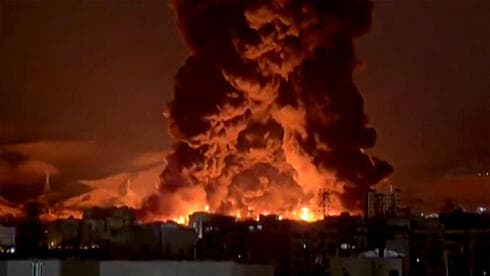
US obliterates military targets on Iran’s Kharg Island, Trump warns
13 sources compared
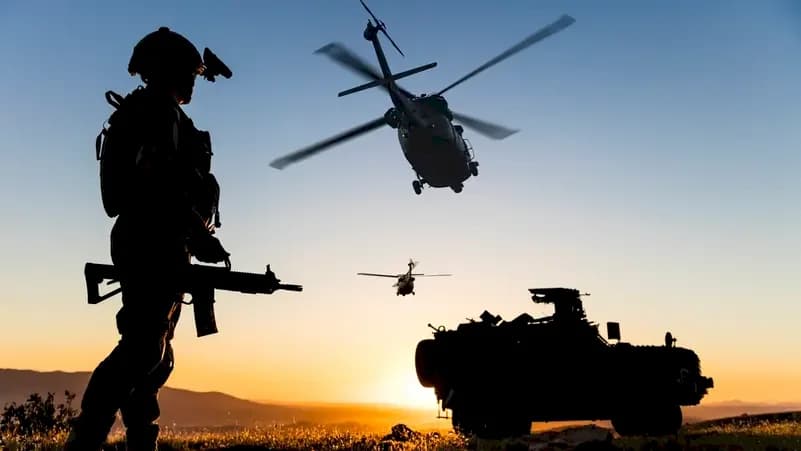
US Deploys About 2,500 Marines to Middle East After Iran Attacks Gulf Shipping
33 sources compared
FBI Warns of Iranian Drone Plot Based on Unverified Tip; California Says No Credible Threat
10 sources compared

White House Demands ABC Retract Report Claiming Iran Sought To Launch Drone Attacks On California
11 sources compared