Full Analysis Summary
Court restricts ICE actions
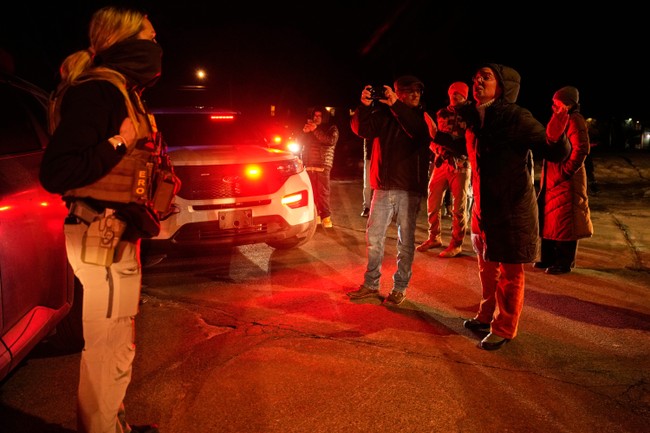
A federal judge in Minnesota issued a preliminary injunction this week restricting how Immigration and Customs Enforcement (ICE) and other federal agents may treat people who peacefully observe or protest immigration-enforcement operations in the Minneapolis–St. Paul area.
Most reports attribute the order to U.S. District Judge Kate (or Katherine) Menendez.
The injunction bars arrests, detentions, or the use of chemical irritants such as pepper spray or tear gas against people engaged in peaceful, non-obstructive protest or orderly observation unless officers have reasonable suspicion or probable cause of a crime.
It also gave the Department of Homeland Security (DHS) 72 hours to comply.
The ruling followed a lawsuit brought by six activists represented by the ACLU of Minnesota and arrives amid heightened tensions surrounding federal immigration enforcement in the Twin Cities.
Coverage Differences
Name discrepancy & emphasis
Some outlets use the name 'Kate Menendez' while others write 'Katherine Menendez'; coverage also differs in emphasis — Al Jazeera frames the order as a clear "win for activists," while AP and other mainstream outlets report the legal restriction in more neutral terms. These differences are matters of naming and tone rather than substance of the injunction.
Procedural detail emphasis
Some reports highlight the 72‑hour compliance window and explicit bans on pepper spray and similar munitions, while others focus on the plaintiffs and the ACLU suit; both aspects appear across sources but with varying prominence.
Court injunction on policing
The injunction covers arrests, chemical agents, and vehicle stops.
The judge found that safely following officers at an appropriate distance does not by itself create reasonable suspicion for a stop.
The order forbids the use of pepper spray, tear gas, impact projectiles, and similar crowd-control tools against peaceful observers and bystanders who are recording operations.
Multiple outlets emphasize that the protection extends to people observing, recording, or peacefully protesting so long as they do not physically impede enforcement activities.
Coverage Differences
Specific crowd-control tools named
Some sources list a broad set of banned munitions ("chemical irritants, impact projectiles, flash-bangs"), while others focus on tear gas and pepper spray; the variation reflects differing levels of detail in reporting, not contradictory legal requirements.
Emphasis on vehicle‑following rule
Several outlets explicitly quote the judge that safely following agents at an appropriate distance "does not create reasonable suspicion for a stop," while some summaries omit that detail; those that include it underscore limits on stops of drivers who are simply observing.
Operation Metro Surge overview
The injunction arrives against a backdrop of an expanded federal enforcement effort dubbed Operation Metro Surge, initially announced as about 2,000 ICE and Border Patrol officers and described in some reports as growing to nearly 3,000.
DHS has described the deployment in some reports as its largest such operation, and it has sparked clashes with protesters.
The effort drew scrutiny after incidents including the Jan. 7 fatal shooting of 37‑year‑old Renee Nicole Good by an ICE agent and another shooting that wounded a Venezuelan man, prompting broader legal and political pushback from local officials and activists.
Coverage Differences
Scale and description of the deployment
Outlets differ on the operation's scale and framing: The Straits Times and Al Jazeera quote figures of 'initially 2,000' rising to 'nearly 3,000' and call it DHS's largest such operation, while other reports note DHS disputes or give the 'up to 2,000' figure — a variance between reportage and DHS statements.
Incidents highlighted
Some sources emphasize the fatal shooting of Renee Good as a focal point for tensions; France 24 and Fox note the killings and investigations, while other reports use the shootings to contextualize the injunction without extensive detail.
Conflicting media coverage
Reporting diverges on specific allegations and evidentiary findings the judge considered; some outlets summarize the court's description of a pattern of tactics that 'chill' First Amendment activity and cite incidents the judge found credible, including the detention of longtime resident Susan Tincher, while others stick to the legal ruling without detailing particular cases.
Investigations and independent video reviews have also been reported; a New York Times video analysis noted in local reporting found no sign an agent was run over before firing, and some sources use that to challenge initial accounts of an officer's justification for shooting.
Coverage Differences
Detailing of court findings vs. summary reporting
Local and in‑depth outlets (e.g., njtoday.news) recount named incidents the court found credible and describe alleged paramilitary tactics, while wire services and brief summaries (e.g., AP, news.meaww) more often focus on the injunction's legal terms without those incident-by-incident narratives.
Use of independent video analysis
Some reports reference independent video analysis (e.g., a New York Times review) that questioned whether an agent was run over prior to firing; other outlets do not include that analysis and instead focus on the shooting as part of broader tensions.
Political and legal fallout
Local officials and state leaders have sued for broader restraints on the operation.
The Department of Homeland Security has defended its officers and described the deployment as necessary.
National political figures have weighed in, including reports of investigations into Minnesota Governor Tim Walz and Minneapolis Mayor Jacob Frey.
There have also been references to President Trump’s threats to invoke the Insurrection Act.
Media coverage varies in tone: some outlets portray the injunction as a rebuke of paramilitary-style enforcement, while others emphasize security concerns and DHS's claims that officers were assaulted.
Coverage Differences
Political framing and emphasis
France 24 highlights probes into local officials and quotes legal/political reactions, while Fox and DHS statements emphasize defense of officers and public safety; this reflects differing editorial priorities.
Tone: rebuke vs. security
Some outlets (e.g., njtoday.news, Al Jazeera) use strong language about 'paramilitary-style enforcement' and frame the order as a rebuke, while other outlets (e.g., Fox, Just The News) foreground DHS's defense and public-safety arguments.