USA08 November, 20252 min read
US Judge Rules Trump Illegally Deployed National Guard to Suppress Portland Protests
This article is an automated aggregation of coverage from news outlets. Our editorials offer in-depth analysis curated by the NewsCord team.
Federal Judge Karin Immergut ruled Trump unlawfully deployed National Guard to Portland. The ruling permanently blocks use of military force to suppress protests against immigration authorities.
9 outlets told this the same way.
Court Blocks Troop Deployment
A federal judge in Oregon ruled on November 7, 2025, that President Donald Trump unlawfully ordered National Guard troops to Portland to suppress protests against immigration authorities. The judge permanently blocked the deployment of these troops. Judge Karin Immergut, a Trump appointee, rejected the administration’s claim that the protests constituted a rebellion or made it impossible to enforce federal law.
“A federal judge in Oregon ruled on November 7, 2025, that President Donald Trump unlawfully ordered National Guard troops to Portland to suppress protests against immigration authorities.”
She characterized the interference as minimal, small‑scale, and largely contained. Several outlets frame the decision as a significant legal setback for Trump’s approach to using military power in U.S. cities and a break with longstanding norms against deploying troops domestically. While The Straits Times reports the White House defended the actions as lawful and necessary to protect federal officers, others spotlight the ruling’s institutional implications and the judge’s own appointment background.

Court's Assessment of Protests
The court’s legal reasoning undercut the administration’s emergency justification. Immergut rejected the claim that protests rose to the level of rebellion or prevented enforcement of federal law, finding the disruption minimal or small‑scale and largely contained.
Oregon and Portland argued the administration exaggerated violence to use authorities reserved for genuine emergencies, a point the court’s findings echoed. In contrast, the Justice Department described violent protests overwhelming federal agents and aligned with Trump’s “war-ravaged” portrayal of Portland—claims the judge found inconsistent with conditions by the time the Guard was deployed.

Federal Troop Deployment Ruling
The ruling’s implications stretch beyond Portland. Multiple outlets note it challenges broader efforts to deploy troops in Democrat-led cities like Los Angeles, Chicago, and Washington, D.C., and departs from longstanding norms against using troops on American soil.
“This ruling... challenges Trump's broader efforts to use military force to suppress protests in other Democrat-led cities like Los Angeles, Chicago, and Washington, D.C.”
The Straits Times also reports the White House defended Trump’s actions as lawful and necessary to protect federal officers, underscoring an ongoing clash between federal justifications and judicial limits. Local leaders in Oregon welcomed the judgment as a victory for rule of law and local authority, further reflecting federal–local tensions.
Legal Challenges to Deployment
Procedurally, the decision capped an earlier interim block on the deployment. CBC notes the new ruling replaces an interim order. RTE.ie specifies that on October 5 Judge Immergut issued that interim block and that the case is at the Ninth Circuit, where preliminary rulings have sided against the administration’s emergency authority.
Al Jazeera and KSL report the Trump administration is expected to appeal, possibly to the Supreme Court. This expectation coexists with RTE.ie’s account of ongoing appellate activity, reflecting evolving timing across reports.
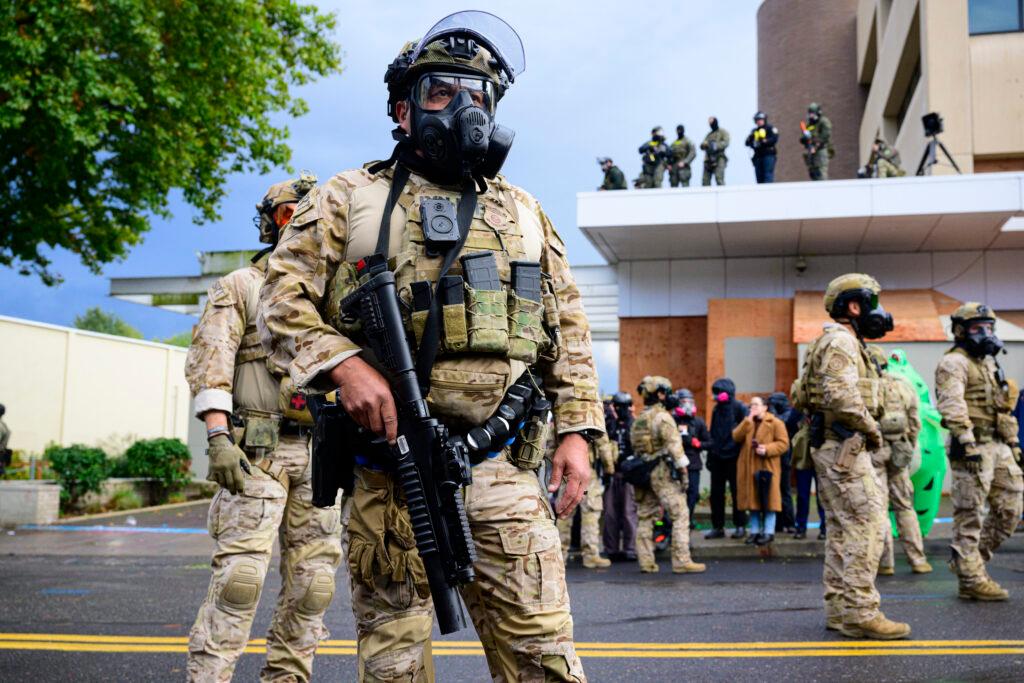
Protests and Legal Responses
Context around the protests further explains the ruling’s impact. Al Jazeera reports that since protests began in June, at least 32 people faced federal charges, with many resulting in probation or misdemeanor pleas—details missing from several mainstream accounts.
“Since protests began in June, at least 32 people have faced federal charges related to the demonstrations, with many receiving probation or guilty pleas to misdemeanors.”
RTE.ie adds that unrest followed a surge in immigration raids tied to Trump’s 2024 campaign focus on mass deportations and that Democrats criticized a misuse of military powers intended for genuine emergencies. Meanwhile, The Straits Times and KSL foreground the judge’s finding that interference was minimal or small‑scale, aligning with the court’s rationale for blocking the deployment.
