Britain05 February, 20263 min read
U.S. Justice Department Releases 3 Million Epstein Files Revealing Global Elites' Complicity In Sex Trafficking
This article is an automated aggregation of coverage from news outlets. Our editorials offer in-depth analysis curated by the NewsCord team.
Justice Department released over three million pages of Epstein-related investigative files Flawed redactions exposed victims' identities, nude images, and sensitive personal data

47 outlets told this the same way.
Outlets did split on UK Police Charge Teddy Young With Spying For Foreign Power, Royal Navy Member →
Epstein document release
The U.S. Justice Department’s recent public release of more than three million pages of documents tied to Jeffrey Epstein has reopened global attention on his criminal network and those who surrounded him.
“The Justice Department last week released more than 3 million files from two decades of investigations into convicted sex offender Jeffrey Epstein.”
Multiple outlets report the scale: NBC states the department released more than 3 million files from two decades of investigations into convicted sex offender Jeffrey Epstein, while other coverage calls it the largest—or second-largest—compilation of related records now public.
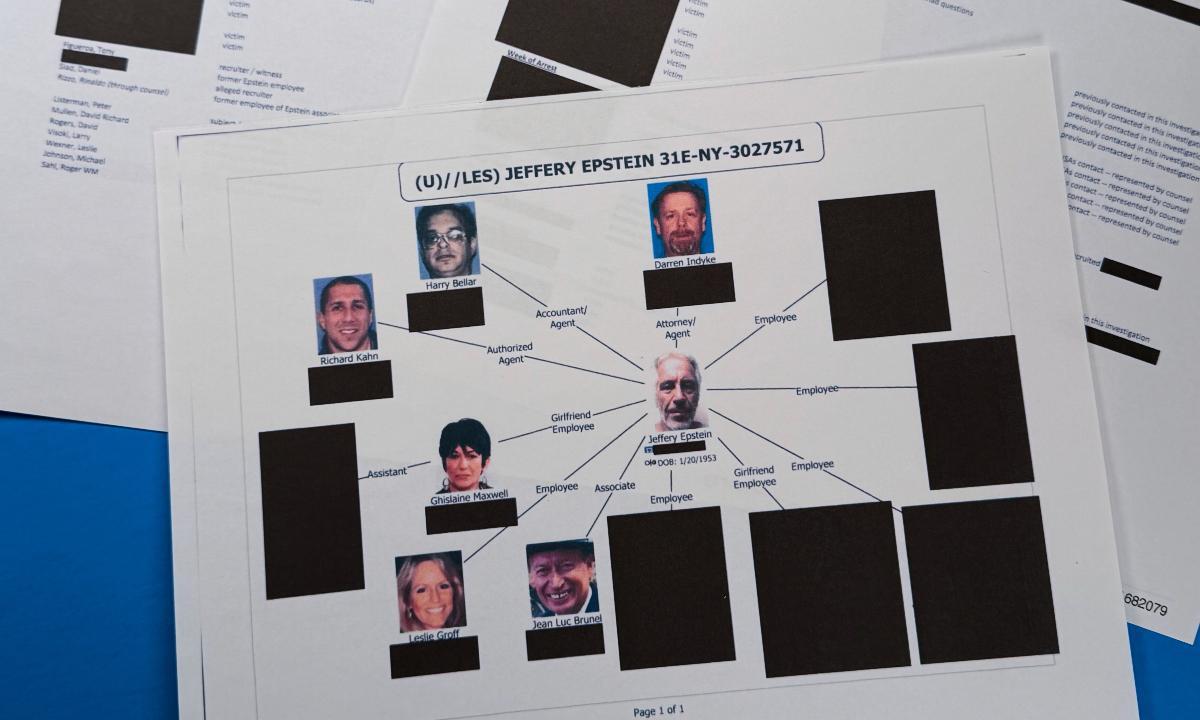
Reporting across regions emphasizes that the release contains witness statements, emails, images and exhibits drawn from long-running federal and civil inquiries, and that the material’s sheer volume and provenance have reignited scrutiny of elites who appear in the files.
DOJ records exposure
Multiple reports say the release included deeply sensitive content that was improperly redacted and briefly publicly accessible, exposing names, images, nude photos, Social Security numbers, and banking information. The Vibes reported unredacted names and faces and even nude photos (including a bathroom selfie and a topless image), while Streamlinefeed and other outlets said the department pulled thousands of files after discovering the errors and that victims' lawyers described the breach as life-threatening. The department attributed the failures to a combination of human and technical mistakes and to an accelerated 30-day review timeline imposed by the recent disclosure law.
Leaked Files and Allegations
The documents thrust numerous high-profile names and contested allegations back into public view. Reporting shows files and emails referencing Bill Gates, Elon Musk, Prince Andrew, former President Donald Trump, and other wealthy or political figures. Folha de S.Paulo says the trove includes a complaint accusing Donald Trump of sexually abusing a 13- or 14-year-old, while Forbes and other outlets flag hundreds of records mentioning Bill Gates and sensational but unverified allegations.
“The Justice Department’s third release of documents tied to Jeffrey Epstein — part of a trove of roughly 3 million pages — includes a complaint from someone who identifies herself as a friend of an alleged victim accusing President Donald Trump of sexually abusing a 13- or 14‑year‑old in New Jersey; those claims are presented as allegations, not established facts.”
CNN and other outlets highlight material tied to Prince Andrew and Virginia Giuffre, and The Straits Times points to exchanges between Epstein and Indian businessman Anil Ambani. Outlets emphasize that these references are allegations or drafts in released files and are not equivalent to proven criminal guilt.
Epstein files: claims and evidence
Some released items revive sharper, contested narratives about intelligence links and corroboration of victims' accounts. S2Jnews summarizes files and a confidential human-source memo that allege Epstein had ties to Israeli intelligence and say those claims were used to suggest political or legal protection; S2Jnews explicitly calls those claims controversial and unproven.
CNN cites a 2015 draft message from a 'G Maxwell' account that appears to confirm a photograph of Prince Andrew with Giuffre, and Anadolu highlights a 2011 Epstein email published by House Democrats saying, "Yes she (Giuffre) was on my plane and yes she had her picture taken with Andrew." These strands show the files both amplify disputed intelligence-style allegations and provide documentary pieces that some outlets view as supporting survivors' claims.
Reactions to disclosure files
The backlash has combined calls for accountability, legal caution, and personal reckonings. Victims’ advocates and lawyers demanded stronger protections and oversight after the exposure. Streamlinefeed reports that victims’ lawyers called the disclosure "life-threatening."
“Victims’ lawyers called the disclosure 'life‑threatening,' and at least one survivor reported the breach to a federal judge.”
BBC coverage outlines investigative tasks to determine how failures occurred and what remedies are owed. Prominent figures named in the files have pushed back.

Bill Gates publicly called his association with Epstein a mistake and denied allegations in draft emails, while Melinda French Gates described the disclosures as "very, very painful." Media outlets diverge in emphasis: some press for fast policy fixes to protect survivors, while others focus on reputational consequences for the elite, leaving readers with urgent questions about procedural failure and unresolved disputes over the meaning of the newly public material.