Syria20 December, 20252 min read
U.S. Launches Large-Scale Airstrikes on ISIS in Syrian Badia After Tadmur Attack Kills Three Americans
This article is an automated aggregation of coverage from news outlets. Our editorials offer in-depth analysis curated by the NewsCord team.
U.S. launched Operation Hawkeye Strike, hitting over 70 ISIS targets with 100+ precision munitions Strikes retaliated for Dec.13 Palmyra ambush that killed two U.S. soldiers and a civilian interpreter

77 outlets told this the same way.
Outlets did split on France Suspends Police Stun Grenades at High School Protests After 15-Year-Old Loses Hand →
U.S. strikes in central Syria
U.S. forces launched a large-scale campaign called Operation Hawkeye Strike across central Syria in direct retaliation for a Dec. 13 attack near Palmyra that killed U.S. personnel, striking roughly 70 ISIS-linked targets including infrastructure, weapons sites and fighters.
“Under 'Operation Hawkeye' (named for the slain troops’ home state, Iowa), U.S. forces launched roughly 70 strikes across Syria targeting infrastructure and weapons storage sites.”
U.S. officials and CENTCOM described the action as a rapid, multi-platform response, and reports emphasize the scale (dozens to about 70 targets) and the operation's aim to degrade Islamic State capabilities and deter further attacks.

The strikes were reported across rural Deir ez-Zor, Raqqa and the Badia/Palmyra area, and CENTCOM said more details would be provided soon.
Palmyra convoy ambush aftermath
Strikes were ordered after a deadly ambush near the UNESCO‑listed ruins of Palmyra on Dec. 13, when a gunman opened fire on a joint U.S.-Syrian convoy, killing two U.S. service members and a U.S. civilian interpreter and wounding several others; the attacker was shot dead at the scene.
Reporting identifies the U.S. military casualties as two Iowa National Guard soldiers named in several outlets and the civilian interpreter Ayad Mansoor Sakat.
Syrian authorities described the shooter as a member of Syrian security forces suspected of ISIS sympathies, a point that is under investigation by CENTCOM.
Multi-platform strike overview
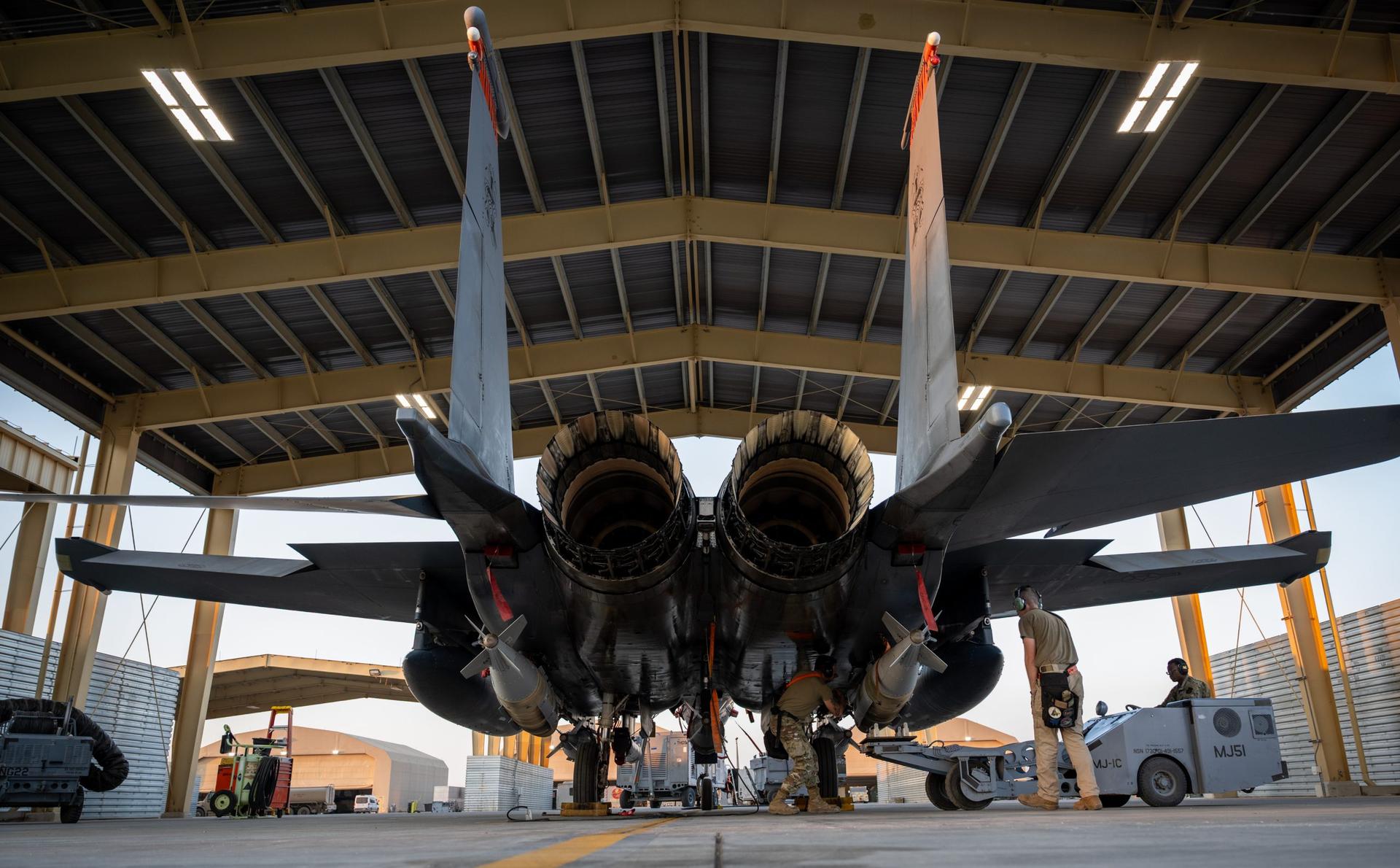
U.S. officials and multiple outlets described the strikes as a multi-platform operation using fighter jets, attack helicopters and artillery, supported by Jordanian aircraft. Outlets listed F-15s, A-10s, AH-64 Apaches, HIMARS rocket artillery and, in some reports, Jordanian F-16s among the assets used. CENTCOM and other reporting said more than 100 precision munitions were employed against scores of IS targets across several provinces, underlining the operation’s breadth and the use of partnered air assets.
“The U.S.-led raids struck roughly 70 ISIS targets — fighters, infrastructure and weapons sites — using F-15s, F-16s (including Jordanian jets), A-10s, AH-64 Apaches and HIMARS rocket artillery.”
Messaging on U.S. strikes
Political and public messaging around the strikes varied. U.S. officials framed the operation as retaliation and deterrence. President Trump called it 'very serious retaliation'.
Defense Secretary Pete Hegseth called it 'a declaration of vengeance' and said U.S. forces 'hunted and we killed our enemies'. Several outlets reported the Syrian government publicly approved or voiced support for operations against ISIS in the areas struck. Officials stressed this was not the start of a new war but a targeted counter-ISIS campaign.

Uncertainties in strike reporting
Key uncertainties remain in reporting. Casualty and damage figures from the strikes were not independently verified at the time of reporting. The attacker’s exact affiliations and whether he acted alone remain under investigation.
“Casualty and damage figures were not yet known.”
Some local monitors (SOHR) and regional sources give differing accounts that CENTCOM is still reviewing. Multiple outlets noted that about 1,000 U.S. troops remain in Syria. Officials warned additional strikes may follow as investigations and operations continue.
