U.S. Launches Strikes Against Iran After Three Merchant Ships Are Hit in Strait of Hormuz
Key Takeaways
- U.S. launches airstrikes against Iran after three vessels attacked in the Strait of Hormuz.
- CENTCOM says strikes impose heavy costs for Iran's attacks on commercial shipping.
- Ceasefire between the U.S. and Iran described as fragile amid Hormuz tensions.
Strikes after Hormuz attacks
The U.S. military launched a series of strikes against Iran early Wednesday after three merchant ships were struck in the waters off Oman in the Strait of Hormuz, with U.S. Central Command saying the action was meant "to impose heavy costs for targeting and attacking commercial shipping crewed by innocent civilians in an international waterway."
“The US military struck targets in Iran following recent attacks on several tankers in the Strait of Hormuz, US Central Command (CENTCOM) said”
CENTCOM said the strikes were in response to "Iran’s demonstrated aggression was unwarranted, dangerous, and a clear violation of the ceasefire," as the renewed exchange threatened the interim deal reached last month.

The ABC13 Houston report said the renewed attacks from both sides threaten the interim deal and add to the difficulty of negotiations aimed at fully reopening the strait, rolling back Tehran's disputed nuclear program, and reaching a permanent end to the war launched Feb. 28.
ABC13 Houston reported that one tanker was traveling off the coast of Oman when it was hit and caught fire, while the other two ships sustained some damage but no one was injured and both continued on their way.
The Air & Space Forces Magazine report said the U.S. carried out fresh airstrikes July 7 as the tenuous ceasefire broke down over disputes over the Strait of Hormuz, and that the operation was intended "to impose heavy costs" for Iran’s recent attacks on commercial shipping.
Condemnations and warnings
Qatar’s foreign ministry spokesperson Majed al-Ansari condemned the Iranian attacks as an "unacceptable attack" on international navigation and global energy security, and said Qatar holds Iran "fully legally responsible."
In a statement posted on social media, CENTCOM said "Iran’s demonstrated aggression was unwarranted, dangerous, and a clear violation of the ceasefire," while a U.S. official told NBC News that the attacks were carried out specifically because of Iranian strikes on ships in the strait.

NBC News quoted a U.S. official saying, "This response is a direct result of the acts of international terrorism that have been perpetrated by Iran on innocent ships transiting the Strait of Hormuz," and added that the Iranians "know the consequences" yet "still chose to carry out these attacks."
The Hill reported that Qatar blamed Iran for attacking Al-Rekayyat and that the U.K. Maritime Trade Operations said a commercial tanker caught fire after being struck by a projectile while transiting near the coast of Oman, with no casualties reported.
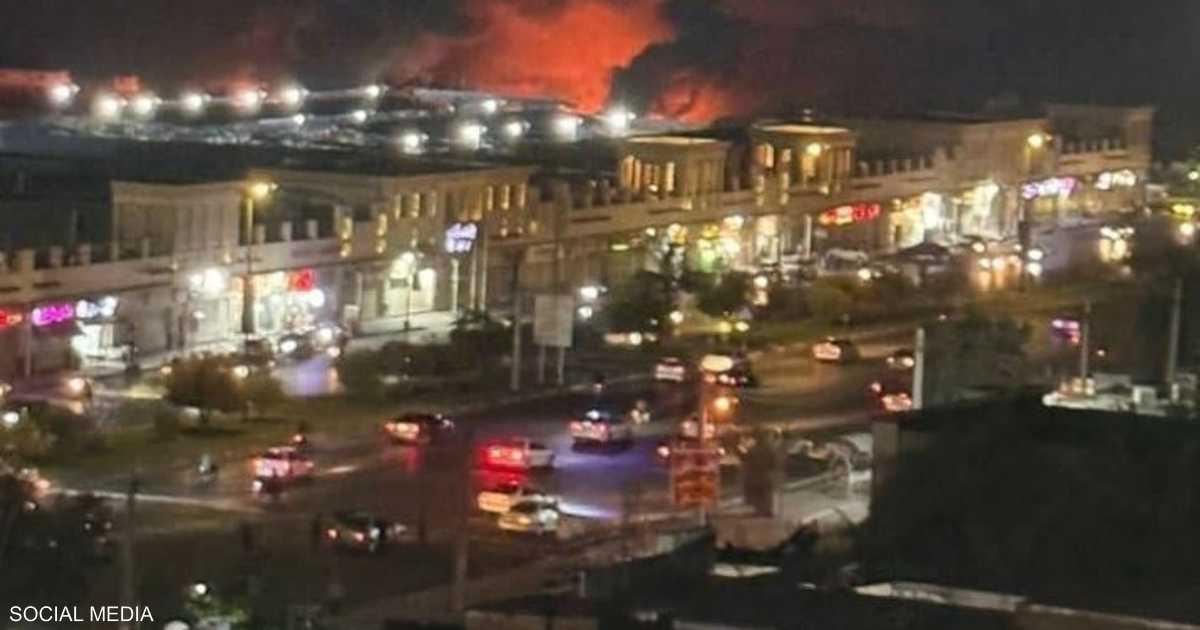
Al Jazeera reported that the U.S. strikes began on Tuesday and were being conducted "in response to Iranian attacks on three commercial vessels that were transiting the Strait of Hormuz," while Iranian media reported explosions in Sirik, Qeshm Island, and areas near Bandar Abbas.
Ceasefire, sanctions, and talks
The renewed strikes and retaliations threatened to unravel a fragile memorandum of understanding signed by President Trump less than three weeks earlier, with Axios saying the exchange of fire risks plunging the U.S. and Iran into a new cycle of retaliation.
Axios reported that the Treasury Department revoked sanctions waivers that had allowed Iran to sell oil, and that Iran’s Foreign Ministry condemned the U.S. decision as breaching the terms of the memorandum of understanding.
NBC News said the U.S. on Tuesday revoked its waiver of temporary sanctions that had allowed the sale of Iranian oil on the global market, and that the revoked waiver said any production, delivery or sale of Iranian oil must be wound down by July 17.
The ABC13 Houston report said the license issued by the U.S. authorized the production, delivery and sale of Iranian oil through Aug. 21, and that the latest exchange followed a similar spate of Iranian attacks on shipping and U.S. retaliation late last month.
The Hill said the U.S. strikes occurred just hours after the Trump administration revoked a sanctions waiver permitting the sale of Iranian oil and petrochemicals, and that transactions allowed under the previous sanctions waiver would have to wind down by July 17 as the initial sanctions waiver was included in the memorandum of understanding signed by both the U.S. and Iran last month.
More on USA

7th Circuit Upholds Illinois Protect Illinois Communities Act Ban on Semiautomatic Guns
12 sources compared

Indiana State Police Trooper Justin Heflin Shot During Pursuit; Suspect Kevin W. Meyers Found Dead
10 sources compared

Donald Trump Fires Election Assistance Commission Members, Leaving No Commissioners
12 sources compared

Eight Accused Of Planning Terror Attack At Casa Blanca UFC Freedom 250 Event
18 sources compared