
U.S. Military Captures Venezuelan President Nicolás Maduro
Key Takeaways
- U.S. military captured Nicolás Maduro during a large-scale strike.
- Maduro's wife was also captured by U.S. forces.
- Maduro and his wife were brought to the United States to face American justice.
Capture of Venezuelan leadership
Multiple sources report that U.S. military forces captured Venezuelan President Nicolás Maduro and his wife in what has been described as a "large-scale strike."
President Trump said the couple will face "American justice" and that the U.S. intends to "run" Venezuela until a transition.

Following the capture, Venezuela’s military recognized Vice President Delcy Rodríguez as acting president.
A Supreme Court ruling ordered her to assume that role for 90 days.
Defense Minister Vladimir Padrino López endorsed that ruling.
Available reporting characterizes the operation as decisive and high-level, with immediate claims of U.S. authority over Venezuela’s political transition.
Global reaction to capture
Global reaction to the capture was swift and predominantly alarmed.
World leaders and international institutions voiced condemnation or concern.
Brazil’s Lula called the operation a grave affront to sovereignty.
The U.N. warned of worrying regional implications.
China and others expressed shock.
Experts cited in coverage warned the intervention would constitute a historic breach of post‑World War II norms limiting the use of force and violations of sovereignty.
They said this would raise acute diplomatic tensions across the hemisphere and beyond.
Venezuela takeover risks
Analysts and humanitarian experts warned the capture risks severe domestic destabilization.
Coverage notes Venezuela's economy has contracted massively since 2013, roughly 8 million people have fled, and over 80% are food insecure.
Observers warned that abrupt removal of central authority could disrupt food distribution, trigger panic buying, create security vacuums as seen in Iraq and Libya, and impede aid delivery, exacerbated by existing problems in Venezuela's CLAP food-aid system.
Commentators also raised concerns that the operation may lack a credible post-Maduro plan and could empower competing actors inside Venezuela.
Interim authority and risks
Domestically, coverage emphasizes immediate institutional moves and the uncertain durability of a Supreme Court-backed interim authority.
The military’s recognition of Delcy Rodríguez and the Defense Minister’s endorsement of the court ruling create a formal chain for interim governance.
Analysts cited the risk that sudden leadership change—absent a clear reconstruction or security plan—could worsen humanitarian access, fracture state institutions, and produce a prolonged period of instability in which multiple actors compete for power.
More on Iran
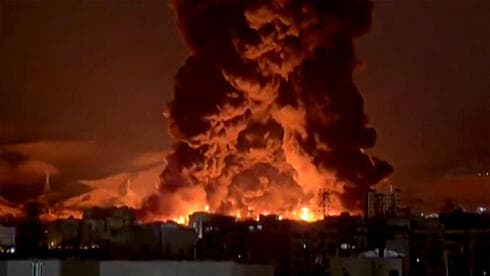
US obliterates military targets on Iran’s Kharg Island, Trump warns
13 sources compared
US Deploys About 2,500 Marines to Middle East After Iran Attacks Gulf Shipping
33 sources compared
FBI Warns of Iranian Drone Plot Based on Unverified Tip; California Says No Credible Threat
10 sources compared

White House Demands ABC Retract Report Claiming Iran Sought To Launch Drone Attacks On California
11 sources compared