U.S. Military Launches Self-Defense Strikes in Southern Iran Near Bandar Abbas During Ceasefire
Key Takeaways
- U.S. launched self-defense strikes in southern Iran after the ceasefire.
- Strikes targeted missile launch sites and boats allegedly laying mines near the Strait of Hormuz.
- Iran accused the U.S. of violating the ceasefire, jeopardizing talks to end the war.
Ceasefire strain, new strikes
President Donald Trump said the United States was “not satisfied” with a deal with Iran and warned it would “finish the job” if talks did not progress, as he spoke at a White House cabinet meeting.
“Iranian and US forces have continued to exchange strikes despite an April ceasefire, fuelling tensions across the Gulf and the Strait of Hormuz, while raising fears the fragile truce could unravel as mediation efforts continue in Doha”
The White House said a report on Iranian state television citing a draft of an unofficial framework for a memorandum of understanding was “a complete fabrication,” while the report claimed the Strait of Hormuz would reopen and US military naval blockade would be lifted.

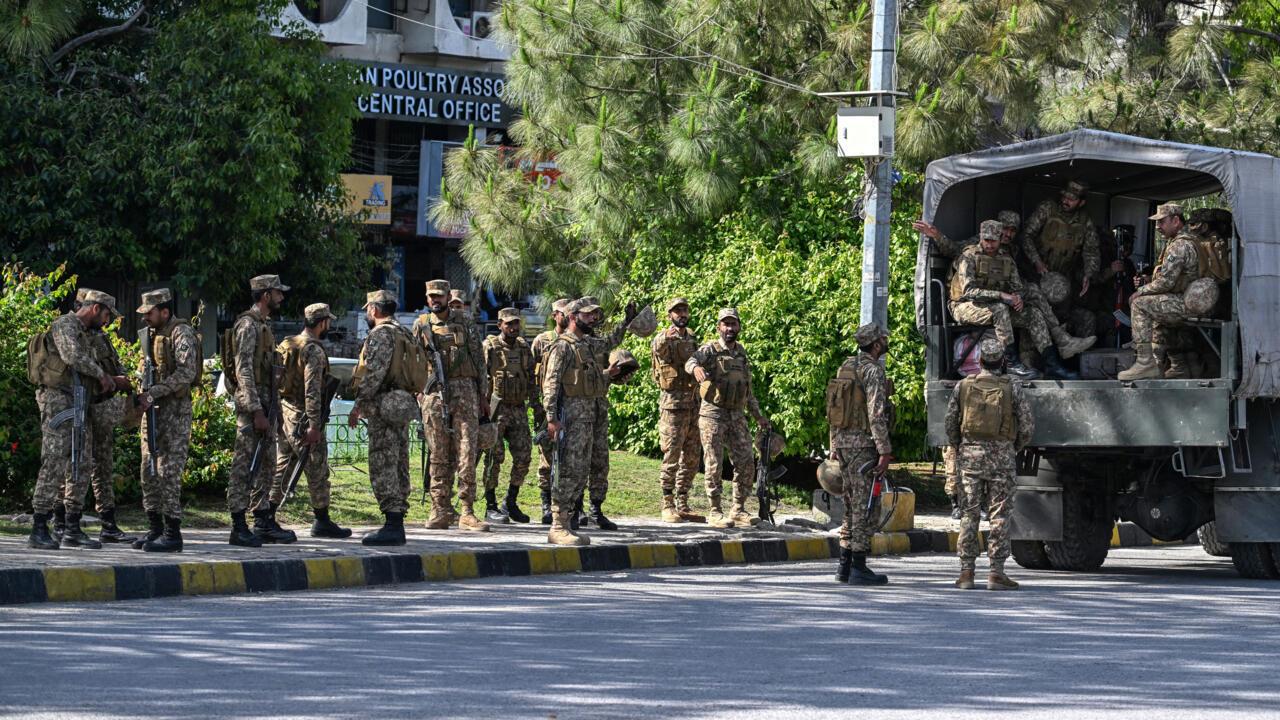
Against that backdrop, the United States military said it carried out “self-defence” strikes in southern Iran targeting missile launch sites and boats laying mines near Bandar Abbas, close to the Strait of Hormuz, even as Trump said negotiations were “proceeding nicely”.
NBC News reported Iran accused the United States on Tuesday of “a clear violation of the ceasefire” after the strikes, and said the U.S. launched defensive strikes in response to 24 hours of missile, drone and small boat launches by Iran’s Islamic Revolutionary Guard Corps near the Strait of Hormuz.
The dispute also fed into the broader talks, with NBC News saying the framework being discussed could give the two sides 60 days to reach a full peace deal and that the temporary ceasefire went into effect April 8.
Competing claims and quotes
In Washington, Secretary of State Marco Rubio told reporters in India that diplomacy was still possible, saying there was a “pretty solid thing on the table” to open up the strait and reach “a very real, significant, time-limited negotiation on the nuclear matter”.
Iran’s Foreign Affairs Ministry said the U.S. strikes were “committed a violation of the ceasefire in the Hormuz region over the past 48 hours,” and warned that “without any doubt,” it would “leave no act of aggression unanswered”.

The U.S. Central Command spokesperson Capt. Tim Hawkins said the strikes were “conducted to defend our troops,” adding that the military was “using restraint during the ongoing ceasefire”.
Iran’s Revolutionary Guard vowed to “respond decisively to any violation of the ceasefire,” and NBC News said it claimed to have shot down an American MQ-9 drone and fired at another U.S. drone and F-35 fighter jet.
Meanwhile, Al Jazeera’s timeline said that since the temporary ceasefire was announced on April 8, Iran has continued to control shipping through the Strait of Hormuz while US forces have enforced a corresponding blockade on Iranian ports, even as negotiations for a long-term ceasefire remained ongoing.
What’s at stake next
The stakes for shipping and energy were explicit in the reporting: Al Jazeera said the Strait of Hormuz is where one-fifth of the world’s oil and natural gas supplies are shipped in peacetime, while the U.S. enforced a blockade on Iranian ports during the ceasefire.
“All you need to know - Trump awaits a response to his proposal to resume negotiations, and Tehran refuses to open the Hormuz Strait - Lebanon: two journalists wounded in an Israeli airstrike in the south - Iran executes a former employee of the Atomic Energy Organization on charges of spying for Israel - The IRGC announces the detention of two ships that attempted to pass through the Hormuz Strait - Trump declares the extension of the ceasefire with Iran and Tehran doubts its true intentions”
Al Jazeera also said the ceasefire was announced after 40 days of war and that the pause was extended to allow more proposals to be exchanged, but it noted that repeated military flare-ups continued to underscore “deep mistrust between the two sides”.
The Guardian reported that Brent crude oil rose 3% after the news of the US strikes, adding to uncertainty about whether a deal would be imminently reached to end the war and open up shipping flows through the Strait of Hormuz.
In parallel, the talks’ core demands remained contested, with the Independent reporting that Iran said it would sign a peace agreement only if Washington released $24 billion (£17.8 bn) in frozen Iranian assets.
NBC News said the unfreezing of billions of dollars of Iranian assets held by the Gulf emirate was a central demand of the team, and it described Parliament Speaker Mohammad Bagher Ghalibaf leaving Qatar after staying overnight for continuing talks as Qatar stepped up mediation role.
More on USA

Chemical Tank Rupture Kills At Least Two at Nippon Dynawave Packaging in Longview, Washington
12 sources compared

Jill Biden Says She Thought Joe Biden Was Having a Stroke During 2024 Debate With Donald Trump
17 sources compared

Ken Paxton Defeats John Cornyn in Texas Senate Runoff, Sets Up Fight With James Talarico
21 sources compared
Ken Paxton Defeats John Cornyn, Sets Texas Senate Fight With James Talarico
13 sources compared