Iran18 February, 20263 min read
US Military Ready to Strike Iran This Weekend as President Donald Trump Weighs Authorization
U.S. military told White House it could strike Iran this weekend; President Trump undecided. Washington has massed carriers, destroyers, fighters and tankers across the Middle East.
51 outlets told this the same way.
U.S. strike readiness reports
U.S. military assets have been moved into the Middle East, and multiple outlets report the forces could be ready to strike Iran as soon as this weekend. President Donald Trump has not authorized an attack. CNN says 'U.S. forces have been readied to strike Iran as soon as this weekend, though President Trump has not yet decided to authorize an attack.'
“U.S. forces have been readied to strike Iran as soon as this weekend, though President Trump has not yet decided to authorize an attack.”
CBS reported that senior U.S. national security officials told President Trump the military could be ready to strike Iran as soon as Saturday, but no final decision has been made and any action could slip beyond the weekend. Goemkarponn says the military is 'prepared to carry out strikes against Iran as soon as this weekend,' though President Trump has not authorized any action. SSBCrack News similarly reports forces are ready though the president 'has not yet made a final decision.'

U.S. force buildup
Reporting describes a large and varied U.S. force posture positioned to enable strikes.
Goemkarponn reports roughly 13 warships including the USS Abraham Lincoln (with the USS Gerald R. Ford en route), two carrier strike groups, advanced aircraft (F-22s, F-15s, F-16s), KC-135 tankers and AWACS.
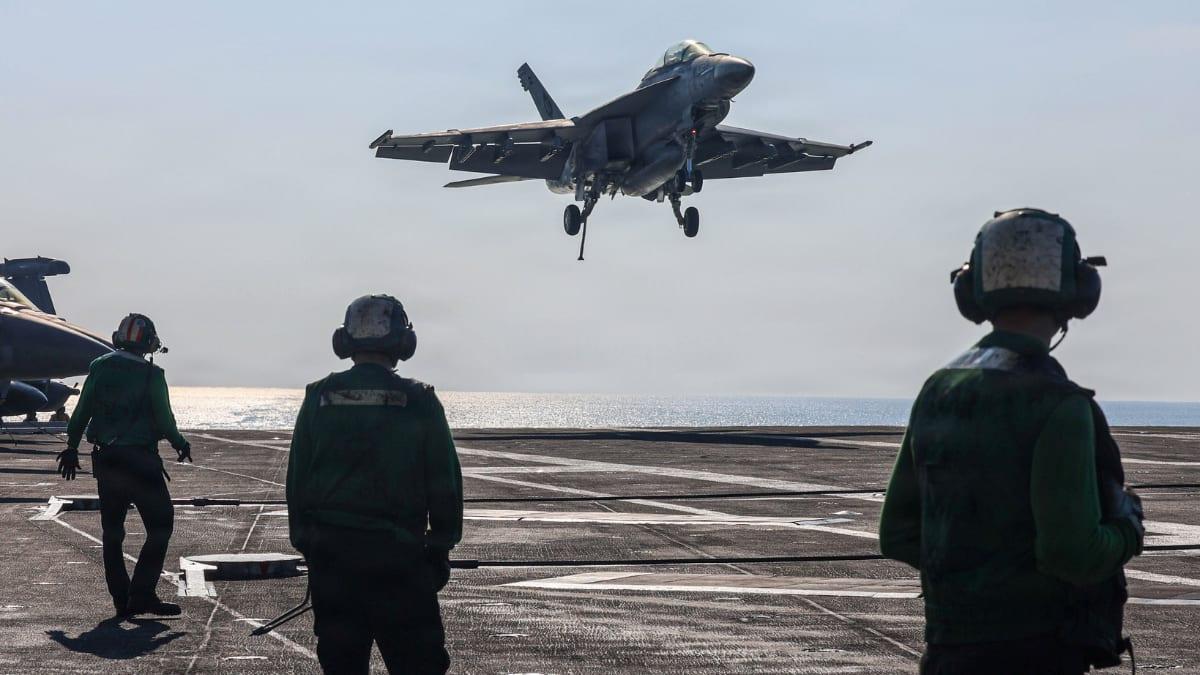
The War Zone reports air deployments that include F-22s and 18 F-35A Lightning IIs, and a maritime presence of roughly a dozen U.S. surface combatants including the Abraham Lincoln carrier strike group.
TimelineDaily and SSBCrack News name the USS Abraham Lincoln and the Gerald R. Ford as part of the buildup.
There is a minor discrepancy between outlets on force size—Goemkarponn's 'roughly 13 warships' and The War Zone's 'roughly a dozen U.S. surface combatants' differ, and sources vary on the exact count.
Geneva talks update
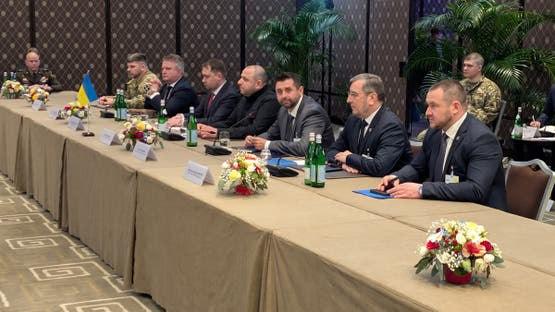
Diplomatic activity is proceeding in parallel: indirect Geneva talks produced exchanges of notes and what some negotiators called "guiding principles." U.S. officials caution that many details remain unresolved and that Iran is expected to provide more detail in coming weeks. CNN said indirect talks "lasted about three-and-a-half hours; notes were exchanged and Iran’s lead negotiator said both sides agreed on 'guiding principles,' but U.S. officials say many details remain unresolved."
“U.S. officials are drafting a document, amid Geneva negotiations, outlining steps to avoid a wider confrontation with Iran.”
The War Zone and i24NEWS report the talks were Oman-mediated and that Tehran will submit more detailed proposals within a short window. Spectrum News quotes Iran’s Abbas Araghchi using a conciliatory line, saying a "new window has opened."
Escalating U.S.-Iran rhetoric
U.S. officials and the White House publicly pressured Iran while reporting highlighted extreme options briefed to the president and stern Iranian responses. Al Jazeera reports the administration said Tehran has not met Washington’s "red lines" and that Trump warned Britain on Truth Social about access to bases. Roya News cites the Wall Street Journal reporting that options briefed include plans to "maximize damage, including targeting dozens of Iranian political and military leaders."
Iranian leaders signaled deterrence, with SSBCrack News noting that "Ayatollah Khamenei posted an AI-generated image suggesting the Ford sunk as a warning." At the same time, White House spokespeople told reporters they prefer diplomacy and declined to set deadlines, a line echoed in multiple outlets.

Middle East risk overview
Analysts and reporters flag immediate precautions and broader regional risks. The Pentagon has temporarily relocated some personnel out of the Middle East as a standard precaution, which CBS described as "standard precautions." Outlets caution an attack during Ramadan or around symbolic dates could be especially destabilizing, and Theweek.in warned such an attack "could be seen as disrespectful by regional allies."
“The Pentagon is temporarily repositioning some personnel out of the Middle East—mainly to Europe or the U.S.—ahead of possible operations or Iranian counterattacks; officials described these moves as standard precautions.”
Iran has signaled countermeasures such as threats to the Strait of Hormuz and naval drills, with Roya News reporting Iran "has threatened to block the Strait of Hormuz" and is conducting drills. PBS and several business-focused outlets note the tense backdrop has economic implications, with oil markets sensitive to escalation.
