South America16 February, 20263 min read
U.S. Naval Deployment Near Venezuela Costs Over $20 Million a Day, Nears $3 Billion
This article is an automated aggregation of coverage from news outlets. Our editorials offer in-depth analysis curated by the NewsCord team.
U.S. naval operational expenses near Venezuela reached about $20 million per day. Total U.S. military operations in the Caribbean approached nearly $3 billion.

8 outlets told this the same way.
Outlets did split on Brazil Police Kill Suspect After 13 Kindergarteners Held Hostage In Curitiba →
U.S. naval cost estimates
A Bloomberg analysis, reported across regional outlets, estimates U.S. naval operations near Venezuela peaked at roughly $20 million per day and approach a total near $3 billion.
“A Bloomberg analysis, reported by Latin Times, says the U.S. naval buildup centered on Venezuela since August has cost more than $20 million per day and as much as nearly $3 billion overall, covering operating expenses for the USS Gerald R. Ford carrier strike group and associated units. Much of the spending was already budgeted for deployed hardware, but analysts warn extended deployments add extra costs (flight hours, munitions, allowances). Mark Cancian of CSIS noted there is no DOD contingency fund for unexpected operations, so ‘conflicts cost extra.’”
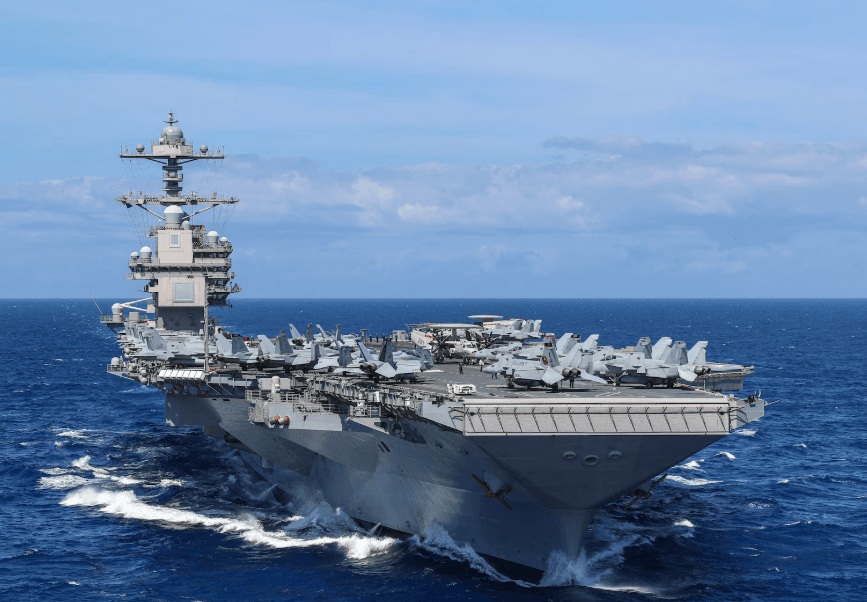
The analysis attributes much of the cost to operating expenses for deployed ships and aircraft, including the USS Gerald R. Ford carrier strike group and its escorts.
Latin Times cites Bloomberg’s calculation and notes analysts warn that extended deployments add extra costs like flight hours, munitions and allowances.
Mark Cancian of CSIS is quoted saying, 'conflicts cost extra.'
CubaHeadlines and CiberCuba repeat Bloomberg’s peak and total estimates and list specific daily cost components for the Ford strike group and other units.
National Today summarizes Bloomberg’s methodology, reports the roughly $3 billion figure and warns that many expenditures are omitted from the tally.
Estimated naval deployment costs
Bloomberg’s cost breakdown, cited in multiple outlets, lists specific platform costs: the Gerald R. Ford strike group at about $11.4 million per day and the USS Iwo Jima, USS Fort Lauderdale, USS San Antonio and the 22nd Marine Expeditionary Unit collectively at roughly $8.59 million per day.
National Today reproduces Bloomberg’s itemized totals—e.g., $417.5M for the carrier USS Gerald Ford and $323.4M for its air wing—and notes the calculation relied on Congressional Budget Office and Defense Department operating-cost data.
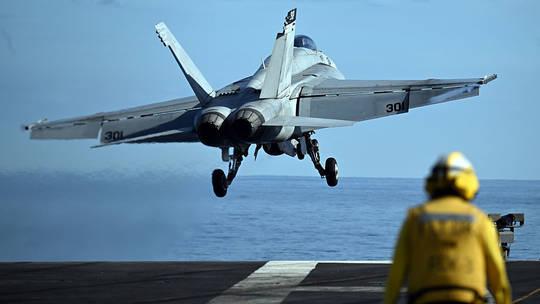
CubaHeadlines and CiberCuba state Bloomberg based its estimate on Pentagon operational-cost figures, ship-tracking, satellite imagery and public deployment notices.
Operational and Budgetary Impacts
Latin Times says the Ford’s deployment began after leaving Norfolk in June 2025 and was redirected from planned European operations. Latin Times says the strike group arrived in Latin American waters in November as part of the largest U.S. buildup in the region in decades, tying up a significant share of the Navy’s surface fleet and delaying the strike group’s return to home port until late spring.
“The Ford’s deployment began after leaving Norfolk in June 2025, was redirected from planned European operations, and arrived in Latin American waters in November as part of the largest U.S. buildup in the region in decades. At its peak the buildup tied up a significant share of the Navy’s surface fleet, highlighting the opportunity cost of concentrating forces in one theater. U.S. officials have since ordered the carrier reassigned to the Middle East to join another strike group amid rising tensions involving Iran, underscoring that a carrier cannot be in multiple theaters at once. The extended and now-redirected mission will delay the strike group’s return to home port until late spring and may affect scheduled maintenance and overhauls.”
CiberCuba and CubaHeadlines warn the deployments will exceed FY2026 budget projections and note the Department of Defense lacks a contingency fund for unforeseen operations. Those outlets echo Mark Cancian of CSIS and former Pentagon comptroller Elaine McCusker’s cost estimate for Operation Southern Spear.
Media coverage of deployments
Balkanweb reports the deployments were tied to the seizure of Venezuelan President Nicolás Maduro and his wife, Cilia Flores, placing them in U.S. custody in New York on federal charges. Balkanweb says the operation began after President Donald Trump ordered their abduction in early January. Balkanweb also reports the White House’s claim that the operation added no new taxpayer costs but contrasts that claim with Bloomberg’s peak and total-cost calculations.
Other outlets, including CubaHeadlines and CiberCuba, emphasize the operations’ link to interdictions of sanctioned oil shipments and to a broader set of named operations (Operation Southern Spear, Operation Absolute Resolve) rather than the abduction narrative. National Today highlights methodological caveats and the possibility that many costs remain uncounted.

Estimates of Southern Spear costs
Analysts and former officials quoted in the pieces caution that Bloomberg's headline figure likely understates the full expense. They say reconnaissance, munitions, satellite support and other costs are not fully counted. They also warn about budgetary accounting and political incentives.
“Experts warn that figure omits many significant expenses—reconnaissance and tactical flight hours, satellite support, weapons and munitions, training, port calls and logistics—so the true bill is likely much higher.”
Elaine McCusker is quoted in multiple outlets estimating Operation Southern Spear, including Operation Absolute Resolve, likely cost about $2 billion since August 2025. Mark Cancian of CSIS is cited warning the Defense Department lacks a contingency fund and that such conflicts add extra cost. One source, The Times of India, noted it could not access the full article text and only presented a headline-based take, highlighting differential access to detail across outlets.