
Iran · 22 March, 2026 · 4 min read
U.S.-Operated Patriot Missile Likely Caused Bahrain Explosion, Reuters Analysis Says
Reuters analysis found a U.S.-operated Patriot battery likely fired the interceptor in Bahrain. The blast injured 32 civilians and damaged homes in Bahrain.
Official misfire denial vs acknowledgement of Patriot involvement in Bahrain.
6 of 7 outlets skipped it: the Sitra refineries’ force majeure status (i.e., Bapco declaring force majeure) was reported by Malaysia Sun but not consistently echoed with the same phrasing by the other outlets..
6outlets compared
Same story, two versions
tap a side to read it in full
KFGO
“CENTCOM insisted at the time that "an Iranian drone struck a residential neighborhood, injuring 32 civilians in Bahrain, including children who required medical treatment".”
Demonstrates divergent framing between initial U.S./Bahraini claims that an Iranian drone caused the damage and later open-source analysis that points to a Patriot interceptor possibly being the launcher.
Initial Incident Reports
On March 9, 2026, a pre-dawn explosion ripped through homes in Bahrain's Mahazza neighborhood, injuring 32 people including children, some seriously.
“Both Bahrain and Washington have blamed an Iranian drone attack for the March 9 blast, which the Gulf kingdom said injured 32 people, including children, some seriously.”
This created an international incident that has sparked conflicting narratives about the cause.

Both Bahraini authorities and U.S. Central Command initially blamed an Iranian drone attack for the blast.
Bahrain's government spokesperson claimed that the Patriot air defense system had successfully intercepted the drone mid-air.
The official accounts maintained that 'had the Iranian drone impacted the residential area, it would have resulted in significant loss of life'.
They also claimed that 'the damage and injuries sustained were not a result of a direct impact to the ground of either the Patriot interceptor or the Iranian drone.'
However, these official explanations have shifted significantly since the attack, leaving questions unanswered about what actually occurred.
Researchers' Analysis
Academic researchers at the Middlebury Institute of International Studies at Monterey conducted a detailed analysis of the incident. They concluded with 'moderate-to-high confidence' that the explosion was likely caused by a U.S.-operated Patriot missile rather than an intercepted Iranian drone. The researchers, including Sam Lair, Michael Duitsman and Professor Jeffrey Lewis, based their findings on open-source visuals and commercial satellite imagery.
They examined a video shot from an apartment building showing a Patriot missile roaring across the night sky on a northeastern trajectory before angling downward. Hany Farid, a professor at the University of California at Berkeley specializing in digital forensics, reviewed the video for Reuters and found 'no obvious evidence that the video is fake.'

The researchers geolocated the video to a neighborhood in Riffa, Bahrain's second-largest city. Using satellite imagery, they traced the missile's trajectory back to its launch point, determining it exploded mid-flight over a residential area.
U.S. Battery Identification
The researchers determined that the missile was likely launched from a U.S.-operated Patriot battery located about 7 kilometers southwest of the blast site in Riffa. They used distinctive features to identify the system as American rather than Bahraini. Based on commercial satellite imagery, they found that the battery has existed at the Riffa site since at least 2009.
“An analysis by researchers at the Middlebury Institute of International Studies at Monterey, examined by Reuters, concluded with 'moderate-to-high confidence' that the missile was launched from a U.S.-operated Patriot battery located in Riffa, about 7 kilometers southwest of the blast site.”
Bahrain's Defense Force did not begin operating its own Patriot systems until 2024, according to a Lockheed Martin press release. The researchers noted distinctive features including protective walls, unpaved roads and a lack of permanent buildings. Using satellite imagery from two days before the incident, they determined that five launchers were visible at the Riffa site.
They concluded that 'the battery is likely operated by the United States, which uses Patriots to defend its naval sites in Bahrain.' This identification challenges the official narrative and suggests the explosion was from a misfired U.S. missile system.
Narrative Discrepancy
A significant discrepancy exists between the official narrative and the researchers' findings about the cause of the explosion.
While Bahrain maintained that the Patriot had successfully intercepted an Iranian drone and both detonated in the air, the researchers concluded otherwise.

Based on the pattern and spread of damage on the ground, the explosion appeared to have been caused solely by the detonation of the Patriot's warhead and unexpended propellant.
The analysis stated that 'if this was the case, this was an irresponsible intercept attempt as it endangered the lives and the homes of allied civilians in a residential area.'
U.S. Central Command had previously denounced reports suggesting a failed Patriot as a 'LIE.'
The researchers noted that the direction of the damage and lack of evidence of a drone made the interception scenario less likely.
They were unable to establish what happened to a first interceptor missile that may have been fired moments earlier.
System Reliability Concerns
The incident raises serious questions about the reliability of U.S. Patriot missile systems.
“Defense and industry officials say Patriot misfires are rare, but they do happen, including an errant missile in 2007 that hit a farm in Qatar.”
It also raises questions about the transparency of U.S. military operations in allied Gulf nations.
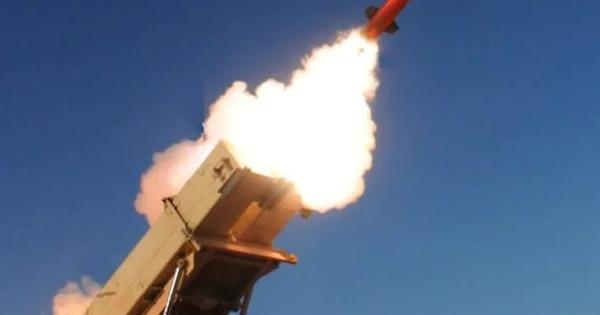
Defense and industry officials note that Patriot misfires are rare but do occur, including an errant missile in 2007 that hit a farm in Qatar.
The analysis suggests that the low trajectory of the missile and its deviation could be signs of a possible problem.
The explosion has highlighted the risks faced by civilians living near military installations.
Bahraini authorities have documented arrests of people who posted videos on social media of attacks during the war.
This incident underscores challenges of verifying military claims in real-time.
It highlights the importance of independent analysis in understanding explosion causes affecting civilians.