Lebanon23 February, 20262 min read
U.S. Orders Non Essential Staff And Families To Leave Beirut Embassy Amid Iran Strike Threat
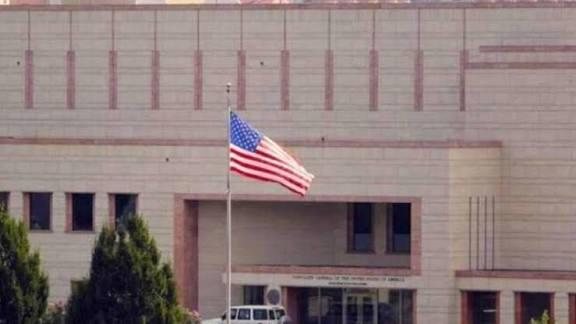
The United States ordered non-essential embassy personnel and eligible family members to leave Beirut Decision followed a security review amid rising tensions with Iran and U.S. military buildup
22 outlets told this the same way.
Outlets did split on Lebanon’s Judiciary Prepares To Apply General Amnesty Law No. 70, Judge Ahmed Rami Al-Hajj Says →
Beirut embassy staff drawdown
The U.S. State Department ordered non-emergency personnel and eligible family members to leave the U.S. Embassy in Beirut after a security review.
“The United States has ordered non-emergency personnel and eligible family members to leave its embassy in Beirut, a senior State Department official told Al Jazeera, after a security review that deemed it ‘prudent to reduce our footprint to essential personnel.’”
The department described the step as a temporary, prudent reduction to essential staff while the embassy remains operational to provide core consular services.

A senior State Department official told Al Jazeera the review deemed it "prudent to reduce our footprint to essential personnel," and other outlets similarly reported the drawdown as temporary and aimed at protecting staff while keeping the mission open.
Coverage across outlets consistently noted the move was framed as a protective, temporary drawdown rather than a full closure of the embassy.
U.S.–Iran tensions and drawdown
The drawdown was reported amid heightened U.S.–Iran tensions and a notable American military buildup in the region. Multiple sources link the personnel reduction to broader preparations and warnings — including U.S. deployments and President Trump’s bellicose language toward Iran — and mention parallel regional developments such as Israeli strikes along the Israel‑Lebanon front. Outlets described the move as coinciding with greater U.S. force posture, diplomatic exchanges, and concerns about retaliation by Iran or Iran‑aligned groups.
Drawdown and evacuations
Some outlets provided concrete operational details about the drawdown, with anonymous U.S. officials describing it as temporary and prudent and local reports giving early evacuation figures. One report said about 50 people were evacuated, while a Beirut airport official reported 32 embassy employees and family members departed, and those figures differ across sources.
“Sources say about 50 people were evacuated; a Beirut airport official reported 32 embassy employees and family members departed Monday.”
Others focused on the diplomatic mission staying open with only core staff to help U.S. citizens. Several sources warned that further travel restrictions for U.S. personnel could be imposed with little or no notice.
Beirut's perceived vulnerability
Analysts and reporting drew on Lebanon's history and the presence of Hezbollah to explain why Beirut is seen as particularly vulnerable. Several pieces recalled past attacks and noted Iran's ties to Hezbollah as part of the risk calculus.
Some outlets invoked the memory of the 1983 Beirut suicide bombing. Others referenced recent Israeli strikes and the weakened but still potent role of Hezbollah if a broader conflict erupted.

Divergent coverage of drawdown
Reporting diverged on the broader implications: some sources tied the drawdown to possible imminent military options and public warnings by President Trump. Other sources said the move reflected routine security reassessments made when regional threats rise and noted that diplomacy, including upcoming Geneva talks, was ongoing. Readers therefore encounter either a narrative of a region on the brink of strike and retaliation or a more procedural account of embassy risk management amid tense but not inevitably eruptive diplomacy.
“The U.S. has ordered nonessential personnel and their family members to leave its embassy in Beirut, a senior State Department official told Military Times, as Washington continues a large military buildup in the Middle East.”