Full Analysis Summary
U.S. and Philippine talks
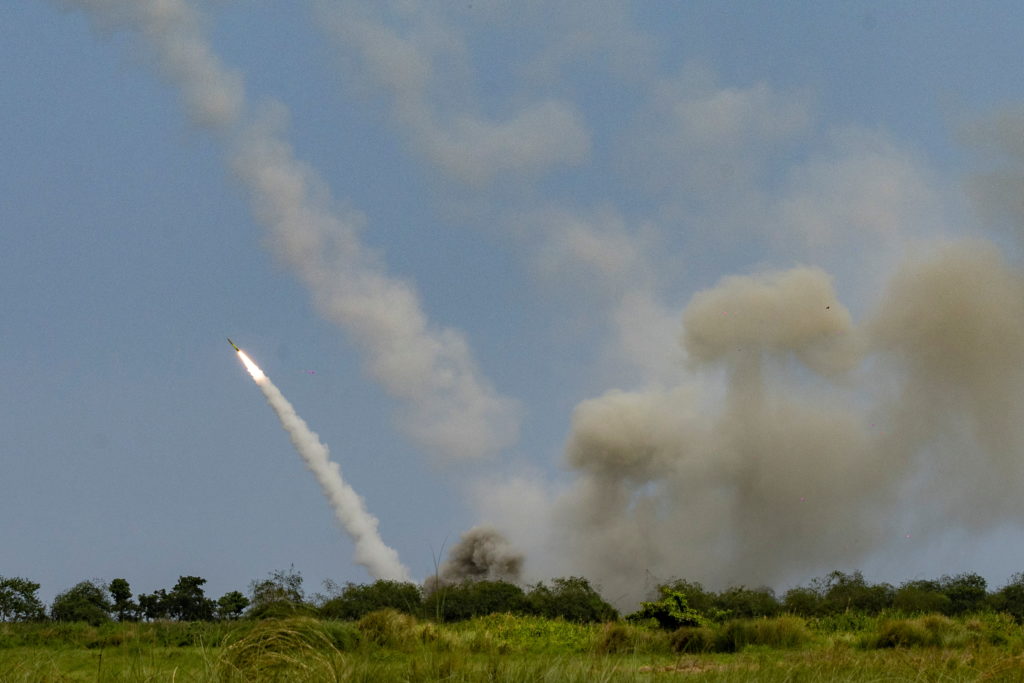
According to the PBS report, U.S. and Philippine officials concluded annual talks in Manila that include plans this year for expanded security cooperation and increased deployments of U.S. 'cutting‑edge' missile and unmanned systems to the Philippines.
The PBS article says defense officials discussed deploying 'upgraded U.S. missile launchers this year that the Philippines might later buy,' and frames those deployments as part of broader modernization and deterrence measures.
The Associated Press item provided to me is incomplete and states it cannot be summarized because the full article text is missing; therefore, the assessment below relies principally on PBS and notes the absence of other sources in the packet provided.
Coverage Differences
Missed Information
PBS reports concrete plans and quotes Philippine officials about U.S. deployments and their framing as deterrence; the Associated Press submission provided here does not include its article content and explicitly says it cannot be summarized, so it offers no competing account or additional detail. I am therefore relying on PBS for factual claims and flagging the AP item as unavailable rather than as a differing viewpoint.
U.S. systems in Philippines
PBS lists U.S. systems deployed to the Philippines, naming the Typhon land-based missile launchers (described as capable of firing SM-6 and Tomahawk missiles) and the Navy Marine Expeditionary Ship Interdiction System (an anti-ship launcher).
PBS says those systems were deployed to Luzon and Batan island in recent years and demonstrated to Filipino forces, and that Tomahawk range from Luzon can reach parts of China while Batan faces the strategically important Bashi Channel south of Taiwan.
The AP submission contains no usable article text to corroborate or contradict these specifics.
Coverage Differences
Unique Coverage
PBS provides system-level detail (Typhon, SM‑6, Tomahawk, Navy Marine Expeditionary Ship Interdiction System) and geography (Luzon, Batan, Bashi Channel). The Associated Press content provided here is missing, so PBS is the sole detailed source in the packet — creating a gap in cross-source corroboration.
South China Sea tensions
PBS reports that both the U.S. and the Philippines reiterated support for freedom of navigation and jointly condemned China's 'illegal, coercive, aggressive and deceptive' actions in the South China Sea.
PBS notes rising clashes between Chinese and Philippine coast guard forces.
PBS records the Philippine ambassador's framing of U.S. deployments as deterrence rather than provocation.
The provided AP fragment does not supply an alternate depiction of China's reaction or regional responses, so the packet lacks a direct Chinese or alternative regional source.
Coverage Differences
Tone
PBS uses strong language quoting the joint statement condemning China’s actions as “illegal, coercive, aggressive and deceptive,” emphasizing clashes and U.S.-Philippine alignment. The Associated Press submission available here does not present its text and therefore does not provide a different tone or direct quotes — this absence reduces the range of tones in the set of provided sources.
U.S.-Philippine military ties
Based solely on the PBS reporting in the packet, the U.S.-Philippine talks signal a step to deepen military ties through more exercises, modernization assistance, and the deployment or demonstration of advanced missile and anti-ship systems.
PBS frames these moves as deterrence and highlights geographic reach, for example mentioning Tomahawk range from Luzon.
The packet did not include the Associated Press text, Chinese-government statements, Philippine opposition voices, or other regional sources, so major perspectives and potential counterarguments are absent.
Because those sources are missing, I cannot reliably report on Chinese official objections beyond PBS's quotation of the joint statement, nor can I confirm whether the term "HIMARS" applies, since PBS does not mention HIMARS specifically.
Coverage Differences
Contradiction / Gap
There is no direct contradiction between sources in the packet because only PBS supplies substantive reporting; the Associated Press contribution is missing, leaving a gap. Important perspectives (Chinese official statements, Philippine domestic political debate, independent regional analysis) are not present in the supplied material, and PBS does not use the term “HIMARS,” so I cannot attribute that system to the reporting.