
U.S. Politics Shifts Over Gaza, Undercutting Bipartisan Support for Israel
Key Takeaways
- U.S. public support for Israel has fallen to record lows across major polls.
- Consensus on backing Israel is waning in both U.S. parties.
- U.S. policy is shifting toward strategic stalemate and critical reevaluation of the alliance.
Bipartisan support fractures
A shift in U.S. politics over the war in Gaza is driving a decline in consensus on supporting Israel across both parties, with a CNN poll in March describing nearly half of Republicans (47%) and three-quarters of Democrats (72%) saying U.S. support for Israel is a problem within their parties.
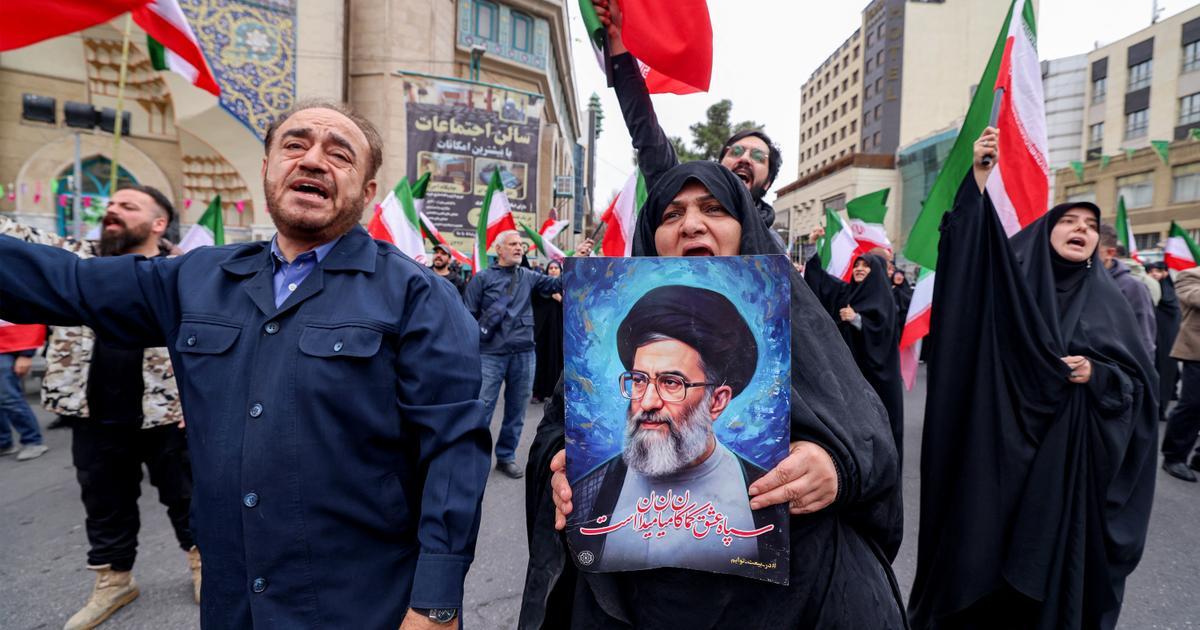
“Tehran targeted, with 'explosions' reverberating also in Tabriz, Qom, Karaj, Khorramabad, Kermanshah, Ilam 'and other cities': on Saturday, February 28, a large part of Iran's territory was the target of attacks carried out by the United States and Israel, reports the Persian-language television channel Iran International, based in London”
The change is reflected in Senate votes on blocking arms sales, with the Arabic-language report saying that "40 members of the Senate last month voted for a resolution to block arms sales to Israel" compared with "27 members who voted in favor of a similar measure in July."
The same reporting ties the political pressure to Gaza to a broader dispute over the U.S. alliance, quoting Adam Hamawi, a field surgeon who volunteered in Gaza, saying: "This is what America wants, and unfortunately the leadership of both parties hasn’t listened."
It also links the widening split to candidates and activists challenging pro-Israel positions, including references to campaigns calling for an end to U.S. foreign aid to Israel and to Democrats and Republicans running on Middle East stances in primaries.
In the Democratic camp, the reporting frames the issue as a credibility test, citing Abdul Sayed’s argument that if politicians cannot name the Gaza genocide and face party interests, "it will be hard to trust what your stance would be" on stopping other violence.
Voices, polls, and rival frames
The political debate is being amplified by polling and by competing narratives about what the Israel issue means inside American parties, including a Washington Post/ABC/Ipsos poll cited as finding that 47% of Americans believe the United States supports Israel more than is necessary.
In that same polling context, the reporting says the share who view U.S. support as excessive has risen since 2015, including among Democrats from 26% to 66%, among independents from 20% to 51%, and among Republicans from 7% to 22%.

The New York Times and The Washington Post are described as documenting a shift that is no longer confined to the right, with the Arabic-language report saying the pro-Israel consensus "is gradually collapsing under the pressure of the Gaza and Iran wars."
The reporting also highlights how right-wing figures are repositioning, quoting Laura Loomer’s claim that the shift resembles a mental health crisis, saying: "mass psychosis," and adding that she is preparing a newsletter to attack right-wing voices critical of Israel led by Tucker Carlson.
Within the Democratic primary framing, Abdul El-Sayed is cited as saying the stance on Israel has become "a test of politicians’ credibility and their willingness to confront the traditional political establishment."
What comes next
As the political burden grows, the reporting describes a competition in Michigan’s U.S. Senate race, with Abdul Sayed at 23% and pro-Israel Haley Stevens at 25%, while state Senate member Mallory McMorrow is at 16% and 36% remain undecided.
“The State of Israel stands tall thanks to a powerful army, cutting-edge technology, and a resilient society”
The same account says Sayed attacked Stevens for accepting support from AIPAC and for stating that the Gaza war is not genocide, while it also describes Democrats calling on the Trump administration to disclose Israel’s nuclear program.
On the right, the reporting points to candidates using Israel as a campaign line, including James Fishback running under the banner "No American should die for Israel" and others calling to halt the purchase of Israeli bonds and end military aid altogether.
The broader stakes are framed as a potential end to the U.S.-Israel alliance’s political foundation, with one report arguing that the relationship has entered an "irreversible downward trajectory" even as it reached a peak in joint military activity.
Finally, the reporting ties the political consequences to public opinion and to the future of U.S. support, stating that "Fewer than half of Americans now see U.S. support for Israel as serving the United States" and that the shift has been accelerated by "the destruction Israel inflicted on Gaza" and the siege and starvation of the Strip.
More on Gaza Genocide

Gideon Sa’ar Cuts All Contact With EU Foreign Policy Chief Kaja Kallas Over Apartheid Remarks
15 sources compared

Trump, Iran Sign MOU To Reopen Strait of Hormuz, End Blockade and Sanctions
13 sources compared

Moshe Feiglin Says He Will Build a New Jewish Temple at Al-Aqsa
11 sources compared

Naël Barghouti Says Hamas-Israel Prisoner Exchange Sent Him Into Exile in Egypt
10 sources compared