Iran14 February, 20262 min read
US President Donald Trump Backs Regime Change in Iran
This article is an automated aggregation of coverage from news outlets. Our editorials offer in-depth analysis curated by the NewsCord team.
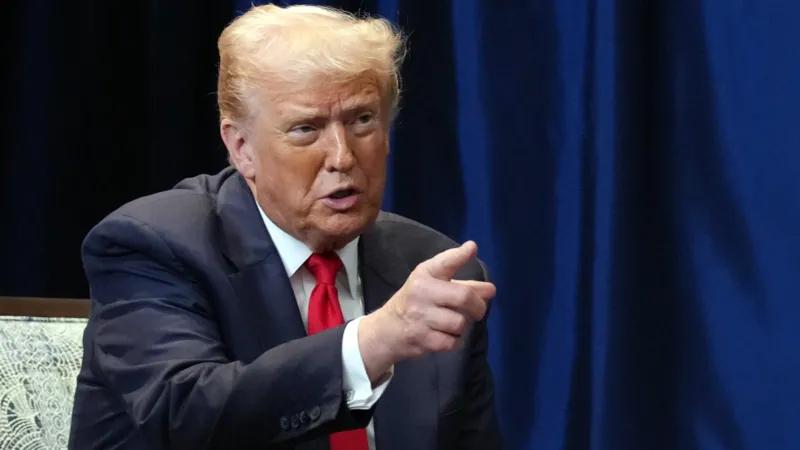
President Donald Trump publicly backed regime change in Iran, calling it "the best thing." The Pentagon moved a second aircraft carrier to the Middle East alongside his remarks.
7 outlets told this the same way.
Outlets did split on Iran Reviews US Negotiation Proposals As Pakistan And Qatar Mediate Strait Of Hormuz Dispute →
Trump on Iran policy
US President Donald Trump publicly endorsed the idea of regime change in Iran on Feb. 14, 2026, saying that replacing Iran’s leadership "seems like that would be the best thing that could happen."
“President Donald Trump on Feb. 14, 2026 openly endorsed regime change in Iran, saying replacing its leadership ‘seems like that would be the best thing that could happen,’ while declining to name potential successors.”
He made the comments after a military event at Fort Bragg as the Pentagon deployed a second aircraft carrier to the Middle East.

Trump also said "tremendous power" will soon be in the region, and reporters noted the USS Gerald R. Ford will join the USS Abraham Lincoln already deployed there.
The remarks were delivered amid ongoing, strained nuclear diplomacy between Washington and Tehran and while U.S. officials weigh both military options and renewed talks on Iran’s nuclear program.
U.S.-Iran diplomacy and pressure
Despite Trump’s hawkish language and the carrier deployment, several sources report parallel diplomatic activity. A Reuters source cited by الصحيفة and The Arab Weekly said U.S. envoys Steve Witkoff and Jared Kushner will meet Iranian representatives in Geneva with Oman mediating. The Reuters source said the U.S. seeks to expand nuclear talks to include Iran’s ballistic missiles, support for regional armed groups, and human-rights issues.
Sources report Iran has signaled willingness to discuss nuclear curbs for sanctions relief but rejects linking those discussions to missile demands. Reporting highlighted this mix of military pressure and diplomacy.

Threats and military deployments
Trump reiterated threats to strike if talks fail and at times boasted about past U.S. strikes on Iranian nuclear sites.
“Trump reiterated threats of strikes if no deal is reached and boasted about past U.S. strikes on Iranian nuclear sites, prompting concerns in the region as both sides warn of retaliation while U.S. forces build up.”
Those comments prompted concerns across the region as both sides warned of retaliation while U.S. forces built up.
الصحيفة reports U.S. officials described the complex, long deployments required to move military assets into place.
BBC notes the Gerald R. Ford was pictured on Trump's Truth Social account and that the Ford was previously sent after US threats over a brutal domestic crackdown in Iran.
Negotiation stances and divergence
Sources report Tehran signals willingness to discuss nuclear limits for sanctions relief. They say Tehran rejects linking the talks to missile demands, and BBC quotes Iran’s President Masoud Pezeshkian warning Tehran will not accept "excessive demands." This reflects a divergence between Washington’s stated aims—pressuring over missiles, proxy support and rights—and Iran’s insistence on separating nuclear curbs from other issues.
U.S. rhetoric and framing
Reporting across source types shows a mix of hawkish U.S. rhetoric, an explicit endorsement of regime change by Trump, active carrier deployments, and parallel diplomatic efforts. Outlets vary in their focus and framing of these elements. Asian and regional outlets (Daily Times, The Arab Weekly, الصحيفة) emphasize the direct endorsement, the carrier deployments, and immediate strategic implications.
“President Donald Trump on Feb. 14, 2026 openly endorsed regime change in Iran, saying replacing its leadership ‘seems like that would be the best thing that could happen,’ while declining to name potential successors.”
BBC situates the comments within past U.S. policy decisions and quotes Iranian leadership pushing back. Differences include which title is used for Trump, which details outlets quote, and whether Iranian pushback is directly quoted. Those differing emphases shape divergent reader impressions about whether the moment is primarily a military threat or part of a complex diplomacy-plus-coercion approach.
