Full Analysis Summary
UN Security Force Proposal for Gaza
The United States is pushing a draft UN Security Council resolution to deploy an International Stabilization/Security Force (ISF) in Gaza under a transitional “Board of Peace” with a minimum two‑year mandate.
Some versions of the draft expand the mandate to the end of 2027.
The draft, confirmed by U.S. officials, is framed as part of President Donald Trump’s plan.
The goals of the plan include protecting civilians, securing borders with Israel and Egypt, enforcing demilitarization, and training a new Palestinian police force.
The text is still being circulated and, in several accounts, has not yet been formally submitted for a vote.
The draft is linked to a ceasefire and hostage-release framework that preceded it.
Coverage Differences
timeline/scope
AP News (Western Mainstream) confirms a “draft” for an ISF “for at least two years,” while CNN (Western Mainstream) details an ISF “until the end of 2027,” showing divergent scope. The Vibes (Asian) and ThePrint (Asian) emphasize the creation of a transitional “Board of Peace,” which AP does not mention. EconoTimes (Local Western) and Arab News (West Asian) explicitly note the ISF’s authority to use force, a detail not in AP’s brief confirmation.
submission status/links to ceasefire
The Vibes (Asian) and ThePrint (Asian) stress that the draft is still being developed and not formally submitted, whereas EconoTimes (Local Western) ties the resolution to momentum from a preceding ceasefire and hostage release agreement, presenting it as a next step in a phased framework.
demilitarization condition
Arab News (West Asian) and ThePrint (Asian) state that the plan seeks to end Hamas governance through demilitarization and that Hamas has not agreed to disarm, while AP News (Western Mainstream) focuses primarily on the existence of the draft and its duration without foregrounding Hamas’s stance.
Proposed Gaza Multinational Force
Several sources highlight that U.S. troops will not be deployed inside Gaza.
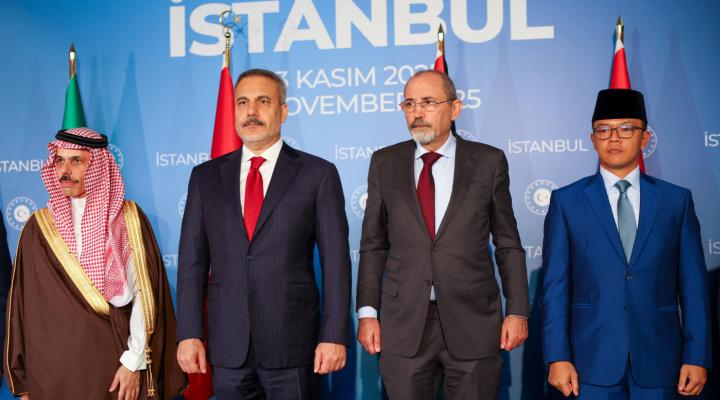
Potential contributors to the force include Indonesia, UAE, Egypt, Qatar, Turkey, Azerbaijan, and others.
These contributors would operate under a unified command with input from Israel and Egypt.
The UK and UN leadership emphasize that any force must have a Security Council mandate.
Positions of China and Russia range from uncertain to expected opposition regarding the force.
Timelines for deployment vary, with some accounts targeting January 2026 and others as early as January next year.
Coverage Differences
US role vs. outside coordination
Samaa TV (Other) and The New Arab (West Asian) say the U.S. will not send troops and is seeking other countries’ contributions; CNN (Western Mainstream) adds that while no U.S. troops enter Gaza, they would coordinate operations from outside via a U.S.-led center in southern Israel.
contributors and command
The Straits Times (Asian) and The New Arab (West Asian) list similar contributor countries under a unified command with input from Israel and Egypt; CNN (Western Mainstream) specifies a U.S.-led coordination center and unified command with Israel and Egypt, offering more operational detail than others.
Russia/China stance and mandate
EconoTimes (Local Western) notes uncertainty about Russia and China, Hürriyet Daily News (West Asian) predicts strong opposition from both, while Daily Sabah (West Asian) says the draft hadn’t even been shared with them yet—highlighting different readings of diplomatic headwinds. Evrim Ağacı (West Asian) and Dhaka Tribune (Other) stress the need for a UNSC mandate echoed by the UK.
timeline to deploy
Evrim Ağacı (West Asian) targets “January 2026,” Gazeta Express (Other) says “deploy troops by January” without specifying the year, and World Israel News (Other) says the force is “possibly starting in January,” indicating ambiguity over start dates.
Gaza Governance Proposals
Governance design is contested.
Several sources describe a temporary “Board of Peace” and a technocratic Palestinian committee to run Gaza while an ISF enforces demilitarization and trains a new Palestinian police force.
Some outlets claim the Board would be chaired by Donald Trump, with Tony Blair involved, and portray the mission as enforcement rather than traditional peacekeeping.
Financially, a World Bank–managed trust fund is floated for reconstruction.
Other narratives debate who is excluded from governance—Hamas, and possibly the Palestinian Authority after reforms—revealing sharp political divides.
Coverage Differences
who leads the Board of Peace
Just Security (Other), The Diplomatic Insight (Other), and Apa.az (Asian) report or discuss a Board of Peace chaired by Donald Trump (with Just Security adding Tony Blair); mainstream summaries such as AP News and EconoTimes do not mention this leadership claim, underscoring a gap between legal/advocacy analysis and straight news briefs.
peace enforcement vs. peacekeeping
Apa.az (Asian) frames the ISF as an “enforcement mission rather than peacekeeping,” while Evrim Ağacı (West Asian) stresses a Council-mandated force authorized to use all necessary measures—both suggest robust enforcement. Al Jazeera (West Asian) separately reports Guterres proposed a UN-mandated peacekeeping force, which Israel opposes.
who is in or out of governance
Algemeiner (Local Western) says the plan would exclude Hamas but could include the PA after reforms, yet adds Israel rejects any role for Hamas or the PA. World Israel News (Other) reports both Hamas and the PA are excluded over militancy and corruption concerns, clashing with the possibility of PA inclusion after reforms reported elsewhere. The New Arab (West Asian) and ThePrint (Asian) emphasize demilitarization and rebuilding via a World Bank trust fund rather than adjudicating PA inclusion.
Diverging Views on Gaza Control
Israel’s stance is split across accounts, with Israeli media and West Asian outlets differing on consultation and control.
Israeli Prime Minister Benjamin Netanyahu is quoted saying only a force approved by Israel will enter Gaza.
Al Jazeera reports that Israel opposes any United Nations involvement.
CNN and other sources describe a unified command including Israel and Egypt in the plan.
Israel Hayom claims the plan was developed with both Israel and Egypt.
In contrast, reporting from JFeed states that Israel’s Cabinet has not reviewed the draft.
Officials worry that the aggressive timeline and specifics could pressure Israel before its policy is finalized.
Coverage Differences
contradiction on Israeli consultation
Israel Hayom (Israeli) reports the plan was developed with Israel and Egypt, implying deep consultation, while JFeed (Other) reveals Israel’s Security Cabinet hasn’t reviewed the draft and officials are frustrated—directly contradicting the impression of full coordination.
Israel’s gatekeeping vs. UN mandate
Al-Jazeera Net (West Asian) quotes Netanyahu that only a military force approved by Israel will enter Gaza, while Hürriyet Daily News (West Asian) says Guterres emphasized any governing body must have a legitimate UNSC mandate—tension between unilateral approval and multilateral authorization. Al Jazeera (West Asian) further reports Israel opposes any UN involvement.
command structure portrayal
CNN (Western Mainstream) details a unified command with Israel and Egypt and a U.S.-led coordination center, while Al-Jazeera Net (West Asian) centers Israeli pre-approval and disarmament aims, reflecting differing emphases on who ultimately directs the mission.
UN Ceasefire and Gaza Crisis
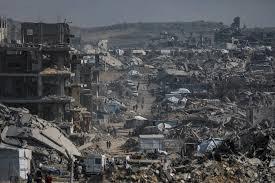
This UN push unfolds amid mass Palestinian death from Israeli military operations that critics describe as genocide.
Al-Jazeera Net reports a ceasefire followed a campaign that killed over 68,000 Palestinians—mostly civilians—and leveled Gaza’s infrastructure.
PressTV shares rights-focused criticism that the plan ignores occupation, accountability for war crimes, and Palestinian self-determination.
Other outlets note body returns under a U.S.-brokered truce and argue that speeding approval is the best chance to replace Israeli troops with an international force and avoid renewed killing.
Coverage varies in tone: some Western mainstream outlets confirm process details with limited rights framing, while several West Asian and other outlets foreground Palestinian civilian deaths and legal accountability.
Coverage Differences
tone and rights framing
PressTV (West Asian) centers Palestinian rights, war crimes accountability, and opposition to foreign-controlled governance; AP News (Western Mainstream) provides a brief procedural confirmation without rights language; Al‑Jazeera Net (West Asian) quantifies Palestinian deaths and destruction—elements many critics call genocide.
on-the-ground consequences vs. process
The Daily Star (Western Tabloid) focuses on body returns under a U.S.-brokered ceasefire and links the next step to the Board of Peace/ISF; EconoTimes (Local Western) emphasizes Security Council arithmetic and regional diplomatic backing, reflecting a process-first lens; Sada News (Other) argues opposing the resolution would worsen Gaza’s situation, describing the plan as a critical opportunity for peace.
who replaces Israeli troops and when
Al‑Jazeera Net (West Asian) says the draft calls for a gradual withdrawal of Israeli troops and activation of the international mandate; Sada News (Other) says the force is “expected to replace the Israeli army”; United News of Bangladesh (Asian) describes coordination with Egypt, Israel, and a trained Palestinian police force with aid safeguards.