U.S. Rebuilds Logistics Supply Chain After Ceasefire, Boosts CENTCOM Airlift From Ramstein
Key Takeaways
- Regional shipping routes disrupted by the US-Israel-Iran conflict.
- Alternative corridors like Caspian Sea and Chabahar are rising.
- Ceasefire context prompts rebuilding CENTCOM logistics networks.
US logistics amid war
A set of reports tied to the United States’ role in the Iran conflict depicts “silent logistics” as a continuing backbone of military pressure, even when ceasefire language appears in public.
“Arabi Post reports in this piece what can be described as the arteries of international logistical and military support that the United States and Israel receive to sustain their ongoing war against Iran, which began in February–March 2026”
In one account, Mehr News Agency’s policy desk says that five days after the United States announced a ceasefire with Iran, Washington “is rebuilding its logistical supply chain and strengthening operational bottlenecks in the CENTCOM area,” describing the moves as a “technical pause” for “reconfiguring forces and preparing for future scenarios.”
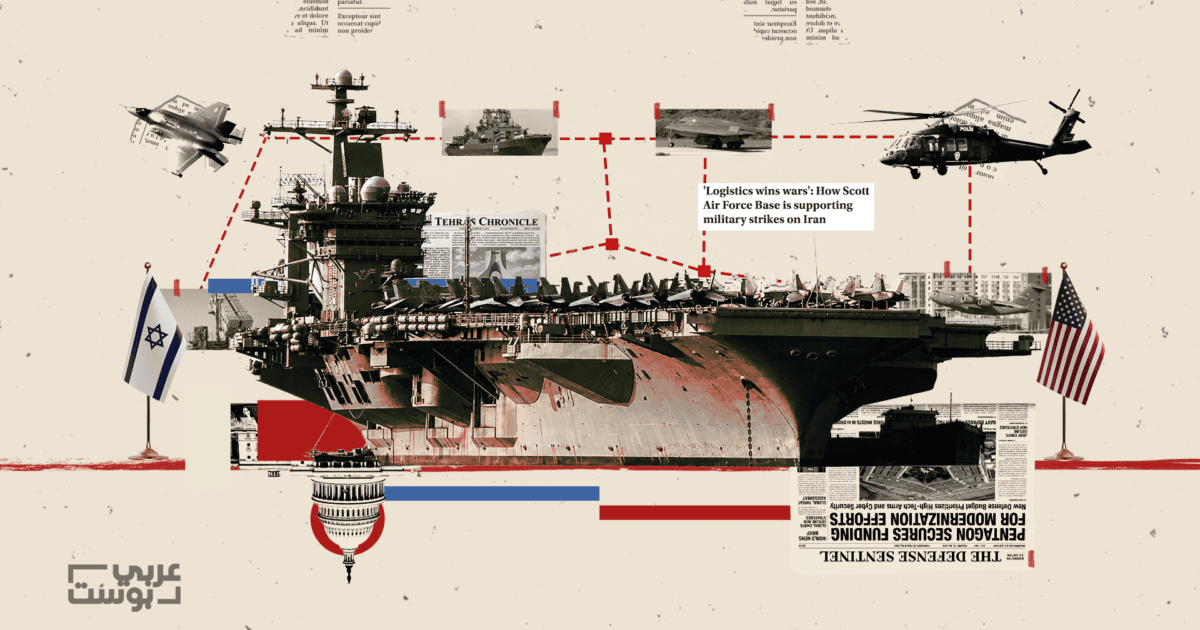
The same report says that in the past “120 hours” strategic airlift traffic from Dover Air Force Base (Delaware) and Ramstein (Germany) toward CENTCOM’s key bases “has risen markedly,” and it claims “at least 12 to 15 heavy sorties” with C-17 Globemaster III and C-5 Galaxy bound for Al-Udeid (Qatar) and Muwaffaq al-Sultī (Jordan) were recorded.
It further estimates “over 800 tons of sensitive equipment” including “radar electronic racks” and “spare parts for F-15E/F-16 fighter jets,” and it says some shipments were moved via the Jebel Ali port (UAE) under “grey logistics.”
Another report, ABNA, frames questions about whether the United States is laying groundwork for an encirclement of Iran from the northern front, pointing to flight-tracking data that show “about 35 military transport flights to Armenia and Azerbaijan,” with destinations “Armenia topped the list with 20 military flights” and “Azerbaijan with 15 flights.”
ABNA’s narrative adds that “more than half of these flights originated from Ramstein Air Base in Germany,” and it says most flights used “heavy cargo aircraft of the Boeing C-17 Globemaster III type,” while “only four flights were logged” using “three Lockheed Martin MC-130J Commando II aircraft.”
Together, the accounts portray the United States’ activity as a logistics-and-readiness pattern spanning airlift corridors and regional staging points rather than direct combat movement.
Airlift routes and equipment
Mehr News Agency’s account details a specific airlift picture and ties it to CENTCOM staging, naming the air bases and aircraft types used in the reported surge.
It says “strategic airlift traffic from Dover Air Force Base (Delaware) and Ramstein (Germany) toward CENTCOM’s key bases has risen markedly,” and it specifies that “at least 12 to 15 heavy sorties with C-17 Globemaster III and C-5 Galaxy bound for the bases Al-Udeid (Qatar) and Muwaffaq al-Sultī (Jordan) have been recorded.”

The report’s estimate of what is being moved is equally concrete, stating “Estimated transport capacity: over 800 tons of sensitive equipment including radar electronic racks, spare parts for F-15E/F-16 fighter jets, precision-guided munitions, and components of air defense systems.”
It also describes how shipments were routed to avoid political sensitivities, saying “part of the shipments were moved via the Jebel Ali port (UAE) with civilian-style logistics coverage to ground bases.”
In ABNA’s separate flight-tracking discussion, the emphasis is on the pattern of cargo flights rather than combat units, stating that “Most of these flights were carried out by heavy cargo aircraft of the Boeing C-17 Globemaster III type,” and that “only four flights were logged using three Lockheed Martin MC-130J Commando II aircraft.”
ABNA then links the timing of the cargo activity to visits by “J. D.” to Azerbaijan and earlier to Armenia, describing that these visits “culminated in the signing of economic and security agreements with the United States.”
While ABNA says the data do not prove intent to attack, it frames the movement as “a different pattern of influence and pressure—one based on indirect aerial movements and the creation of flexible logistical infrastructure deep in the Caucasus region.”
Ceasefire, but no end
The reports also depict a dispute over whether a ceasefire means a halt in hostilities, with Mehr News Agency quoting an Iranian official framing of the pause as temporary.
“Iran conflict boosts profits for European logistics companies amid shipping chaos Economy AI sentiment: 72/100 Up This rating is generated through an AI-powered analysis of the article's content”
Mehr says the Islamic Revolutionary Guard Corps (IRGC) and the General Staff of the Armed Forces of the Islamic Republic of Iran, in an official statement, emphasize that the ceasefire is “by no means the end of the war and is merely a 'temporary tactical pause'.”
It then quotes the IRGC Public Relations release, writing: “The IRGC Navy declares that contrary to the false claims of some enemy officials, the Strait of Hormuz is open and under intelligent management, with special procedures ensuring harmless passage for civilian vessels; for military vessels that, under any title or pretext, intend to approach the Strait of Hormuz, violation of the ceasefire will be considered and met with severe action.”
The same Mehr report adds that the Iranian armed forces stress “constant vigilance,” stating that “The honorable government, the armed forces and the Iranian nation must, while preserving unity and cohesion, remain vigilant to any suspicious enemy movements and maintain full readiness.”
In TRT عربي’s account, Turkey’s Minister Bolat is quoted warning that “the effects of rising prices and supply shortages due to the war in the region may last for some time,” and he says “We hope that the 15-day ceasefire terms will be observed permanently.”
TRT عربي also ties the ceasefire to a specific diplomatic step, stating that “On Wednesday, the United States and Iran announced a two-week truce brokered by Pakistan,” and it describes that this “paving the way for a final agreement to halt the war that Washington and Tel Aviv began against Tehran on February 28 last year.”
El Mundo’s framing, by contrast, argues that “NACHO persists” and that “Closing choke points is relatively easy for adversaries willing to cut risks,” while it asserts that “Not A Chance Hormuz Opens” is the expression gaining popularity.
Hormuz disruption and rerouting
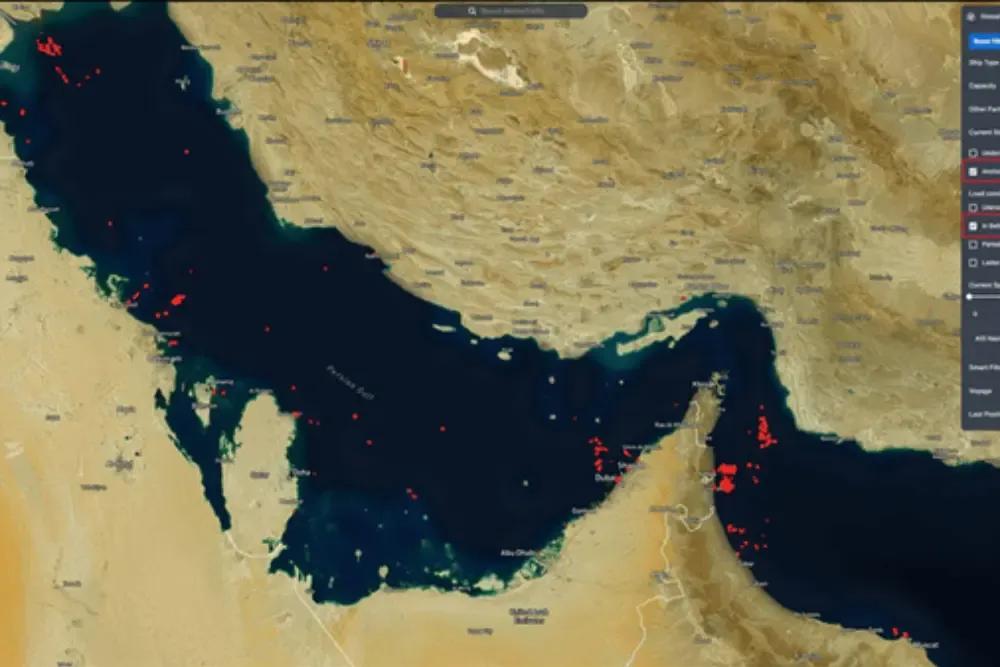
Beyond military logistics, the sources describe how the Strait of Hormuz disruption reshapes global and regional supply routes, with multiple reports tying the change to insurance costs, port access, and alternative corridors.
Midel East News says that with a naval blockade imposed as part of the war waged by the United States and Israel against Iran, “the transit routes for essential goods are being rapidly replaced,” and it reports “the first shipment of livestock and poultry feed through Caspian Sea ports into Iran.”

It quotes Reza Rastami, head of the Transport, Transit and Logistics Committee at the Iranian Chamber of Commerce, saying the private transport sector supported the government and that “multiple access routes have been opened from the east, west, north, and south of the country, to secure the country’s needs for essential goods in wartime.”
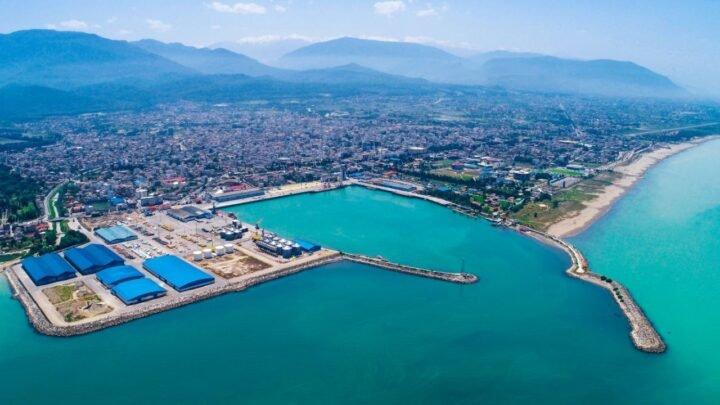
The same report says that “About 90 percent of Iran’s commodity trade is conducted by sea,” and it adds that the naval blockade in the south “has accelerated the search for alternative trade routes,” including “the activation of four ports on the Caspian Sea.”
Tin News focuses on the Hormuz Strait’s effect on Iran’s internal logistics, saying that “Shahid Rajaee Port, Iran's largest container port, has borne the greatest impact,” and it describes Chabahar as “now entered operational service as an alternative route.”
Tin News adds that “some ships that previously targeted Persian Gulf ports, including Imam Khomeini Port or Shahid Rajaee, are now routing to Chabahar,” and it reports that delays of “several days or even more than a week have been reported.”
El Mundo adds a broader trade framing, saying “Closing choke points is relatively easy for adversaries willing to cut risks,” and it claims that “Through Hormuz passes 20% of the world’s oil,” while it argues that “NACHO persists.”
Economic stakes and pressure
The sources also connect the United States-Iran confrontation to economic stakes, including energy prices, shipping costs, and political pressure.
“That came in an opening speech delivered by Bolat at the 'E-commerce Logistics in the AI Era' summit on Friday in Istanbul”
Dr. Mohamed Al-Shawadfi, an economist quoted by جريدة الدستور, says the confrontation “has led to clear negative repercussions on the global economy,” and he points to Brent crude rising “to about $125 per barrel from $111,” describing this as a sign of “sharp price increases and global inflation.”
He warns that crossing “the $120 barrier for oil prices means entering the global economy into a phase of strong inflationary pressures,” and he says the closure of the Strait of Hormuz poses “a direct threat to global oil supplies.”
Al-Shawadfi also states that “the cost of the war on the United States has surpassed $50 billion,” adding that it will reflect on the American economy through higher prices, “especially fuel prices.”
In The Week’s opinion piece, the stress is on supply-chain vulnerability and energy dependence, saying the Strait of Hormuz has become “a flashpoint,” and it reports that “Since the outbreak of the war on February 28, oil prices have surged nearly 60 per cent,” with crude “climbing past $120 a barrel.”
Invezz’s report frames the stakes through logistics company profitability, saying “European logistics firms are expected to report higher first-quarter profits” due to supply-chain disruptions tied to “the war between the United States, Israel, and Iran,” and it quotes Reiko Loman: “A full resumption has now been delayed by several months, perhaps until the end of the year.”
Finally, vista.ir attributes a claim to Sardar Seyed Majid Mousavi, commander of the IRGC Aerospace Force, stating that “The paralysis of the U.S. radar network, logistics, and taking casualties from the United States in the region continues.”
More on USA

Spirit Airlines Begins Orderly Wind-Down After White House Rescue Deal Fails
32 sources compared

Donald Trump Tells Congress Iran Hostilities Have Terminated After War Powers Deadline
30 sources compared
Pentagon Orders Withdrawal of About 5,000 U.S. Troops From Germany Amid Trump-Merz Feud
70 sources compared
U.S. Treasury Warns Shippers Not to Pay Iran Strait of Hormuz Tolls
11 sources compared