U.S. Reopens Strait of Hormuz After UAE Says Iran Attacked Civilian Ships
Key Takeaways
- Iran attacked United Arab Emirates with drones, missiles, and small boats near Hormuz.
- U.S. forces engaged Iranian forces and moved to reopen the Strait of Hormuz.
- Iran denies targeting the UAE and blames the United States for the incident.
U.S. opens Hormuz lane
The United States moved to reopen the Strait of Hormuz on Monday after the United Arab Emirates said it had come under attack from Iran for the first time since a fragile ceasefire took hold in early April.
The U.S. military said it fired on Iranian forces and sank six small boats targeting civilian ships as it moved to reopen the strait, and it said two American-flagged merchant ships successfully transited the strait on Monday as part of a new initiative.

The U.S.-led Joint Maritime Information Center advised ships Monday to cross the strait in Oman's waters and said it had set up an "enhanced security area."
Adm. Brad Cooper, commander of U.S. Central Command, told reporters that American forces opened a passage through the strait that is free of Iranian mines, and he said Iran launched multiple cruise missiles, drones and small boats at civilian ships under the U.S. military's protection.
Cooper said U.S. military helicopters sank six of the small boats and that "each and every" threat had been defeated, adding that "The U.S. commanders who are on the scene have all the authority necessary to defend their unit and to defend commercial shipping."
In parallel, the UAE Defense Ministry said its air defenses engaged 15 missiles and four drones fired by Iran, and authorities in Fujairah said one drone sparked a fire at a key oil facility, wounding three Indian nationals.
Cooper said U.S. military helicopters sank six of the small boats and that "each and every" threat had been defeated, adding that "The U.S. commanders who are on the scene have all the authority necessary to defend their unit and to defend commercial shipping."
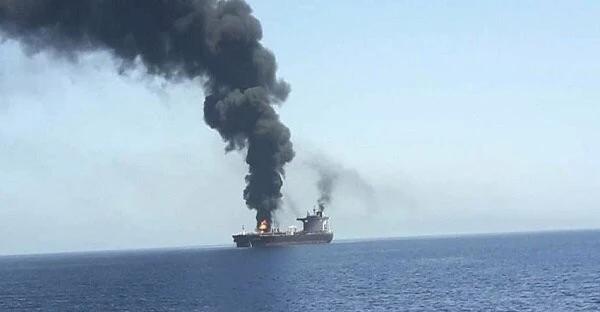
The British military reported two cargo vessels ablaze off the UAE, while Tehran did not outright confirm or deny the attacks and Iran's Foreign Minister Abbas Araghchi said on X that both the U.S. and the UAE "should be wary of being dragged back into quagmire."
Ceasefire strain and escalation
The renewed violence came as the U.S. and Iran argued over whether the fragile ceasefire had been violated, with Iran saying the U.S. effort was a violation of the fragile ceasefire that had held for more than three weeks.
NPR reported that Iran has said the new U.S. effort is a violation of the fragile ceasefire that has held for more than three weeks, and it described how the U.S. said it reopened a lane through the strait after Iran's effective closure had caused a spike in worldwide fuel prices and rattled the global economy.

The BBC and CBC accounts in the broader reporting also tied the flareup to the U.S. push to restore traffic through the strait, with CBC saying the attacks appeared to be in response to U.S. President Donald Trump's latest efforts to reopen the Strait of Hormuz.
In the same NPR reporting, Trump had warned Sunday that Iranian efforts to halt passage through the strait "will, unfortunately, have to be dealt with forcefully," and it said he described "Project Freedom" in humanitarian terms designed to aid stranded seafarers on hundreds of ships stuck in the Persian Gulf since the war began.
Al Jazeera reported that Trump warned that Iran would be "blown off the face of the Earth" if it attacks United States ships, and it said the U.S. military began implementing on Monday a Trump plan dubbed Project Freedom to guide ships through Hormuz and break the Iranian blockade.
Anadolu Ajansı reported that the UAE said it was facing a fourth wave of missiles and drones from Iran on Monday evening, with air defenses intercepting ballistic and cruise missiles as well as unmanned aerial vehicles, and it said there were no immediate reports of casualties or damage.
The escalation timeline also included the ceasefire date itself, with Anadolu Ajansı saying a ceasefire took effect between Tehran and Washington last month and that talks in Islamabad failed to produce a lasting agreement.
In the midst of this, Iran's Foreign Minister Abbas Araghchi warned against being dragged into a "quagmire," while the UAE Foreign Ministry said the attacks represented "a dangerous escalation and an unacceptable violation" and called for an immediate halt to the attacks.
U.S. and Iran trade threats
The U.S. and Iran exchanged hostile messaging as the operation to reopen the strait unfolded, with U.S. officials emphasizing defensive authority and Iran warning against approaching without permission.
“An informed Iranian military official said on Monday that his country did not have a pre-planned plan to target the UAE or facilities at the UAE's Fujairah port, accusing the U”
NPR quoted Adm. Brad Cooper saying, "The U.S. commanders who are on the scene have all the authority necessary to defend their unit and to defend commercial shipping -- as we saw and demonstrated earlier today," and it also quoted Cooper saying "each and every" threat had been defeated.
In contrast, Iran's Foreign Minister Abbas Araghchi said on X that both the U.S. and the UAE "should be wary of being dragged back into quagmire," and NPR also included an Iranian state television quote from an anonymous military official saying Tehran had had "no plan" to target the UAE or one of its oil fields.
Savage Minds reported that on Monday, Iran warned it will target any force which tries to enter the Strait of Hormuz without its permission, and it said the warning was issued after Trump announced on Sunday that U.S. armed forces will start escorting ships through the strait on Monday.
Savage Minds also quoted Ali Abdollahi, head of Iran's Khatam al-Anbiya Central Headquarters, saying the security of the Strait of Hormuz is solely under the authority of the armed forces of Iran and that all safe passage must be coordinated with Iranian forces.
Al Jazeera added that Trump threatened Iran with a statement that it would be "blown off the face of the Earth" if it attacks United States ships, and it reported that Iran's official news agency IRNA cited a military source as saying that the "US claim of sinking a number of Iranian warships is false."
In the same Al Jazeera reporting, it said Iran appeared to demonstrate its ability to still target ships near the strait, with South Korea confirming one of its vessels suffered an explosion and a fire off the coast of the UAE.
The U.S. framing of the operation as humanitarian also drew direct pushback, with the U.S. described as calling it "humanitarian" and Iran's state-run IRNA calling the effort part of Trump's "delirium" in Al Jazeera.
Allies, markets, and shipping
The operation and the attacks also triggered reactions from governments and raised questions about whether shipping companies and insurers would take the risk.
NPR said shipping companies, and their insurers, are unlikely to take such a risk, given that Iran has fired on ships in the waterway and vowed to keep doing so, and it described how Iran's effective closure of the strait has caused a spike in worldwide fuel prices and rattled the global economy.

CBC reported that Prime Ministers Mark Carney wrote on social media that Canada "strongly condemns Iran’s unprovoked missile and drone attacks on the United Arab Emirates" and reiterated the call for "de-escalation and diplomacy in the region," while British Prime Minister Keir Starmer echoed the message.
Boston Herald reported that oil prices surged on news that Iran had attacked Fujairah and that the price for a barrel of Brent crude leaped 5.8% to settle at $114.44, while West Texas Intermediate advanced more than 4% and settled at $106.42 per barrel.
Al Jazeera reported that the U.S. said it helped two U.S. merchant vessels through the strait, but ship-tracking websites show traffic through the waterway remains largely suspended, and it said Admiral Brad Cooper described stranded vessels as belonging to 87 countries that are “innocent bystanders” in the conflict.
Al Jazeera also described how Trump cited the attack on a South Korean ship to urge Seoul to join his campaign, quoting Trump writing that Iran has taken some shots at unrelated Nations with respect to the Ship Movement, PROJECT FREEDOM, including a South Korean Cargo Ship.
The U.S. also faced skepticism from Iran, with CBC reporting that Iran's Revolutionary Guard Corps denied that any commercial vessels or tankers had crossed the strait in the last few hours, saying via Tasnim news agency that such "claims by U.S. officials are baseless and complete lies."
In the background of these market and diplomatic reactions, NPR said the UAE condemned what it called "renewed treacherous Iranian aggression" and called for an immediate halt to the attacks, and it reported that four missile alerts were issued Monday urging UAE residents to find shelter.
What comes next
The sources also point to immediate next steps and looming uncertainty about the ceasefire and further operations, with U.S. officials preparing additional briefings and Iran warning of consequences.
CBC said U.S. War Secretary Pete Hegseth was expected to give a briefing on operations in the region Tuesday morning at the Pentagon with Air Force Gen. Dan Caine, chair of the Joint Chiefs of Staff.

NPR said rescue and military actions were ongoing as the U.S. moved to reopen the strait, and it described how the U.S. commanders said they had authority to defend commercial shipping, while Trump had warned that Iranian efforts to halt passage would be dealt with forcefully.
Al Jazeera reported that the violence cast fresh focus on the failure of the U.S. and Iran to come to an agreement on a longer-term deal and said there was no indication of fresh meetings between the adversaries.
It also reported that Iran renewed its attacks on the UAE on Monday and that the UAE Defence Ministry said the country’s forces engaged 12 ballistic missiles, three cruise missiles and four drones, while the media office in Fujairah confirmed an Iranian attack caused a fire in the Fujairah Petroleum Industry Zone and injured three people.
In parallel, Anadolu Ajansı said the UAE reported a fourth wave of missiles and drones on Monday evening and that air defenses were intercepting incoming projectiles, with sounds heard across different parts of the country.
Savage Minds added that on Monday the U.S. handed over 22 crew members of the Iranian ship “Touska” seized by it in April to Pakistan for repatriation to Iran, and it said six of the crew members had already been handed over to other countries for repatriation.
Across the reporting, the stakes are framed as both military and economic: NPR said breaking Iran's chokehold on the strait would ease global economic concerns and deny Iran a major source of leverage, while it also warned such efforts risk reigniting full-scale fighting.
More on USA

U.S. Sinks 7 Iranian Boats as Iran Launches Missiles and Drones at UAE
10 sources compared

Secret Service Officers Shoot Armed Suspect After Gunfire Near White House
27 sources compared
U.S. Sinks Six Iranian Boats, Shoots Down Missiles and Drones in Strait of Hormuz
34 sources compared

Shooting At Arcadia Lake Party Near Oklahoma City Sends At Least 10 To Hospitals
18 sources compared