South America06 March, 20263 min read
US Restores Diplomatic Relations With Venezuela Months After Trump-Ordered Raid Captured Maduro
United States and Venezuela agreed to re-establish diplomatic and consular relations Agreement follows U.S. capture of Nicolás Maduro in a January military raid

U.S. and Venezuela ties restored
On March 5, 2026 the U.S. State Department announced that the United States and Venezuela’s interim authorities have agreed to restore diplomatic and consular relations, formally ending a rupture that began in 2019 and was confirmed by multiple governments.
“On March 5 the State Department announced the U.S. and Venezuela will restore diplomatic and consular relations that were severed in 2019, a move described as aimed at ‘facilitating joint efforts’ on economic recovery and reconciliation and announced two months after the reported capture of Nicolás Maduro.”
France 24 reported, "On March 5 the State Department announced the U.S. and Venezuela will restore diplomatic and consular relations that were severed in 2019," and Newsweek noted, "the State Department announced Thursday that the United States and Venezuela’s interim authorities have agreed to reestablish diplomatic and consular relations."

The BBC summarized the pact as a move "to cooperate on promoting stability, economic recovery and political reconciliation," reflecting the stated goals from both capitals as they reopen formal channels of government-to-government engagement.
U.S.-Venezuela diplomatic thaw
The restoration follows dramatic political change after a U.S. operation that captured President Nicolás Maduro in January 2026. EL PAÍS English said two months and two days after the U.S.-backed capture of Nicolás Maduro in Caracas, the State Department announced that the United States and Venezuela’s interim authorities agreed to re-establish diplomatic and consular relations.
The Diplomatic Insight linked the move to the January operation and said the agreement followed months of talks between the Trump administration and Venezuela’s interim government led by Delcy Rodríguez, who assumed power after Maduro’s capture. BBC connected the thaw to Venezuelan President Nicolás Maduro’s January 2026 capture and transfer to the U.S. to face criminal charges.
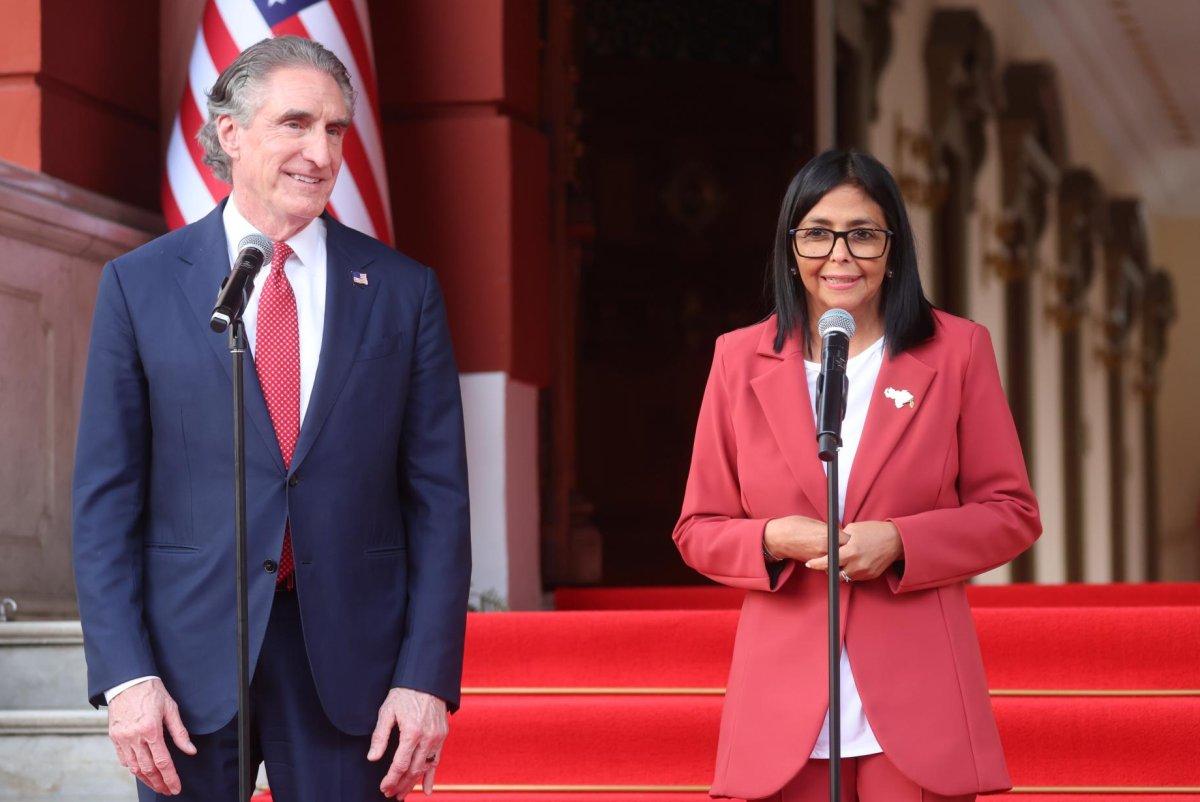
US and Venezuela diplomacy
The rapprochement has immediately involved reopening missions and exchanging senior diplomats. EL PAÍS English reported that Venezuela’s interim government named Félix Plasencia as its representative in Washington, and his transfer to the U.S. is now proceeding. Enterate Noticias reiterated the personnel moves, saying they include Venezuela’s Félix Plasencia as representative in Washington and U.S. chargé d’affaires Laura Dogu in Caracas.
“Venezuela’s interim government also named Félix Plasencia as its representative in Washington, and his transfer to the U.S. is now proceeding.”
The BBC said the U.S. embassy in Caracas, closed in 2019, has reopened. The BBC added that Washington has appointed a new diplomat and that more staff are expected to move from the U.S. embassy in Bogotá to Caracas to ease face-to-face negotiations and consular work.
Economic and energy cooperation
Economic and energy cooperation has been a central driver of the reset.
U.S. officials have visited Caracas to court investment and Venezuela has revised laws to attract foreign oil and mining companies.
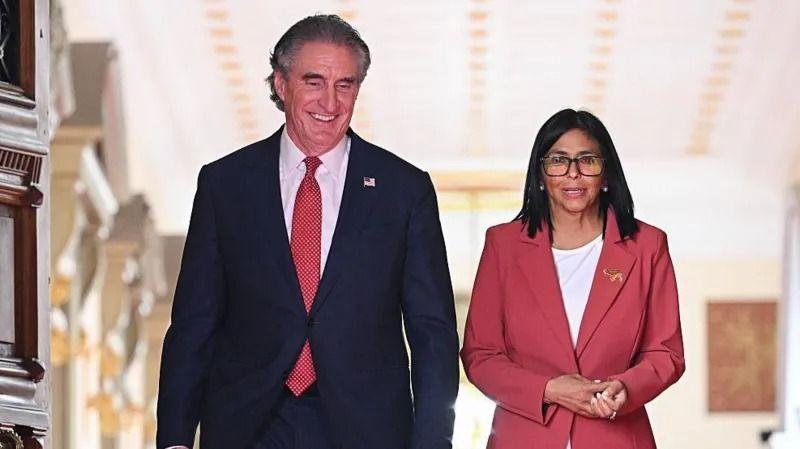
France 24 reported U.S. Interior Secretary Doug Burgum saying recent changes to Venezuela's hydrocarbons law "should draw investment, raise oil output and improve security for mining firms."
Radio LFM described Burgum's remarks that "Venezuela would guarantee the security of mining companies" and listed reforms including revisions to the hydrocarbons law, an amnesty and judicial reform.
Arise News highlighted that "the U.S. has authorised Venezuela to sell previously sanctioned oil under American oversight" and that the two sides "announced plans to collaborate on developing Venezuela's mining sector."
U.S. engagement and criticism
The political consequences are contested, with Washington framing the engagement as a phased process to create conditions for a peaceful transition.
“The U.S. and Venezuela’s interim government have agreed to reestablish diplomatic and consular relations, the State Department said, saying the move is intended to help create ‘the conditions for a peaceful transition to a democratic government.’”
Critics warn the reset prioritises business and energy access over immediate democratic guarantees.
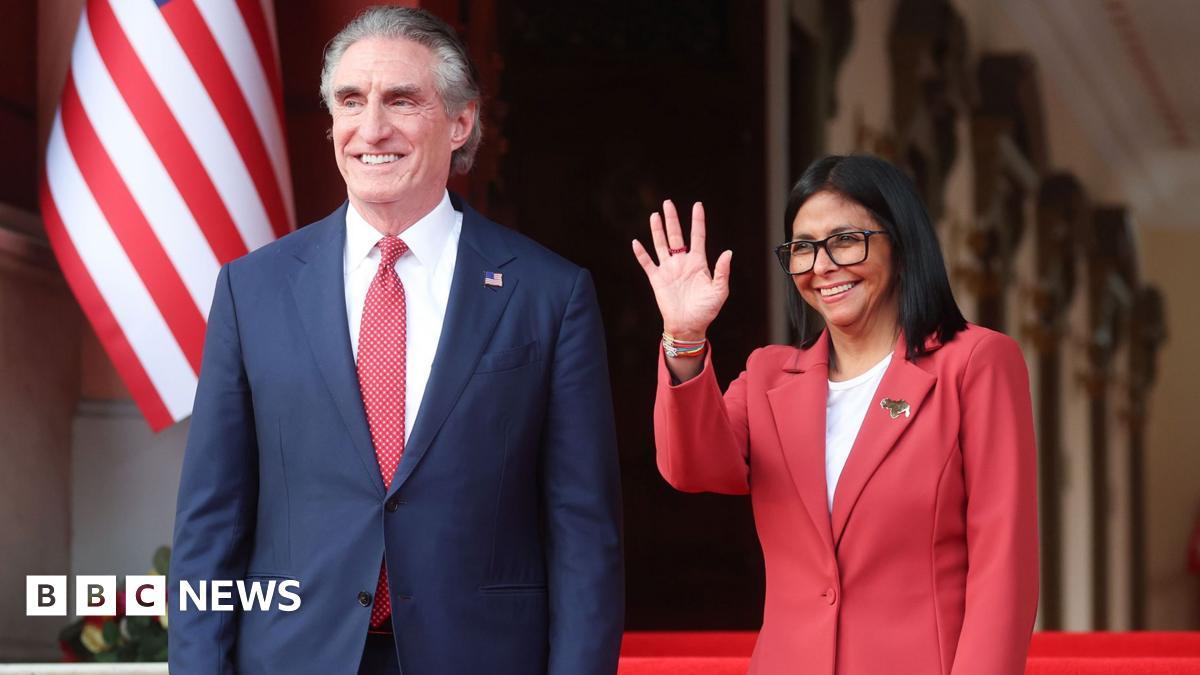
The U.S. State Department described the move as intended to help "create the conditions for a peaceful transition to a democratic government," a phrasing echoed by multiple outlets.
Associated Press reported that Rodríguez’s government "approved an amnesty law that freed politicians, activists and others, implicitly acknowledging widespread political detentions."
EL PAÍS English observed that "The U.S. approach during the transition has emphasized business, especially oil, over immediate democratic reforms; there is still no election date."
The Detroit News captured domestic criticism by saying U.S. officials have framed the visit as "dollar diplomacy" aimed at building reliable supply chains and promoting stability and prosperity—language used by critics to argue Washington’s interests are financial as much as political.