Iran-Israel03 March, 20262 min read
US Secretary of State Rubio Says Israel's Planned Attack Prompted US Strikes On Iran
This article is an automated aggregation of coverage from news outlets. Our editorials offer in-depth analysis curated by the NewsCord team.
Secretary of State Marco Rubio said Israel's planned attack dictated timing of strikes against Iran. US forces struck preemptively to prevent Iranian retaliation against US assets and troops.

11 outlets told this the same way.
Outlets did split on U.S. Intercepts Iran Message Activating Sleeper Cells After U.S.-Israel Strike Kills Khamenei →
Rubio on strike timing
Senator Marco Rubio told reporters that on March 2, 2026 the United States struck Iran only after learning Israel planned a strike and fearing Tehran would immediately retaliate against U.S. forces. He said U.S. intelligence indicated Iran had ordered field commanders to respond automatically and that Washington acted pre-emptively to avoid higher American casualties. Rubio defended the timing as tied to an imminent threat from the expected Israeli action and said the operation "needed to happen."
“Secretary of State Marco Rubio said on March 2, 2026 that the United States struck Iran only after learning Israel planned a strike and fearing Tehran would immediately retaliate against U.S. forces. Rubio told reporters that U.S. intelligence indicated Iran had ordered field commanders to respond automatically to an attack on Iran, so Washington acted preemptively to avoid higher American casualties. He said the administration believed there was an imminent threat tied to the expected Israeli action and defended the president’s decision to strike alongside Israel. Defense Secretary Pete Hegseth has said Israel carried out the Tehran strike that killed Iran’s supreme leader, Ayatollah Ali Khamenei, and other officials; Rubio added that, in any case, the operation ‘needed to happen.’ Rubio was preparing to brief key lawmakers as questions about the use of force and congressional war powers loom.”
Explanation for U.S. strikes
Rubio and other U.S. officials framed the strikes as aimed at degrading Iran’s missile and drone capabilities and defended the decision’s timing; Rubio said the strike 'needed to happen' now to prevent Iran from amassing so many short-range missiles and drones that it could be 'effectively immune' and 'hold the whole world hostage.'
U.S. Defense Secretary Pete Hegseth and others have linked the operations to an earlier Tehran strike that killed Iran’s supreme leader and other officials.

Strikes and Iran's response
Several outlets place Rubio’s remarks within the broader sequence of joint U.S.-Israeli actions and Iran’s counterattacks. Reports say those strikes killed Iran’s supreme leader Ayatollah Ali Khamenei, other senior officials, and many civilians. Iran launched drone and missile attacks across the region, including against U.S. bases.
“The article places Rubio’s remarks in the wider context of joint US‑Israeli attacks that, it says, killed Iran’s supreme leader Ayatollah Ali Khamenei, other senior officials and hundreds of civilians; Iran responded with drone and missile launches across the region, including against US bases in the Gulf. Rubio framed the campaign as aimed at destroying Iran’s missile and drone programs and said the US would welcome the overthrow of Tehran’s government.”
After those attacks, the U.S. military confirmed its death toll had risen to six. Iran’s foreign minister Abbas Araghchi called the strikes a "grave crime" and vowed to defend Iran’s rights.
Responses to Rubio's Comments
Rubio’s comments have provoked pushback and raised questions in Washington about oversight and the administration’s objectives.
Representative Joaquin Castro criticized Rubio’s remarks, saying Israel had put U.S. forces in harm’s way.
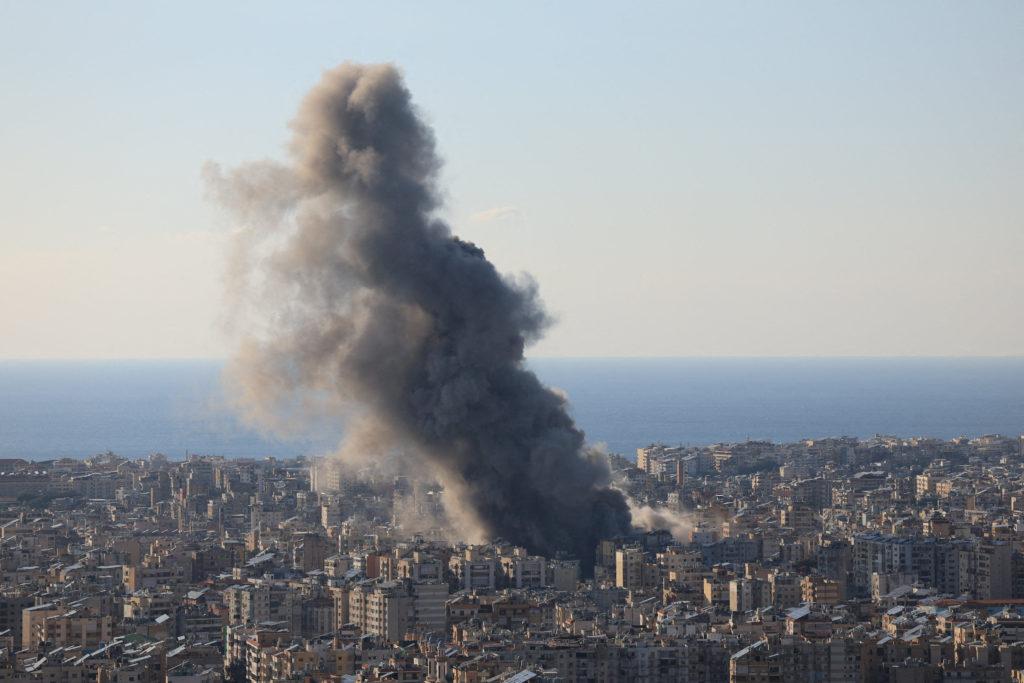
Rubio was preparing to brief key lawmakers as questions about the use of force and congressional war powers loom.
After classified briefings, Sen. Mark Warner said he was unclear about President Trump’s actual endgame and urged clarification of which stated objectives — among several Trump has mentioned — is the administration’s true aim.
Motives and coordination debate
Some sources emphasize U.S. and Israeli coordination, Israeli intelligence support for U.S. strikes, strong U.S.-Israel ties, and recent military aid. Other sources highlight uncertainty over stated war aims and stress Iran’s denials of seeking nuclear weapons.
“The piece also notes Israel’s close ties to Washington — including at least $21bn in US military aid since 2023 — and cites Israeli PM Benjamin Netanyahu’s comment that the strikes were carried out with the assistance of US President Donald Trump.”
Taken together, these accounts indicate the administration frames the action as pre-emptive to protect U.S. forces and to degrade missile and drone capabilities. There remains public and congressional uncertainty over the campaign’s ultimate objectives and the role of Israeli planning in the timing.
