
U.S. seeks NATO help with Strait of Hormuz. And, federal judge blocks vaccine changes
Key Takeaways
- U.S. seeks NATO help to secure the Strait of Hormuz amid Iran tensions.
- Federal judge blocks changes to vaccine requirements.
- Israel intensifies actions in Lebanon amid broader war with Iran.
Lebanon-Israel escalation
In Lebanon, a second front in the U.S.-Israel war with Iran has heated up as Israel intensifies ground attacks on the Iranian-backed Hezbollah.
Israel's defense minister says the military has killed two top Iranian commanders in a targeted strike, though Iran did not immediately confirm the killings.
European allies have refused to send warships to the Strait of Hormuz, a vital oil passage blocked by Iran amid the conflict, and NATO is set to convene in Brussels today to discuss the escalating tensions in the Middle East.
Cuba grid collapse & policy context
Another catastrophic collapse of Cuba's electricity grid yesterday left nearly 11 million people without power.
This outage is not the first across the entire island, but it is the largest since the U.S. began blocking oil to Cuba in January.
The interruption of service comes as Trump vowed yesterday that he would have the "honor of taking Cuba."
Cuba's power grid has been failing for decades, and the government hasn't been able to keep up with the maintenance.
The country relies on imported oil for its thermal power plants, and it hasn't received any for months.
Small demonstrations broke out after the blackouts.
The Cuban government responded by opening parts of the economy and betting on solar energy.
But Peralta says it's unclear how quickly that can ease residents' pain.
President Miguel Díaz-Canel confirmed last week that negotiations with the U.S. are underway.
Over the weekend, Cuba announced it would release 51 prisoners arrested during protests in 2021 and allow Cubans living abroad to invest in and own businesses in Cuba.
Peralta says it's unclear if these concessions will satisfy Washington.
TPS deportation & vaccine policy rulings
The Supreme Court yesterday temporarily halted the Trump administration's plan to deport some 6,000 Syrians and 350,000 Haitians who had received Temporary Protected Status from Presidents Barack Obama, Joe Biden, and Trump himself in his first term.
The court has expedited arguments for these cases to April, with a decision likely by the end of June.
Trump wants to end TPS for individuals from 13 countries, including Myanmar, Nepal, Honduras, Nicaragua, Afghanistan, Cameroon, Yemen, Somalia, Ethiopia, South Sudan and Venezuela.
A federal judge yesterday blocked the Trump administration's efforts to overhaul national vaccine policies, including the controversial decision to cut the number of federally recommended vaccinations for children.
U.S. District Court Judge Brian Murphy in Boston ruled that Health Secretary Robert F. Kennedy Jr. improperly replaced the Centers for Disease Control and Prevention's entire vaccine advisory committee.
Murphy said Kennedy and this committee disregarded long-used, well-regarded scientific processes for developing vaccine policy and wrote in his ruling that the government "thereby undermined the integrity of its actions."
The administration plans to appeal it.
More on Iran

Israel strikes Iran's Pars gas field as Tehran vows revenge
14 sources compared
Trump threatens to blow up South Pars gas field if Iran attacks Qatar again
10 sources compared
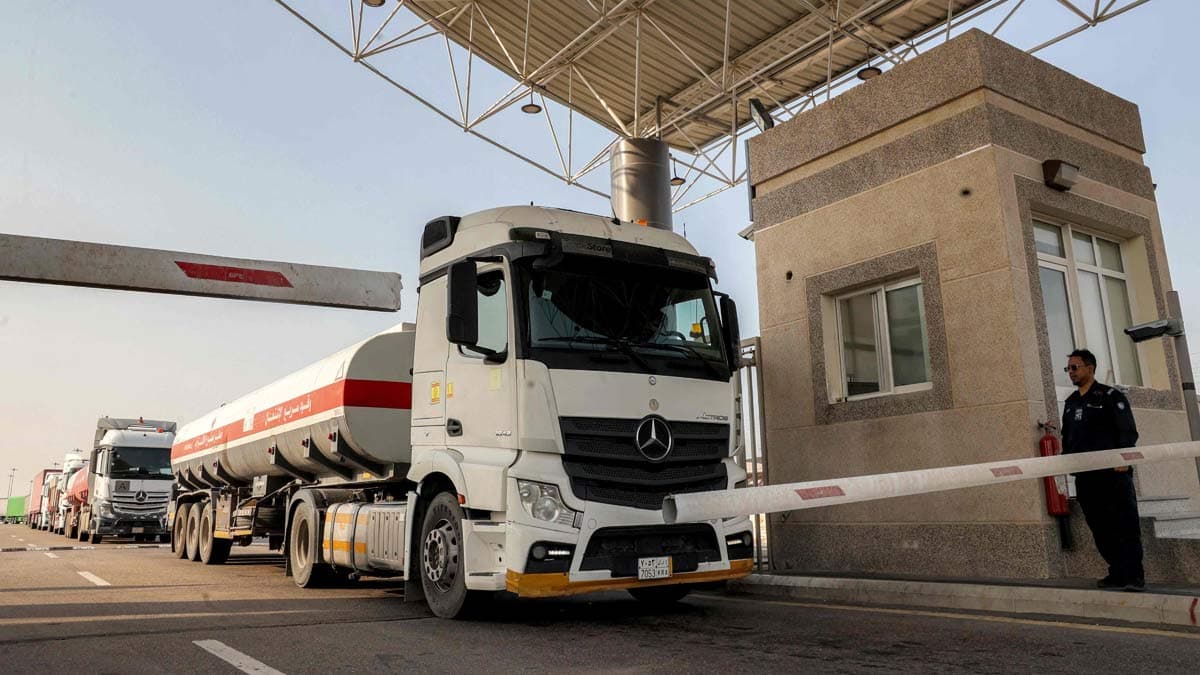
UAE Halts Habshan Gas Facility Operations After Debris From Intercepted Missiles
10 sources compared

Iran Threatens Gulf Energy Facilities After Israel Strikes South Pars Gas Field
11 sources compared