South America09 January, 20263 min read
U.S. Senate Advances Measure To Curb Trump’s Authority To Use Military Force In Venezuela
Senate voted 52-47 to advance resolution barring military action in Venezuela without congressional approval A handful of Republicans joined all Democrats to move the measure forward

10 outlets told this the same way.
Outlets did split on Alexandre de Moraes Orders Eduardo Bolsonaro Arrest, Cancels Passport, Enforces Four-Year Sentence →
Senate limits Venezuela force
The U.S. Senate on a 52–47 procedural vote advanced a bipartisan war‑powers resolution intended to limit President Trump’s authority to mount further military actions related to Venezuela, moving the measure toward a potential final vote and allowing extended debate in the chamber.
“The Senate voted 52–47 to advance a war‑powers resolution aimed at restricting President Trump’s ability to authorize further military action related to Venezuela after the surprise capture of President Nicolás Maduro.”
Outlook India reports the Senate “voted 52–47 to advance a war‑powers resolution aimed at restricting President Trump’s ability to authorize further military action related to Venezuela after the surprise capture of President Nicolás Maduro,” reflecting congressional concern about executive use of force.

NBC News likewise notes the Senate “advanced a bipartisan war‑powers resolution (52–47) to limit presidential military action against Venezuela,” and CNN describes GOP senators moving the measure that would limit the president’s use of force without Congress’s approval.
ABC News’ excerpt adds that five Republican senators joined Democrats on a related vote, underscoring cross‑party unease.
Congressional vote backlash
The vote exposed sharp partisan tensions and produced immediate pushback from administration allies who argued the resolution would undermine law enforcement and deterrence.
ABC News excerpt quotes Sen. John Barrasso criticizing Democrats for trying to limit the President's authority to enforce the law.

NBC News and CNN report the measure drew criticism from some Trump allies, and Vice President J.D. Vance labeled the law 'fake and unconstitutional,' calling the vote a legal technicality rather than a substantive policy rift.
Outlook India highlights the close margin as emblematic of deep divisions over congressional oversight of foreign military operations.
U.S. legal briefings on Venezuela
Beyond politics, lawmakers were briefed on legal and operational questions tied to recent U.S. actions toward Venezuela. NBC News reported that U.S. officials briefed lawmakers on a reported Justice Department Office of Legal Counsel opinion that could be used to justify a U.S. operation to capture Venezuelan President Nicolás Maduro. That opinion raises legal stakes for both Congress and the administration.
“U.S. officials briefed lawmakers on a reported Justice Department Office of Legal Counsel opinion that could be used to justify a U.S. operation to capture Venezuelan President Nicolás Maduro.”
CNN reported that the administration called the vote a legal technicality, which underscores competing legal narratives. Outlook India noted that, if passed, the resolution would limit or require congressional approval for additional U.S. military involvement tied to Venezuela, altering the executive branch's operational latitude.
U.S. campaign in Venezuela
The Senate action came amid a broader U.S. campaign in Venezuela following the surprise capture of Nicolás Maduro, a context that different outlets portray with contrasting emphases on coercion, diplomacy and regional rivalry. France 24 reports President Trump said he called off a planned 'second wave' of attacks on Venezuela after the country's transitional authorities cooperated, and it describes U.S. moves including the seizure of two sanctioned tankers and selective easing of sanctions to shape oil sales.
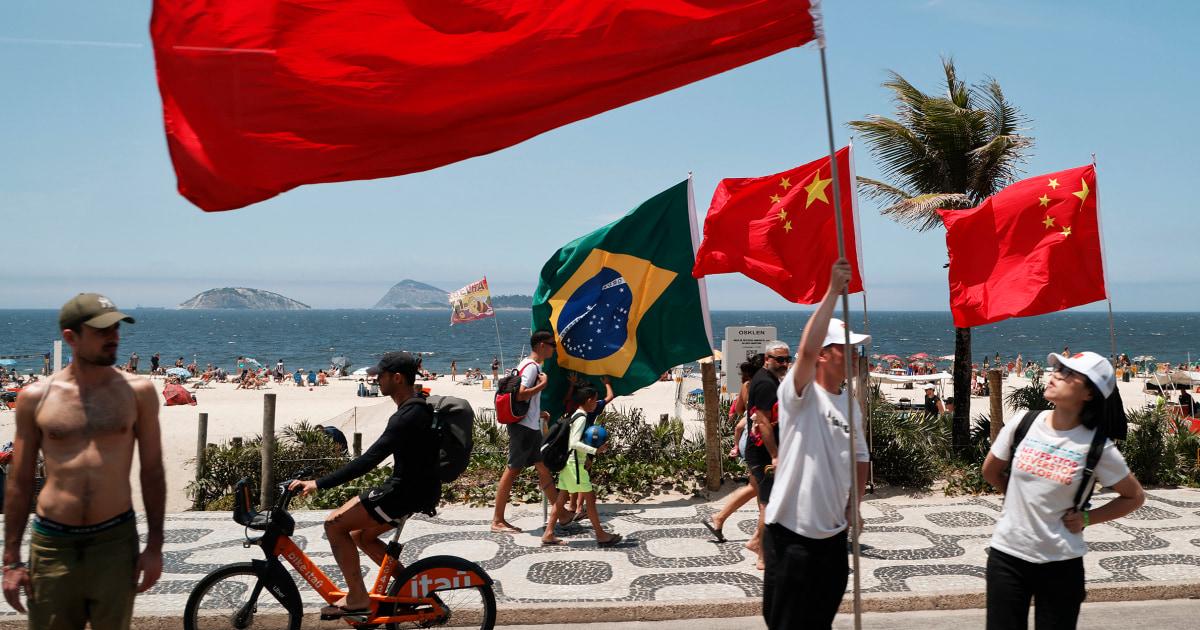
Beritaja reports the Trump administration framed the operation as asserting U.S. dominance and explicitly warned China to keep out of 'America's backyard,' while China condemned the action as bullying. Al Jazeera focuses on the Venezuelan military (FANB) as central, arguing Delcy Rodríguez's selection reflects the military's acceptance and that the FANB faces pressures to adapt to avoid deeper instability or potential U.S. intervention.
Media coverage differences
Coverage varies by outlet type: Western mainstream outlets (e.g., NBC News, CNN, France 24) tend to center the U.S. legislative and executive dispute and immediate operational developments; West Asian sources (e.g., Al Jazeera, Daily Sabah where available) emphasize regional power dynamics and the Venezuelan military's role; Asian outlets (Outlook India) highlight institutional checks and procedural impact on U.S. authority; and other/alternative outlets (beritaja, abcnews.go snippets) stress geopolitical framing and partisan quotes. Those differences shape what readers learn — for example, whether reporting foregrounds legal memos and congressional checks, the administration's geopolitical messaging to China, or the Venezuelan military's incentives. Readers should note the variations in tone and emphasis and that some snippets omit full bill names, vote implications, or longer contextual detail.
“The Senate voted 52–47 to advance a war‑powers resolution aimed at restricting President Trump’s ability to authorize further military action related to Venezuela after the surprise capture of President Nicolás Maduro.”